
AI overview
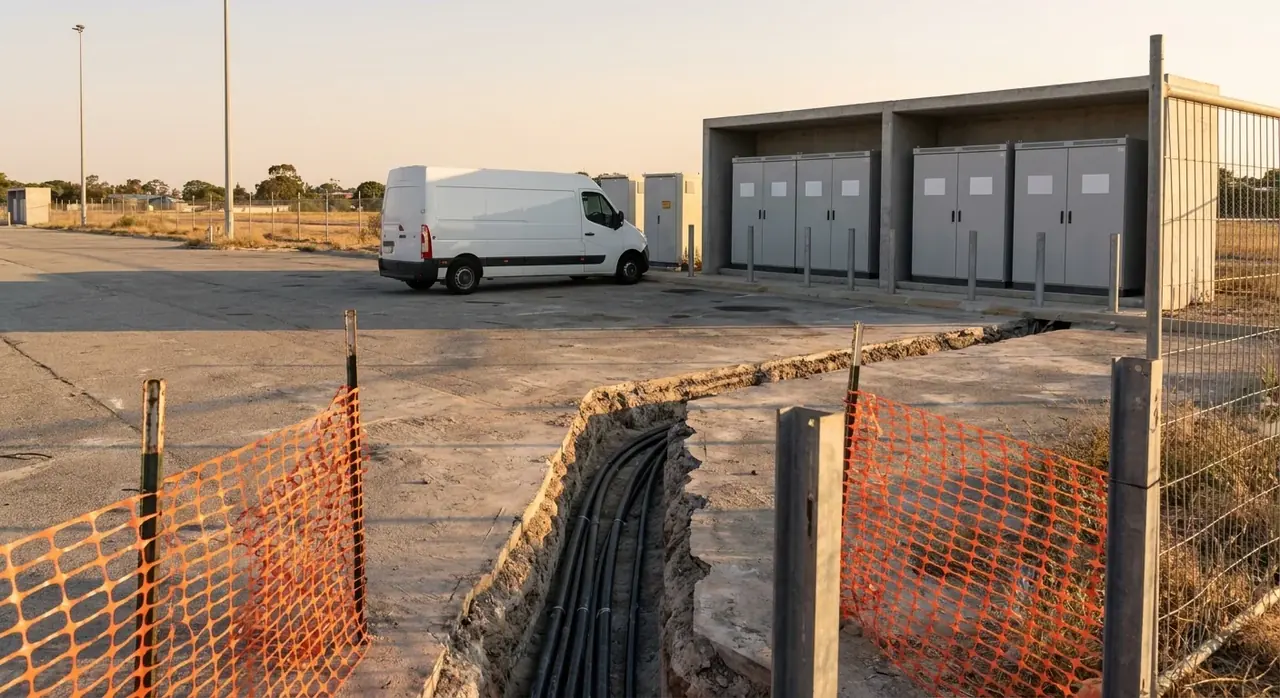
Choose the location by how the power gets there, not just by which bays are handiest. A bay near the switchboard can still be the dearest option if it means cutting concrete, trenching and installing pedestals, the standalone posts a charger mounts on, while a wall 20 or 30 metres away may be simpler and cheaper. Compare convenience, cable route, mounting, security and future growth before you lock in the bays.
Key highlights
- The closest bay to the switchboard is not automatically the cheapest
- The cable route can matter more than the straight-line distance
- Walls are usually simpler than fences or open car parks
- Plan security and bollards, the short posts that protect a charger, before the install
- Only build for growth that is certain and soon
- Fewer, faster chargers can beat a long row of slow ones
 Free PDF · 9 pagesEV Charger Location Planning GuideDownload the PDF guide
The Handiest Bay Is Not Always the Cheapest
Picking where EV chargers go looks easy: choose the most convenient bays and put the chargers there. In practice, the location has a big effect on the installation cost, on how easy the chargers are to use, on security, and on how simply the system can grow.
A bay close to the main switchboard is not automatically the cheapest. If getting power to it means cutting concrete, trenching, resurfacing and installing pedestals, a charger 20 or 30 metres further away on a suitable wall may be simpler and cost less.
Look at the Whole Site Before You Pick the Bays
These are the questions that change the installation cost. You do not need the answers before you call, but it helps to start thinking about them.
- Where are the main switchboard and any smaller boards around the site?
- What sits between the switchboard and the bays: open wall, ceiling space, garden, bitumen or reinforced concrete?
- Can cable run safely along a wall or overhead, or will it have to go underground?
- Are the bays against a wall, a fence or out in open parking?
- Will the chargers need pedestals, concrete footings or protective bollards?
- Do the vehicles charge during the day, overnight, or both?
- If they stay overnight, is the area secure and safe from vandalism?
- Is the business likely to add more EVs soon, or is this a small trial?
Start With How the Vehicles Will Use the Bays
Work out who will charge there and for how long: fleet cars, pool vehicles, vans, staff cars or visitors. Vehicles that come and go all day need different bays from vehicles that stay plugged in overnight.
Convenience matters. The cheapest electrical spot is no good if it gives the drivers a daily headache. Equally, the bays the business first picked are sometimes only a little more convenient than another spot that would save thousands of dollars in installation work.
Find the Electrical Starting Point
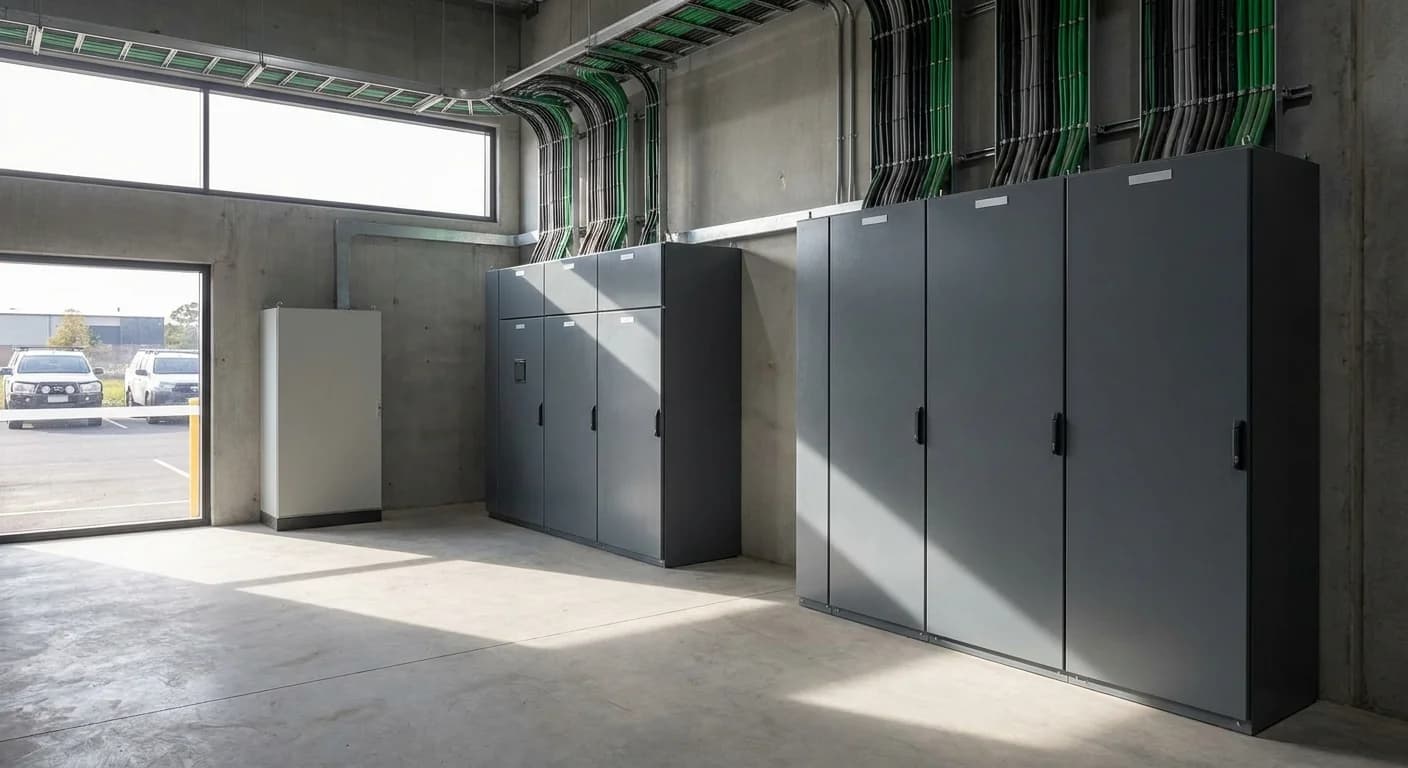
Find the main switchboard and any distribution boards, the smaller switchboards fed from the main one, around the site. A large property may have several, and the closest board is not automatically the best one.
A board can sit right beside the bays and still not have the capacity for the charging load, while another part of the site is a much better starting point. Capacity has to be measured, never assumed. For a fleet that will grow, a dedicated EV distribution board can be the better long-term starting point. Our guide on whether your business has enough power for EV chargers explains how capacity is worked out.
Walk the Cable Route, Not Just the Distance
The path the cable takes can change the cost more than the distance does. A five metre run through hard ground can cost more than a 25 metre run along an accessible wall or ceiling. Most of that difference is civil works, the digging, cutting and resurfacing needed to bury a cable. Questions to ask along the route:
- Can the cable run in conduit, a protective pipe, along an existing wall?
- Is there accessible ceiling or overhead space for a safe route?
- Does it have to cross open ground?
- Does it have to pass under bitumen, paving or reinforced concrete?
- Will it need concrete cutting, trenching, or boring, which means drilling a tunnel underneath?
- What surface has to be put back afterwards?
- Is the business comfortable with the disruption and how it will look?
- Are there existing underground services that complicate the route?
A Useful Question to Ask
If we choose these bays, how does the power physically get from the switchboard to the charger? That one question often shows where the biggest hidden costs are.
At Midway Ford in Midland, the workshop charger sits 35 to 40 metres from the main switchboard. Two of the three chargers were fitted with 10 metre cables so technicians and the delivery team can charge across several bays without moving cars around. Our projects page has the dealership's story.
Wall, Fence or Open Car Park?
What sits at the end of the bay changes how the charger is installed.
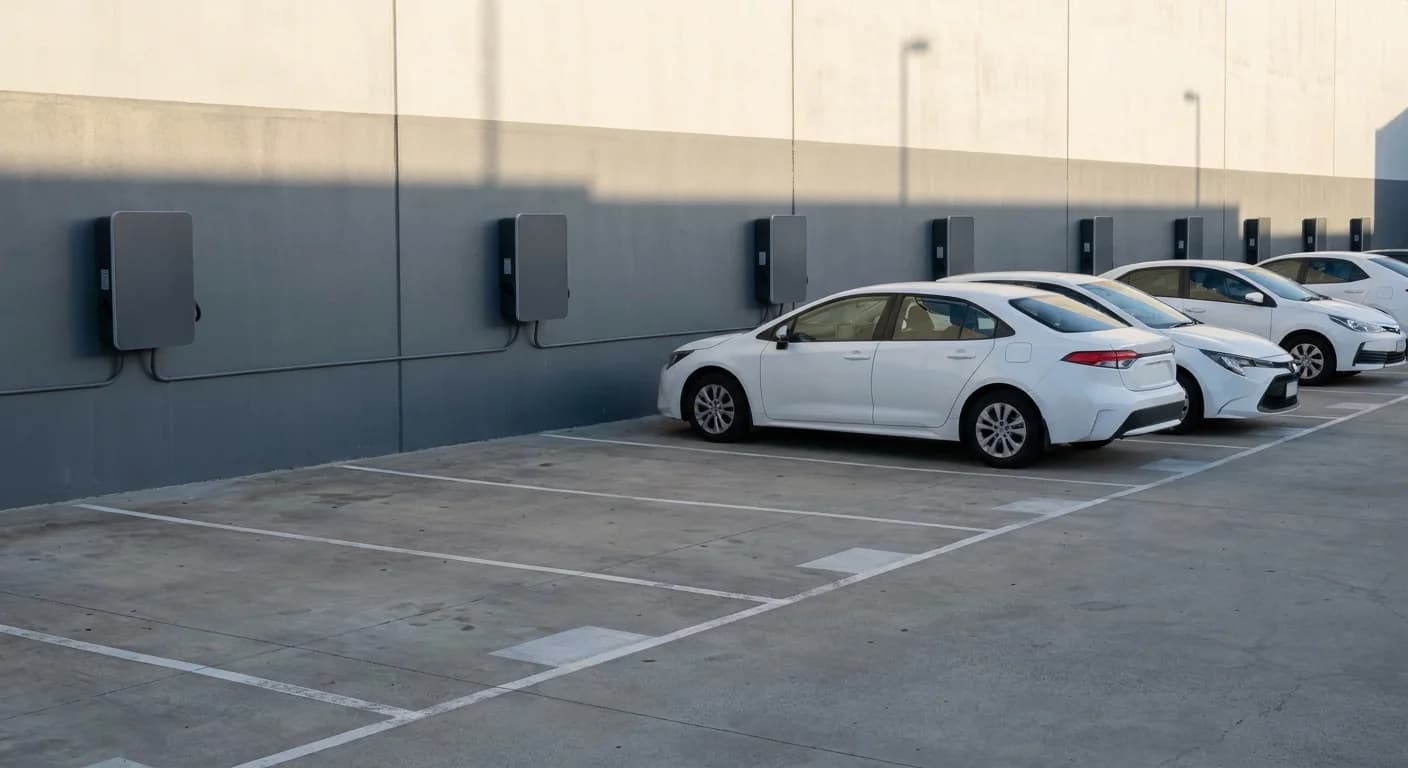
- Against a suitable wall: usually the simplest. The charger mounts on the wall and the cable can often run along the building.
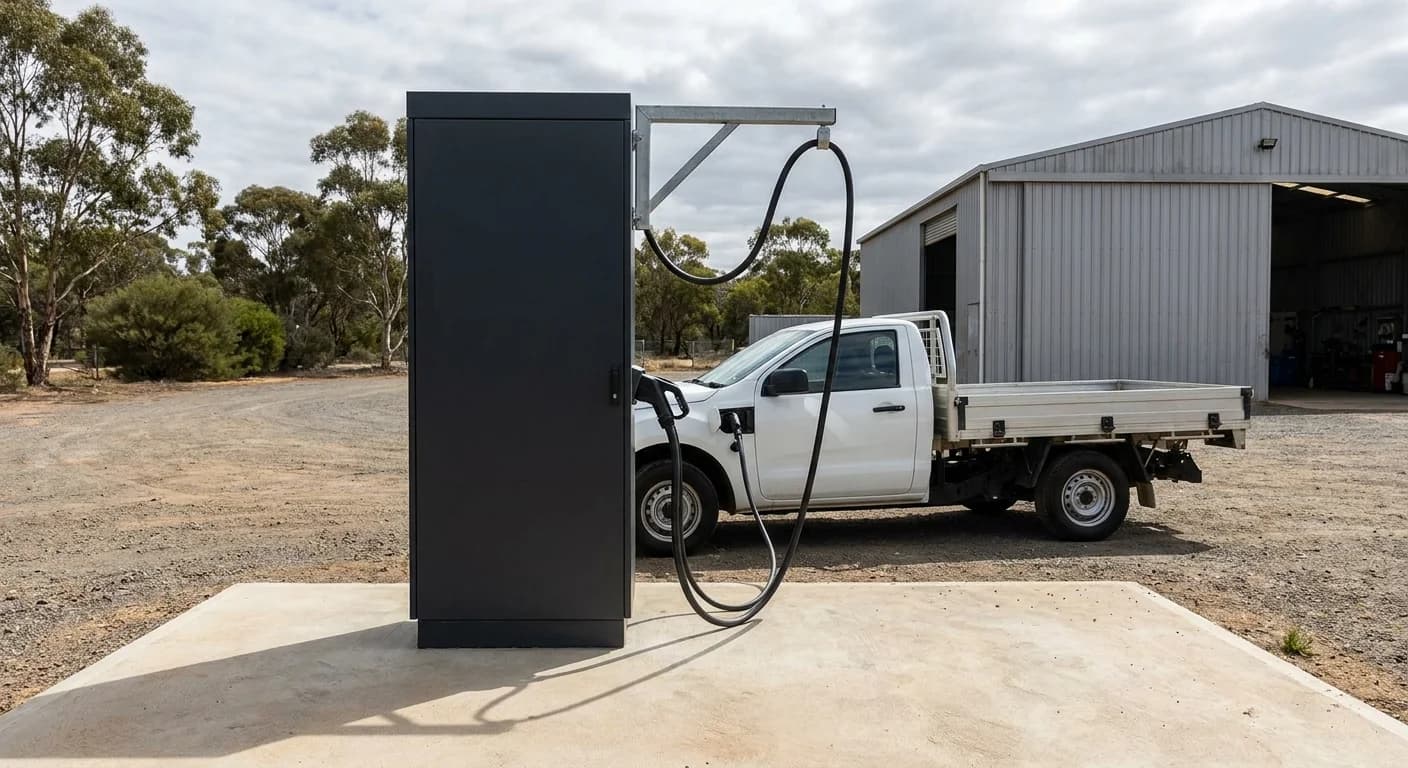
- Against a fence: a fence is often not strong enough to carry charging equipment, so the job may need pedestals, concrete footings and an underground cable.
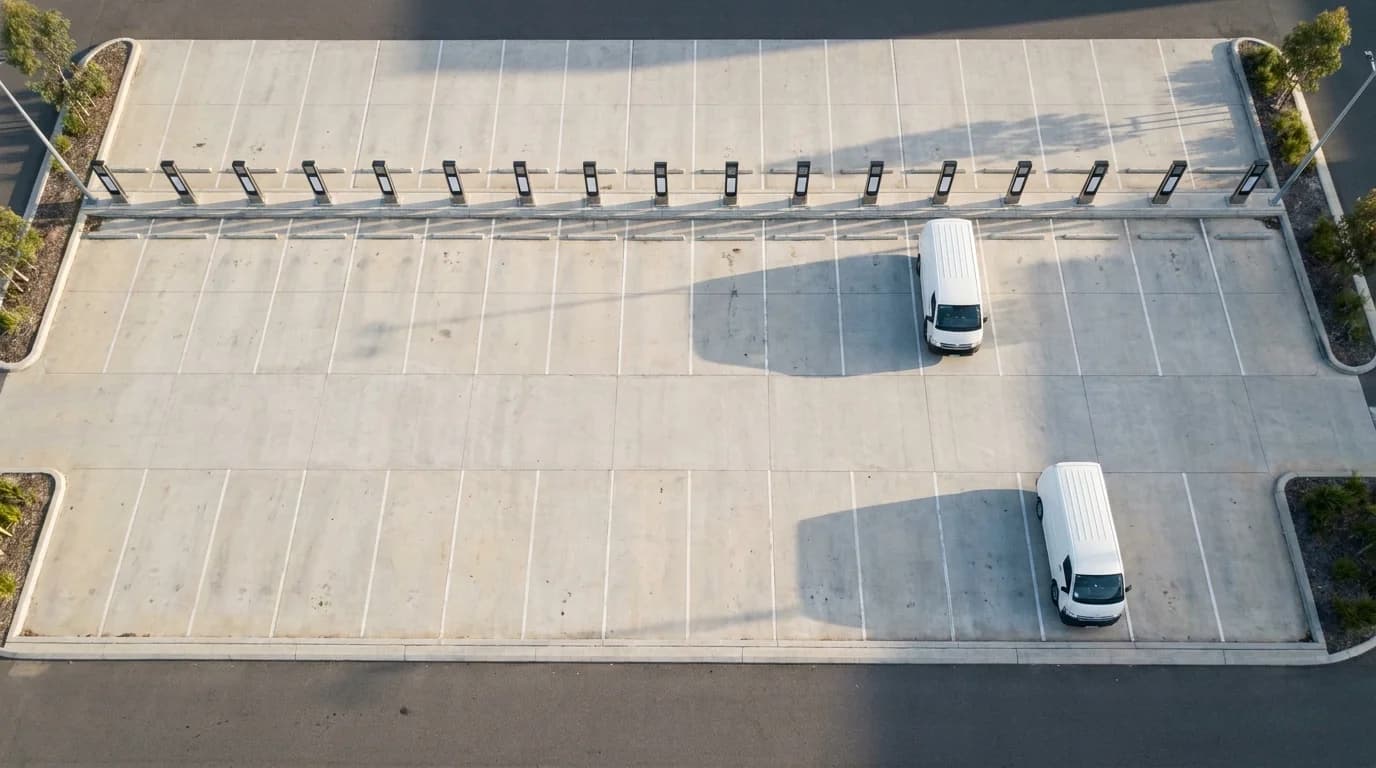
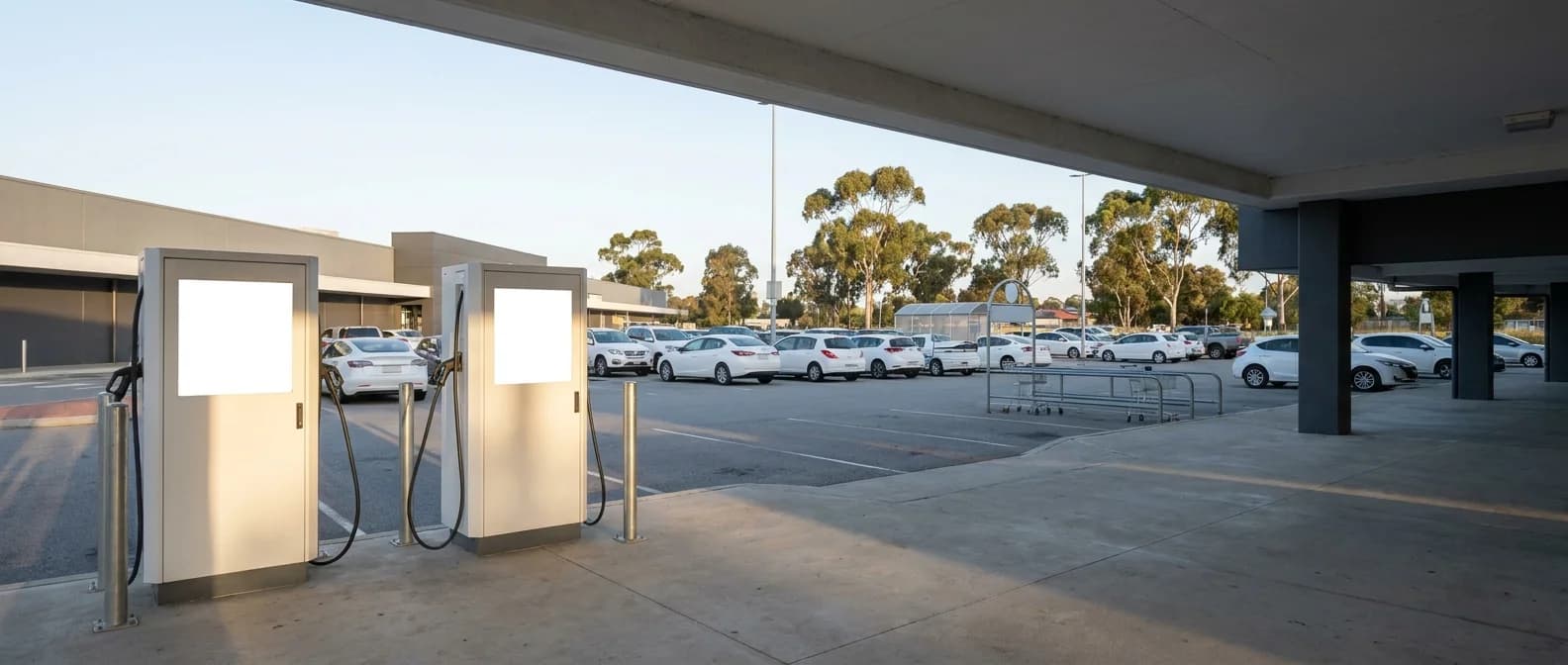
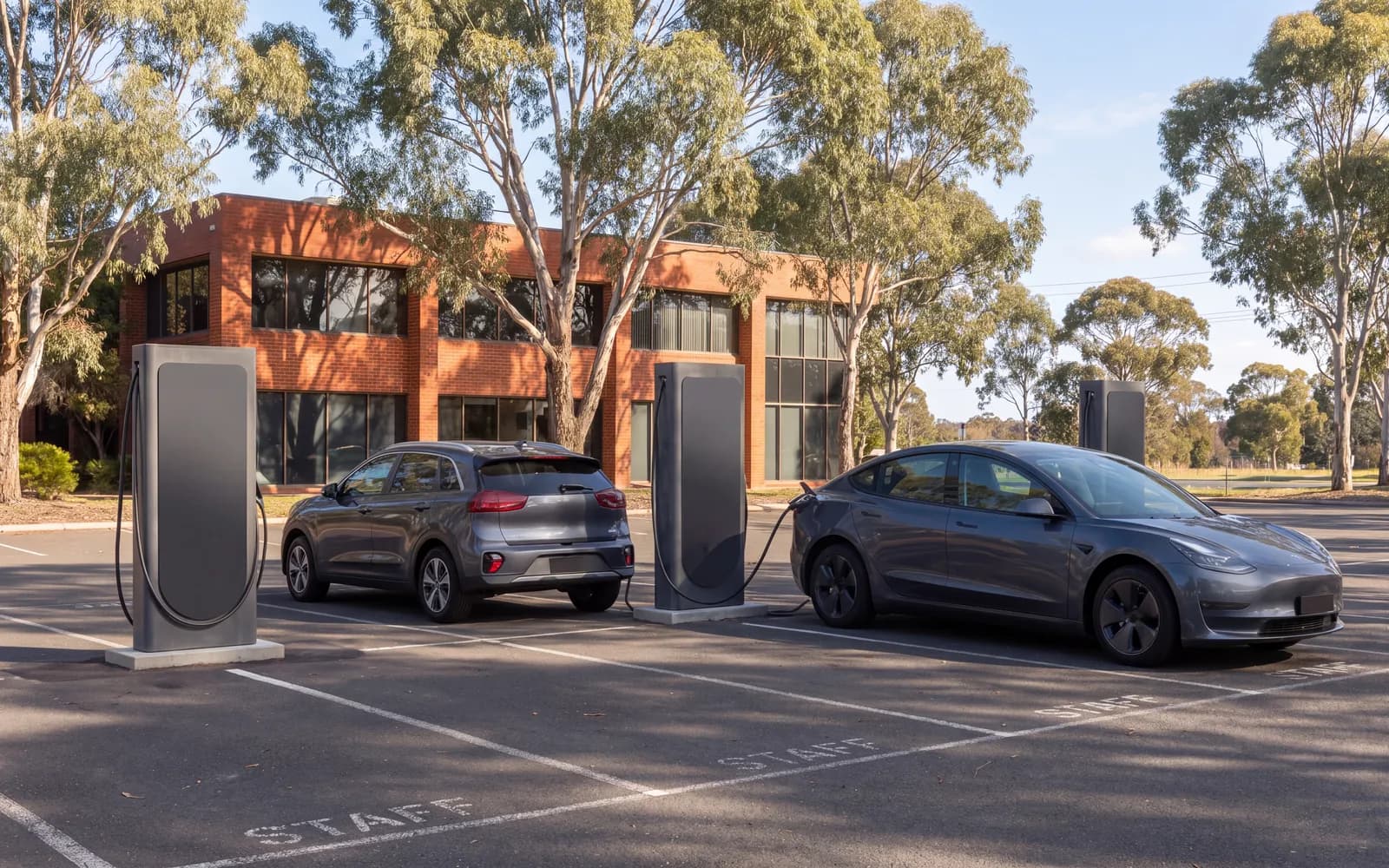
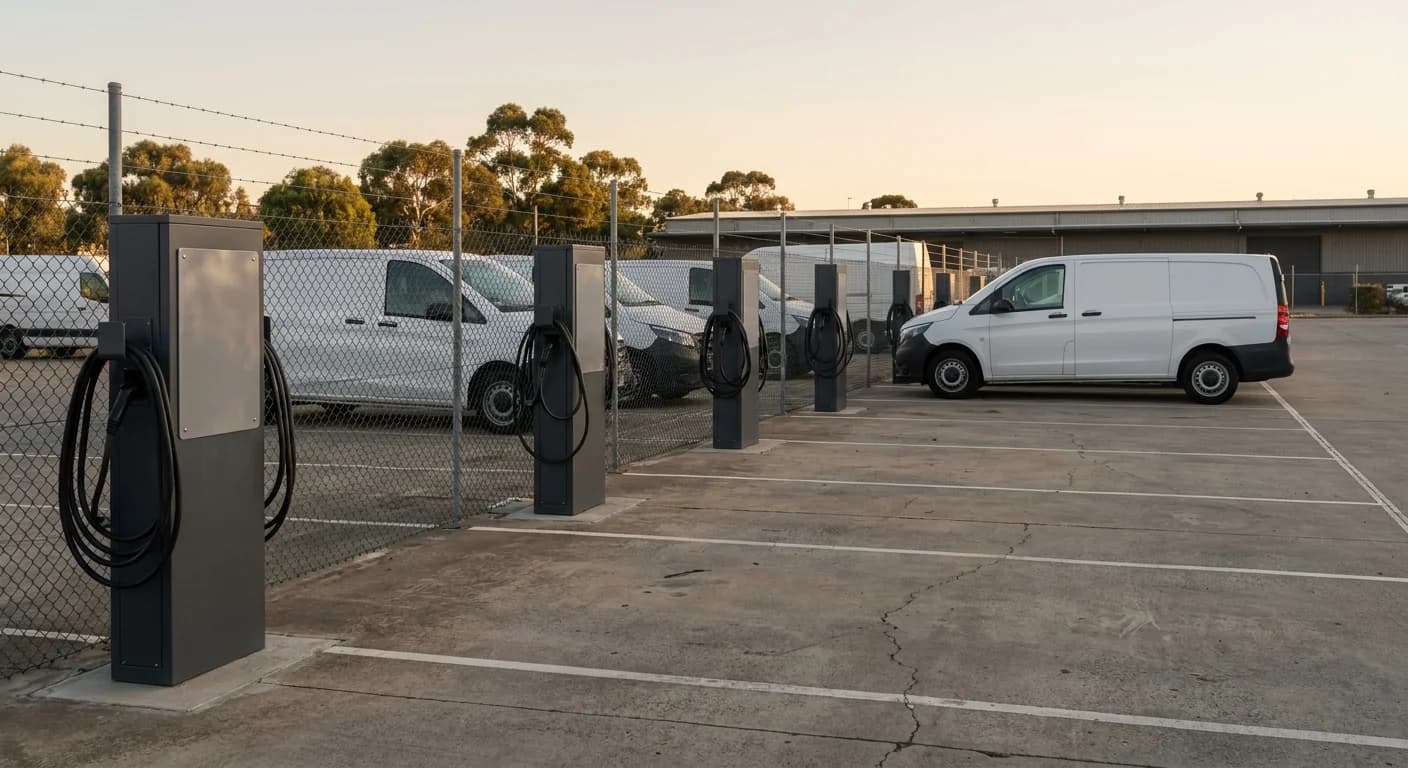
- In an open car park: standalone pedestals, underground cabling and usually some protection around the equipment.
Protect the Chargers
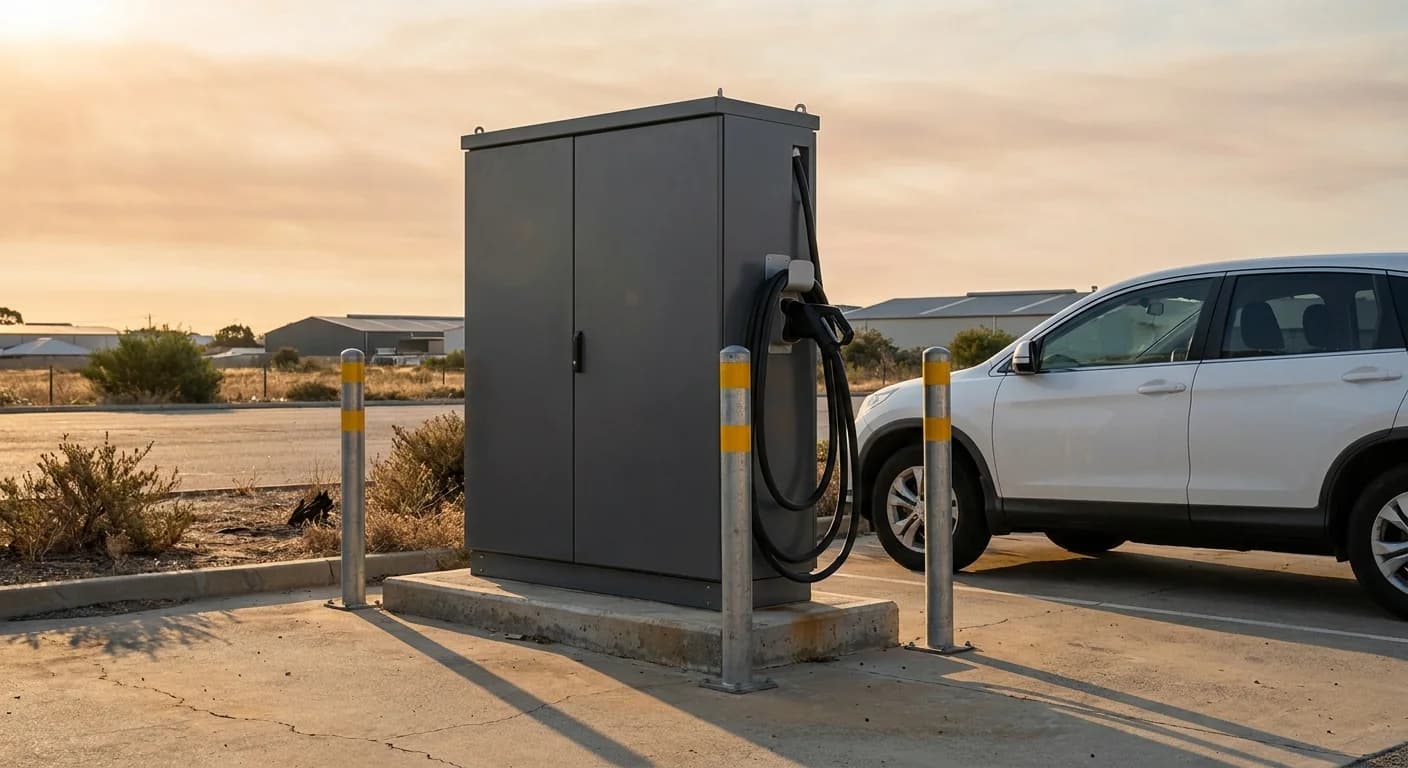
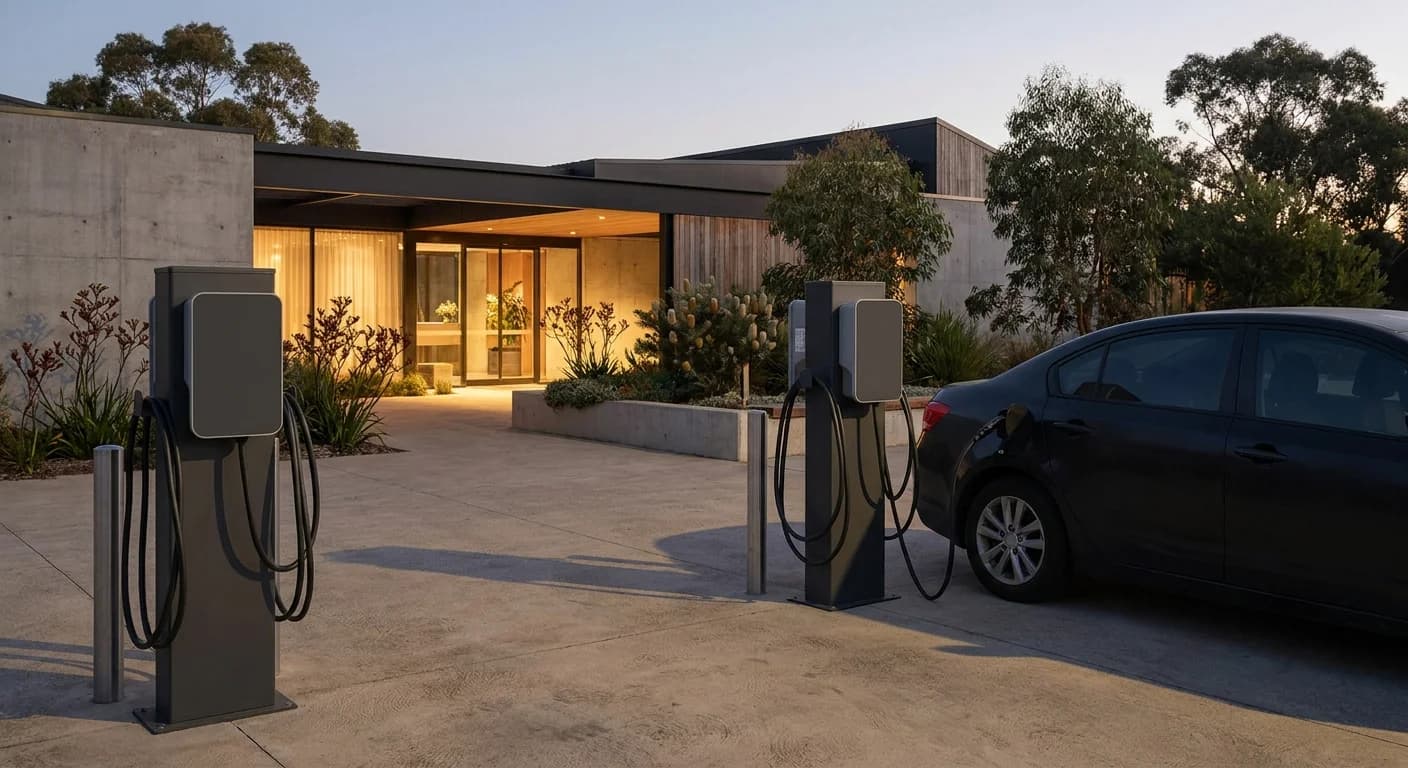
A bollard, a short steel or concrete post, is the usual way to stop a car reversing into a charger. Questions to ask at each bay:
- Could a vehicle reverse into the charger?
- Are the bays tight?
- Would bollards be sensible?
- Will charging cables create a trip hazard or block access?
- Could delivery trucks or other site traffic hit the equipment?
- Does the charger get in the way of a footpath or an accessible bay?
- Is it exposed to more vandalism than it needs to be?
Do Not Overbuild, but Leave Room to Grow
How much to build for the future depends on how certain the growth really is.
- Two EVs now, no firm plans for three years: a simple, economical install is usually right. Paying for a large future system today makes little sense when fleet plans and technology may change.
- Two EVs now, then two more every few months until the fleet reaches ten: a very different job. If you know you will need much more charging within 12 to 18 months, an EV distribution board, a main cable sized for the extra chargers, load management (which lets the chargers share the site's power) or a charging area designed to grow can avoid paying twice.
More Chargers Is Not Always the Answer
On one commercial site, the first idea was a row of seven AC chargers, the slower kind that charge a car over several hours. The chargers looked cheap, but getting enough power to the preferred spot meant major electrical and civil works.
Once we looked at the available boards, how the vehicles were used and how quickly they had to turn around, a different plan made sense: fewer bays with faster charging, placed close to the main electrical infrastructure. The business spent more on chargers, less on civil works, and ended up with a system that serves more vehicles through shorter charging sessions.
So price the whole job, including the cable route and civil works, before you compare chargers. Our guide on what commercial EV charging costs in Perth breaks down where the money goes.
The Walk-the-Site Checklist
Walk the site with these questions before you commit to any bays.
- Vehicles: how many EVs now and later, day or overnight charging, and how long they park.
- Preferred bays: why these bays? Is the reason operational, or would nearby bays work just as well?
- Security: will vehicles or chargers be exposed overnight, and is a safer area available?
- Main switchboard: where is it compared with the bays?
- Other boards: are any closer, and do they have the capacity and room to grow?
- Cable route: wall, ceiling, conduit, underground, bitumen, paving or reinforced concrete?
- Civil works: will trenching, cutting, boring or resurfacing be needed?
- Mounting: wall-mounted or a pedestal, and will it need a concrete footing?
- Protection: are bollards likely to be needed?
- Future growth: is expansion definite and soon, or only possible in a few years?
- Charging strategy: would several slower chargers or fewer faster ones suit how long the vehicles park?
- Connectivity: will the chargers need a network connection for software, reporting, billing or monitoring?
What a Site Assessment Should Give You
A good assessment compares every workable spot, including the one you first pointed at, and explains what each means for cost, convenience and growth, so you can pick what suits the business. For the bigger picture on planning a fleet, start with our guide to EV charging for business fleets in WA.
- A preferred location based on how the business operates
- Other locations, where they cut the cost or make growth easier
- The likely cable routes and civil works
- How the chargers will be mounted and protected
- How much electrical capacity is available
- Options to install now and expand later
- Where it matters, different strategies, such as several AC chargers against fewer faster ones
- Clear prices for each option