
AI overview
The right commercial EV charger is decided by how long the vehicle sits still, not by peak output. AC suits anything parked for hours; DC is for short turnarounds and costs accordingly. The software matters more than the hardware badge, because authentication, billing and reporting are what make charging accountable, and local support is what matters two years in.
Key highlights
- Dwell time picks the charger, not the spec sheet
- AC for anything parked for hours, DC for short turnarounds
- Software decides whether charging can be billed and reported
- Authentication is what stops a bay becoming a public power point
- Locally supported hardware beats a better spec with no one to call
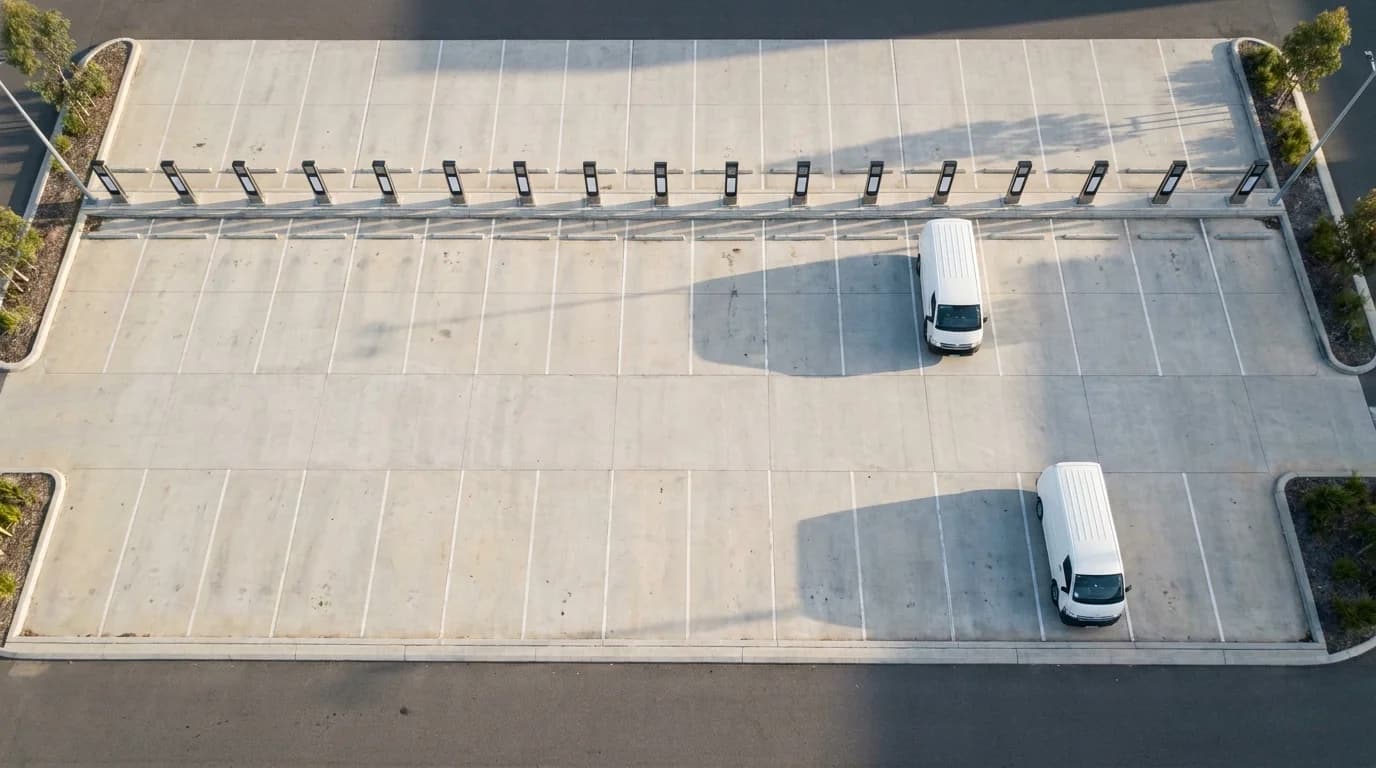
- Design for the bays you will want, not only the ones you need now
Start with dwell time
Before comparing any two chargers, answer one question: how long is the vehicle standing still?
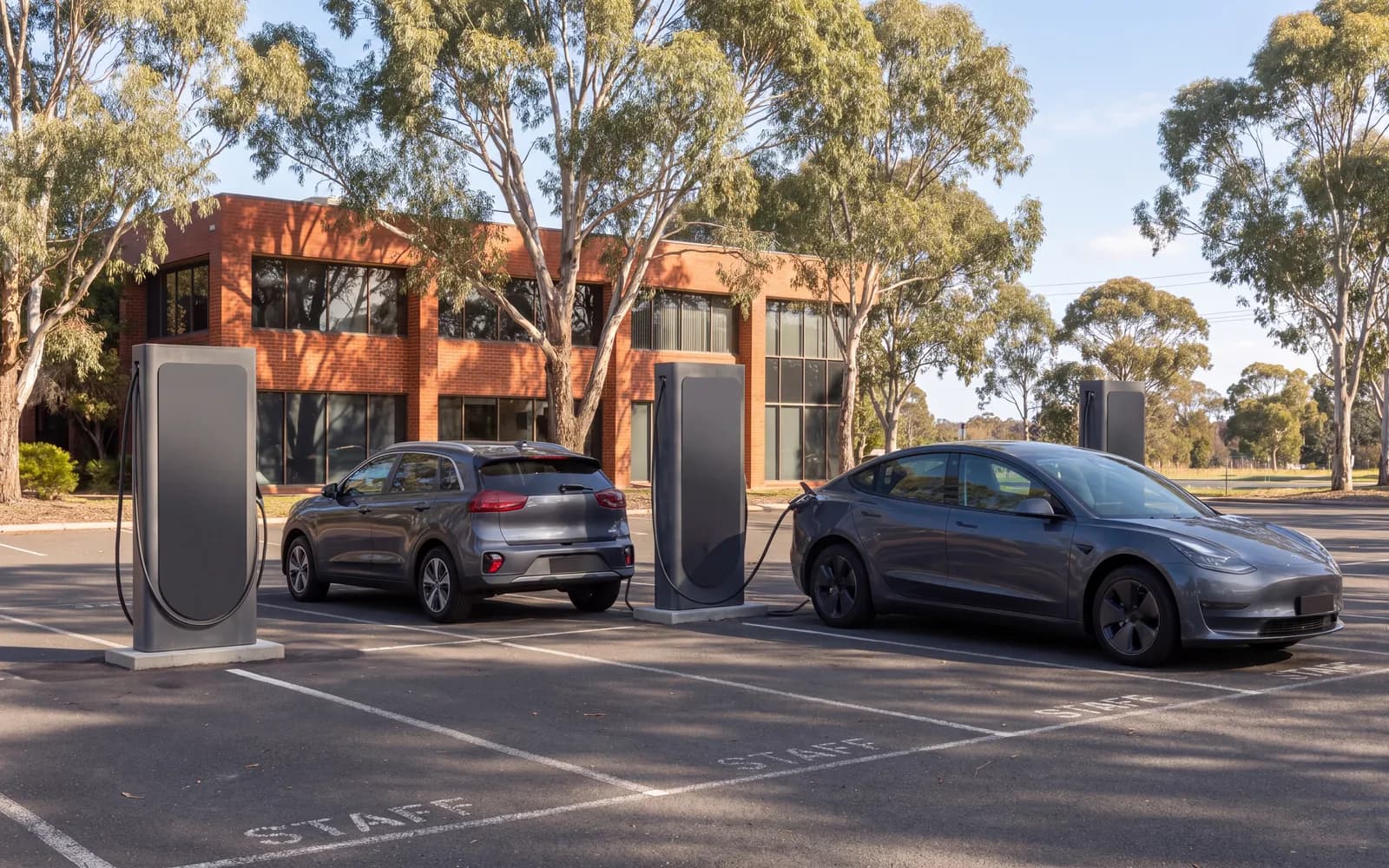
Nine hours in a staff carpark, and almost any AC charger will do the job. Ninety minutes between runs at a depot, and no amount of AC will, which puts you in DC territory whether the budget likes it or not.
Everything else in the decision follows from that number.
AC against DC, without the marketing
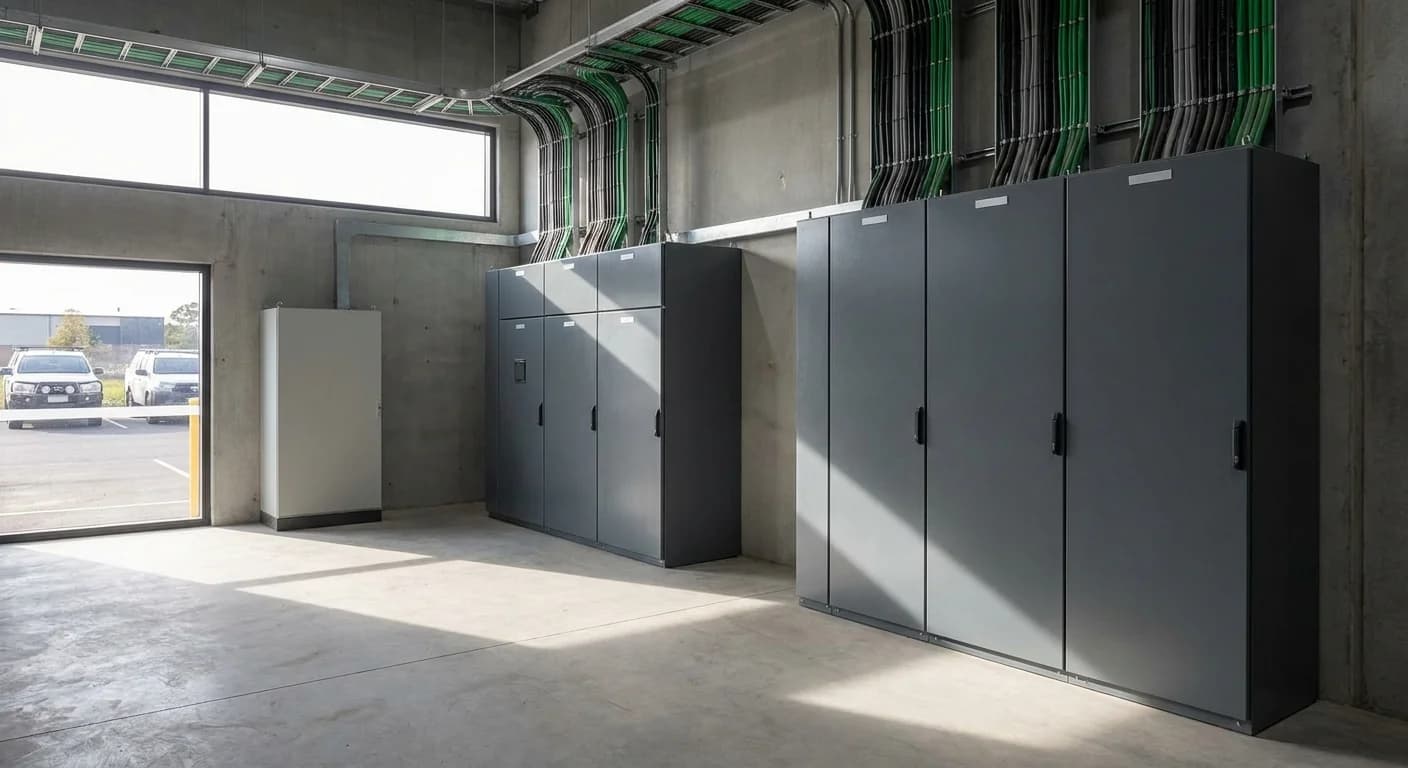
AC chargers are simple, cheap, and slow in a way that usually does not matter. DC chargers are fast, expensive, physically large, and take longer to arrive.
- AC 7kW: a single bay where a vehicle sits all day or overnight
- AC 22kW: shared bays where several vehicles cycle through
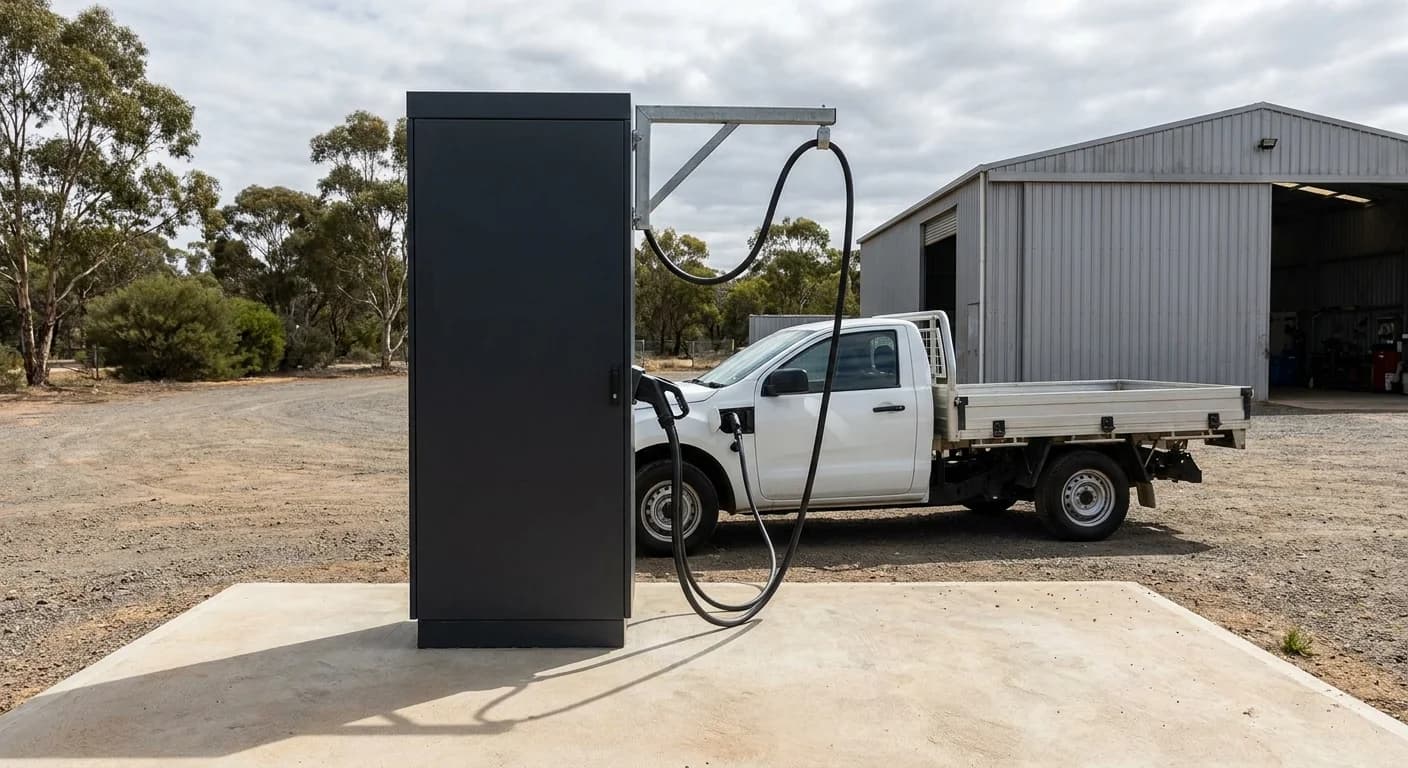
- DC: dealerships, service centres, public sites, and depots with short turnarounds
- Mixed: one DC unit for the exception, AC for everything else, which is what most sites actually need
The software is the part you live with
The hardware charges the car. The software decides whether you can tell who charged, when, how much they used, and whether anyone paid for it.
For a business, that is the difference between an asset and a liability. Without authentication, a bay on a commercial site becomes a free power point for the street. Without session reporting, staff charging cannot be recovered and resident charging cannot be billed.
We use Exploren alongside Ocular hardware, because the two are built to talk to each other and both are supported here rather than through a queue in another timezone.
What the spec sheet does not tell you
Two things, and both of them show up later.
The first is support. A charger with a marginally better spec and no local presence is worse than a slightly plainer unit someone can attend within a day. Ask who fixes it and where they are.
The second is expandability. A site that lays in the backbone and the conduit now can add bays cheaply for years. A site that solves only today's need pays for the civil works twice.