
AI overview
A business can take payment for EV charging in four main ways: through an app linked to the driver's card, with RFID cards, a card or key tag the driver taps on the charger, for staff and fleet, by tap to pay at a charger with a card reader, or through a QR code for one-off guests. Which suits you depends on who is charging. Decide that before you choose the chargers, because not every charger supports every option.
Key highlights
- Decide who will use your chargers before you decide how they pay
- Tap to pay and QR codes suit the public; RFID cards suit staff and fleet
- Tap to pay needs a charger with a card reader built in
- QR code payment lets a visitor pay once without an account
- Free charging can make sense when it brings customers in
- Plug and Charge, where the car pays for itself when it is plugged in, is coming, so ask for chargers that support its standard, ISO 15118
Start with who will use your chargers
We set up business EV charging across Perth, and it starts with who will be plugging in. Staff, a fleet, customers and the public each want to pay in a different way.
Staff and fleet drivers come back every day, so they want something fast they never have to think about. A customer or a passing driver may only charge with you once, so they need a way to pay without signing up for anything.
Most sites have a mix. A shopping centre might have staff in one corner of the carpark and the public in another. Get this clear first, because it decides which chargers you can use.
EV charging apps and platforms
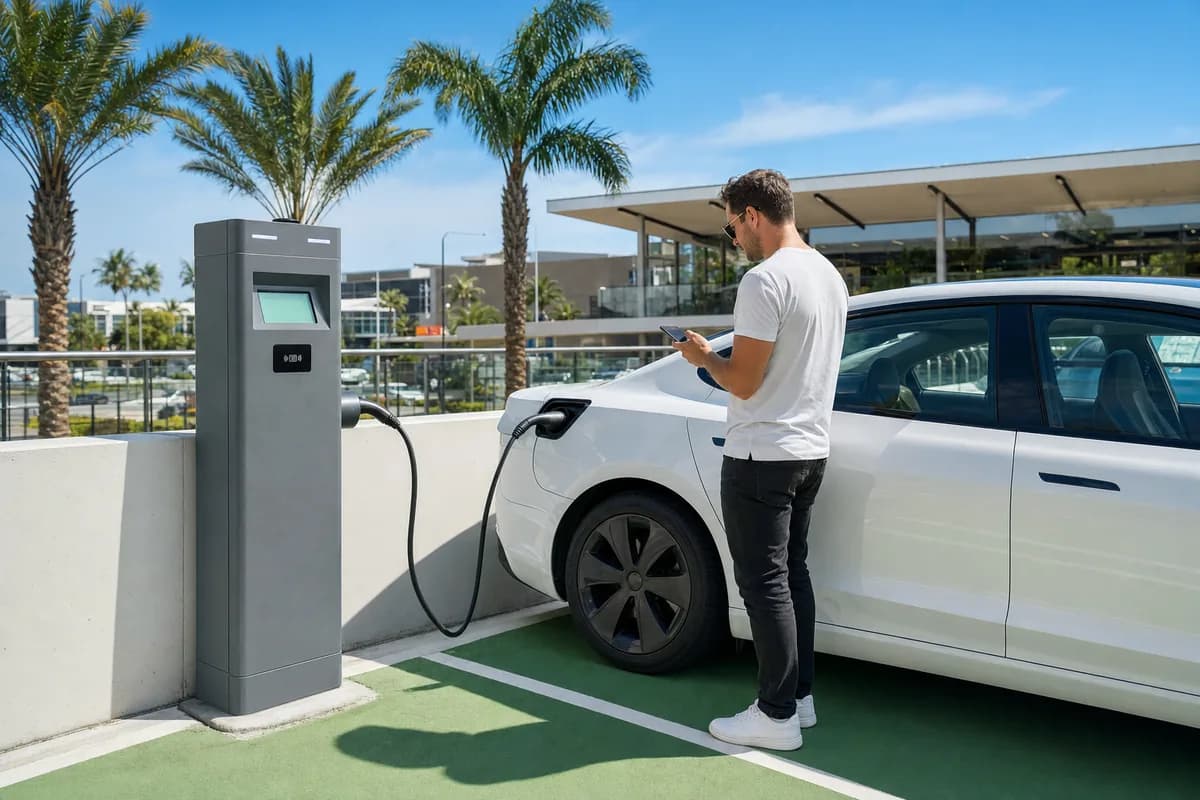
Most public charging in Australia is paid through an app. The driver downloads it, adds a card, and starts and stops the charge from their phone. The payment goes through when the session ends.
For you, the app is run by a charging platform, the software that connects your chargers to drivers. You set the price in it, and it handles the billing.
When you choose a platform, ask whether your chargers support OCPP, an open standard for connecting chargers to charging platforms. A charger that supports it can usually be moved to another platform that also supports OCPP.
The catch for drivers is that each network has its own EV charging app. Someone who has never used yours has to download it at the charger, and on a site with poor phone reception that can take a while.
RFID cards for staff and fleet charging
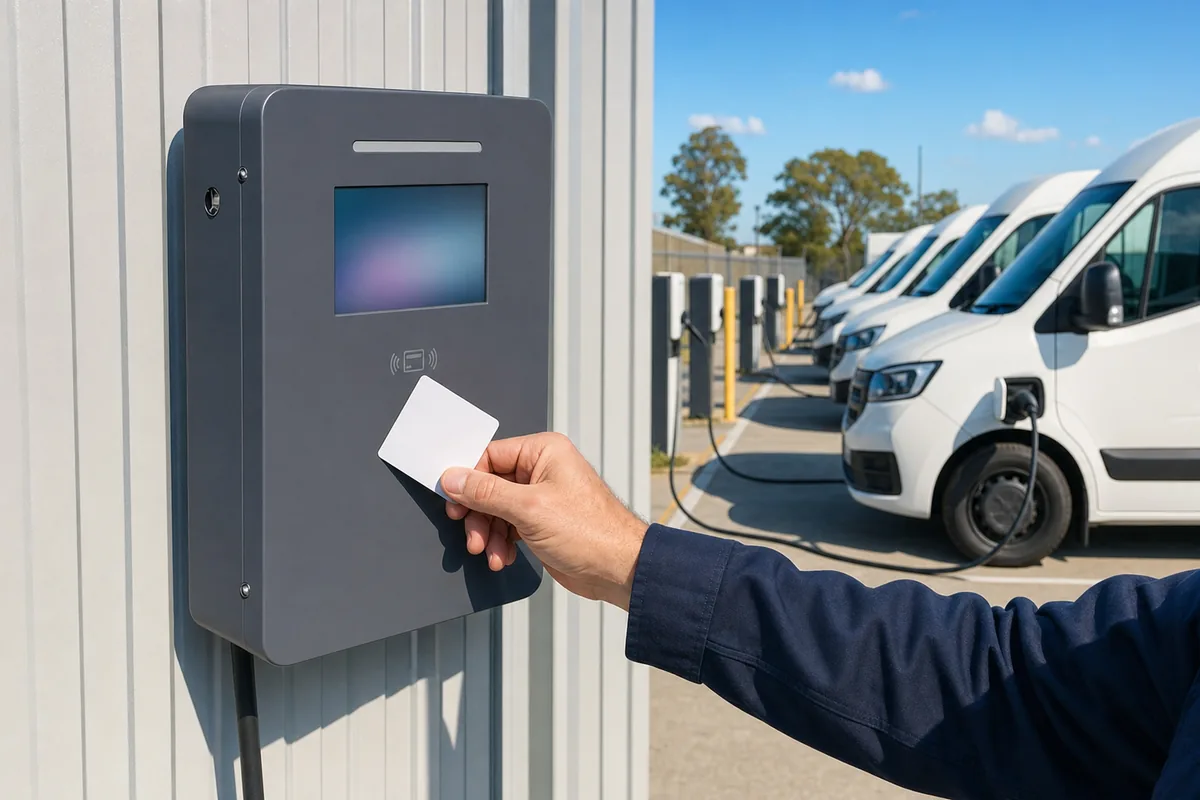
An RFID card is a card or key tag that starts a charge when the driver taps it on the charger. Each card is linked to an account, so every charge lands on the right person or the right vehicle.
This is the best fit for workplace EV charging and fleet depot charging. There is no app to open and no phone signal needed. Every charge is recorded against the card, so you get a report showing who used how much.
Tap to pay at the charger
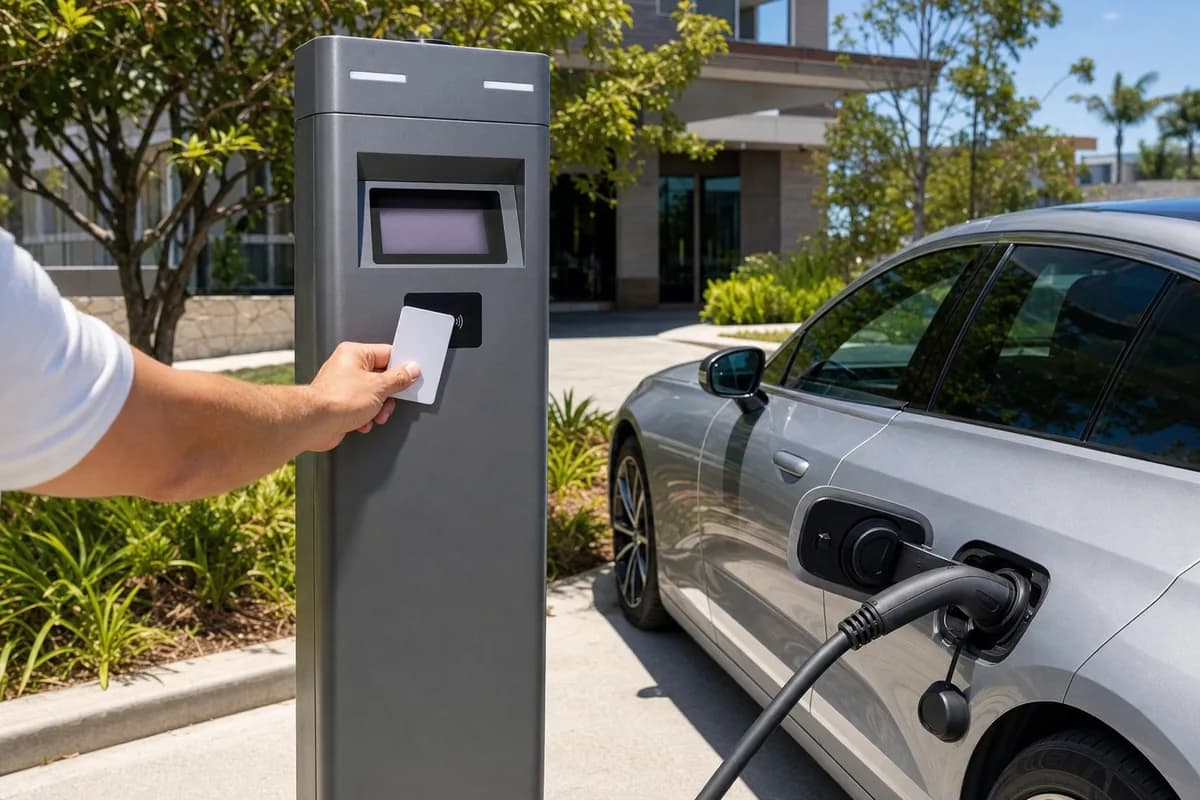
Some chargers have a card reader built in, so a driver can pay with a debit or credit card, or with Apple Pay or Google Pay, the same way they would at a shop counter. The driver has nothing to download and needs no account.
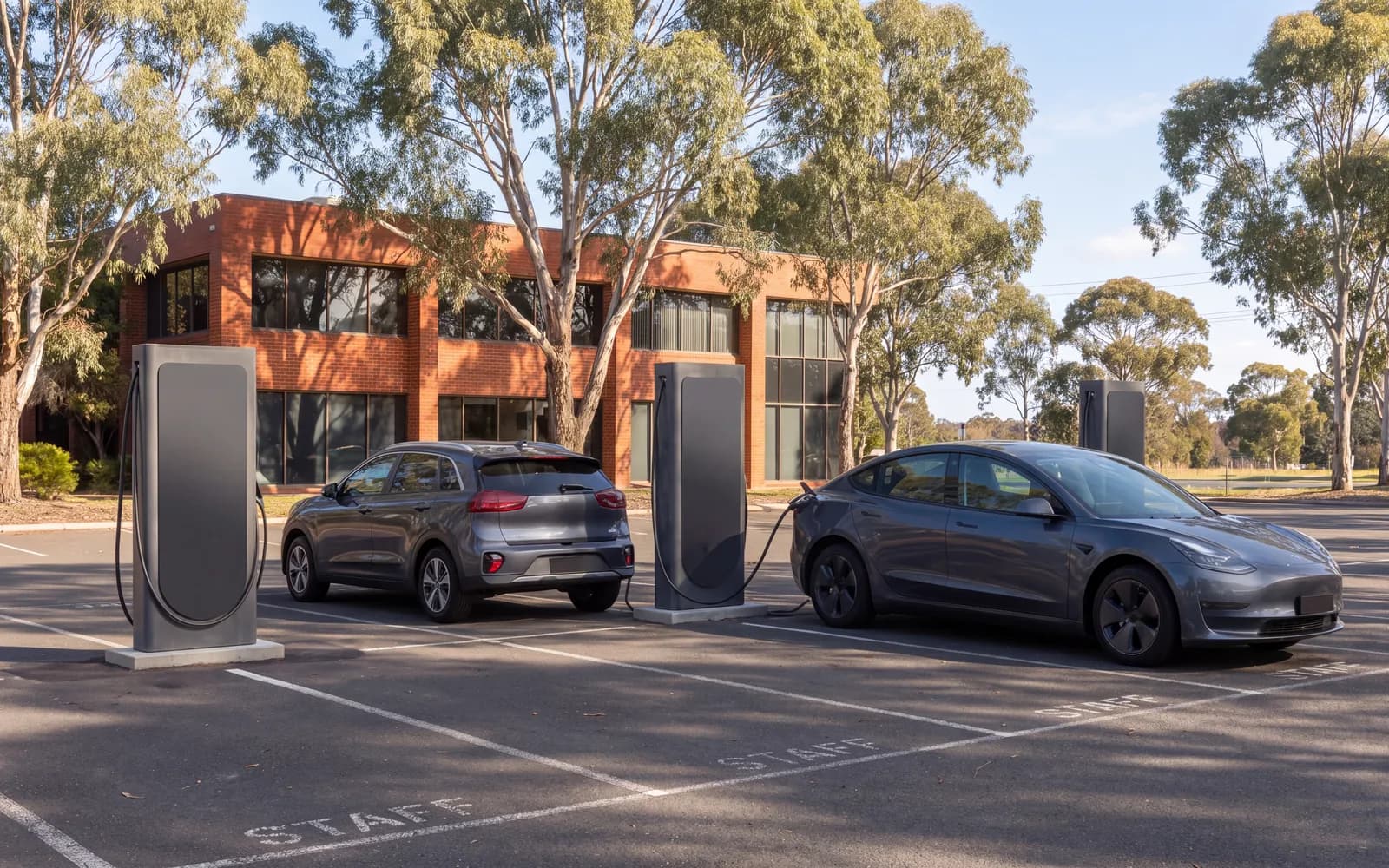
This is the easiest option for the public, but it only works if the charger has a reader. One we install for exactly this is the Ocular Charging IQ Tower. If you want customers to be able to walk up and pay, choose the charger with that in mind from the start. Our guide to choosing commercial EV chargers covers the other features to weigh up.
QR code payment for one-off guests
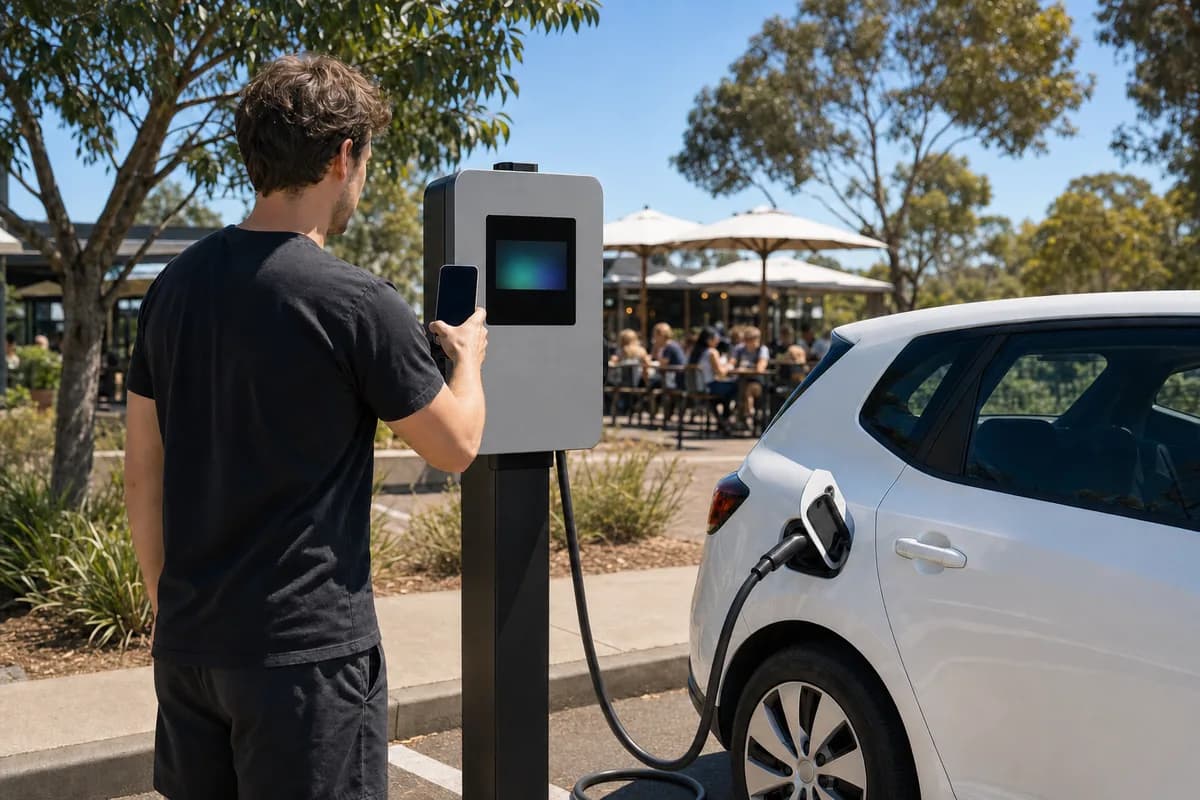
Some chargers let a driver pay once by scanning a QR code. The driver scans it, enters their card details on a web page, and the charge starts. It suits a visitor who will only charge with you once.
It takes a little longer than an app or a card, but it means nobody gets turned away because they do not have the right app.
Should you charge drivers at all?
Not every business needs to. A hotel, a cafe or a retail centre may offer destination charging free, or free for customers, because it brings people in and keeps them there longer.
Even then, it is worth putting the chargers on a platform that can switch payment on later. Free charging that gets popular can start to show on your power bill, and you want the option to set a price without replacing the chargers.
If you do charge, set the price so it covers your electricity. Some businesses also add an idle fee, a charge once a car is full but still plugged in, so bays do not get tied up.
Plug and Charge and ISO 15118
Plug and Charge lets the car pay for itself. The driver plugs in, the car and the charger identify each other, and the charge starts and is billed to the driver's account automatically. It runs on a standard called ISO 15118.
Few Australian chargers use it yet, but it is a minimum requirement for government-supported public charging, so it is where the market is heading. If you are buying chargers now, ask whether they support ISO 15118.
Setting it up
When we install your chargers, we connect them to the platform, set your prices and access rules, and test them before we leave. We also show your team how to read the reports and change the settings.
Before you buy, check the WA Government's Charge Up EV Charging Grants page. Past rounds co-funded chargers for businesses, and you can register there to hear about future rounds.
Tell us who will use your chargers and whether you want to charge for them, and we will recommend the chargers and payment setup that fit.