
AI overview
The hardware is rarely the expensive part of a commercial EV charging project. Cable distance, switchboard capacity and civil works drive the cost, and the single largest line is often a supply upgrade that is not actually needed. Load management usually removes it. Ask for an itemised proposal so you can see which line is which.
Key highlights
- Hardware is typically the smaller half of a commercial charging quote
- Distance from switchboard to bay is the cost driver nobody expects
- A supply upgrade is the line most worth challenging
- Load management is almost always cheaper than more supply
- Trenching and reinstatement can exceed the chargers themselves
- An itemised proposal is the only way to compare two quotes fairly
Why nobody can quote it over the phone
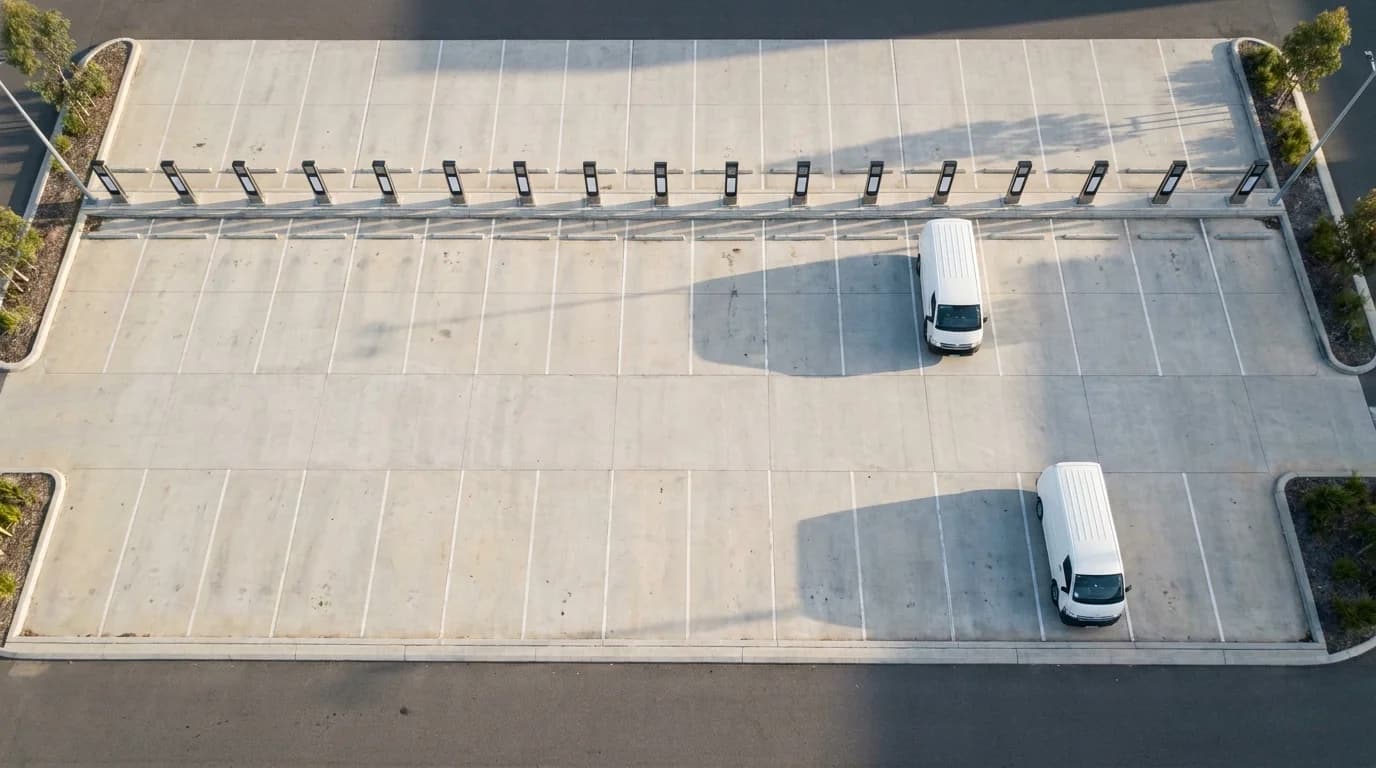
Two identical buildings on the same street can differ by tens of thousands on the same charging brief. The variable is not the chargers. It is how far the power has to travel and what stands between the switchboard and the bay.
That is why a real quote follows a site visit. Anyone giving you a number before they have seen the switchboard is guessing, and the gap between the guess and the invoice is where the arguments live.
The four things that actually set the price
Every commercial charging quote is really these four lines wearing different names.
- Cable run. The distance from the board to the bay, and whether it can be surface mounted or has to go underground.
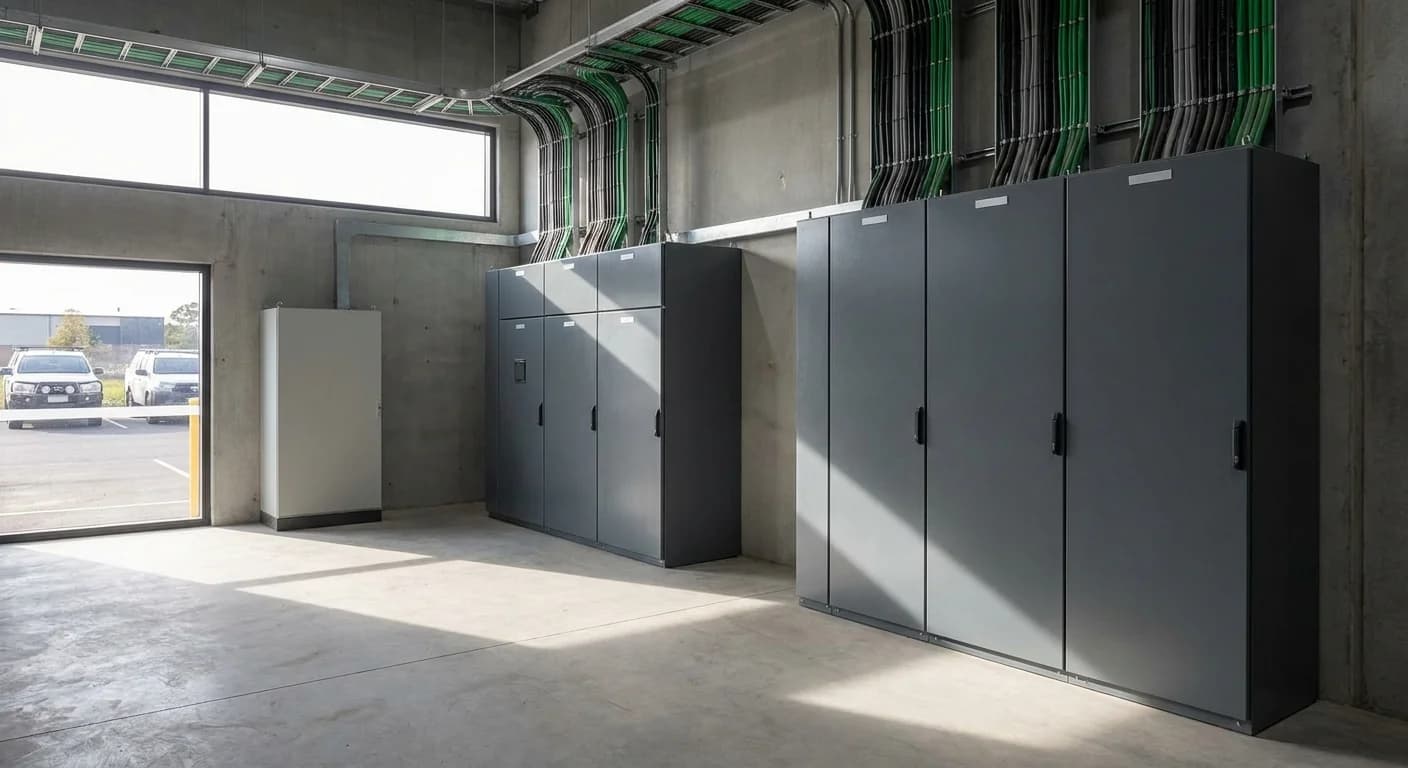
- Switchboard capacity. Whether there is a spare way and enough headroom, or whether the board needs work first.
- Civil works. Trenching, saw cutting, bollards, line marking and making good afterwards.
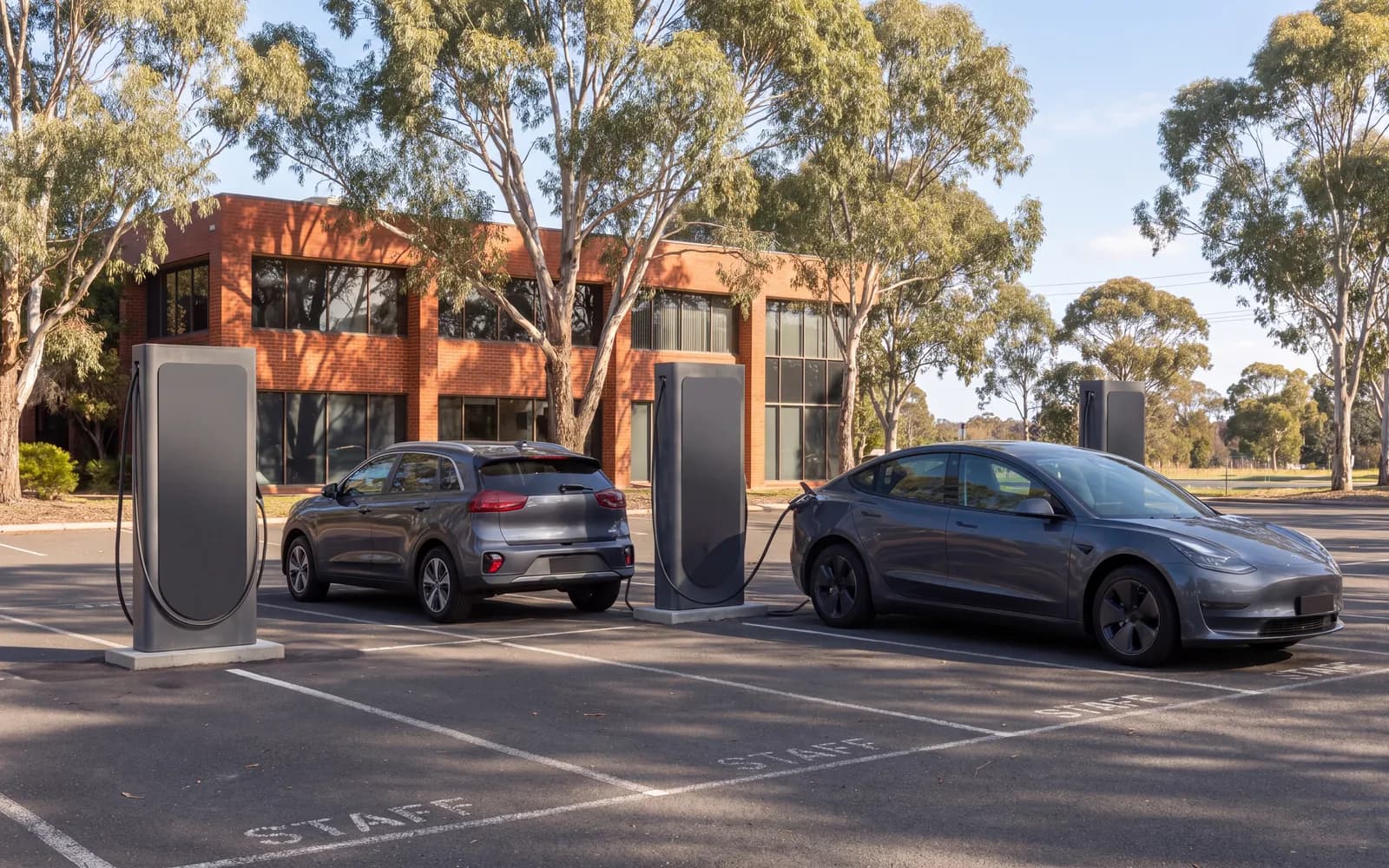
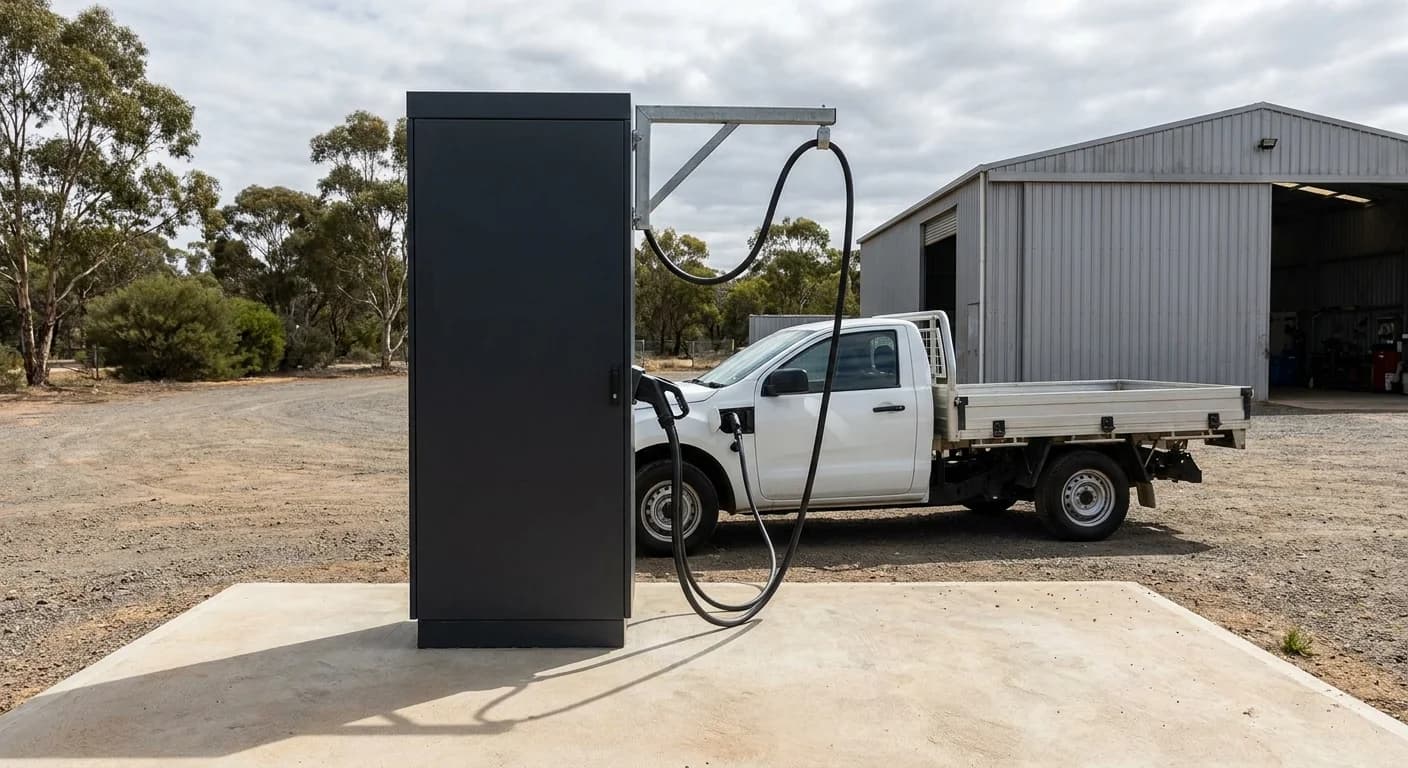
- Hardware and software. The chargers themselves, the licences, and the commissioning.
The line worth challenging
If a proposal carries a supply upgrade, treat it as a question rather than a conclusion. Upgrading a service is one of the most expensive things you can do to a commercial site, and it is frequently avoidable.
The alternative is control. Chargers that talk to each other and to the building can share the capacity that already exists, backing off when the building needs the power and catching up overnight. Vehicles are parked far longer than they need to be charging, so in practice nobody notices.
Before you accept an upgrade, ask whether the site is short of power or short of control. Most are short of control.
Where the money is well spent
Two places. The first is the design, because a backbone sized for where the site is heading turns every future charger into an addition rather than a second project.
The second is what happens after commissioning. A warranty on parts and labour covers the first couple of years; a service level agreement sets how fast someone is on site after that. On a site where charging is operationally critical, that response time is worth more than a discount on the hardware.
How to compare two quotes fairly
Ask both for an itemised proposal. Not a single figure, but the hardware, the software, the electrical work, the civil works, the timeline, the warranty and the service tier as separate lines.
Then compare like for like. A cheaper quote that assumes surface mounted cable where the other assumes trenching is not cheaper, it is a different job.