Destination EV Charging in Perth
Hotels, retail and venues
Destination EV charging for Perth hotels, retail and clubs, installed where a customer already parks.
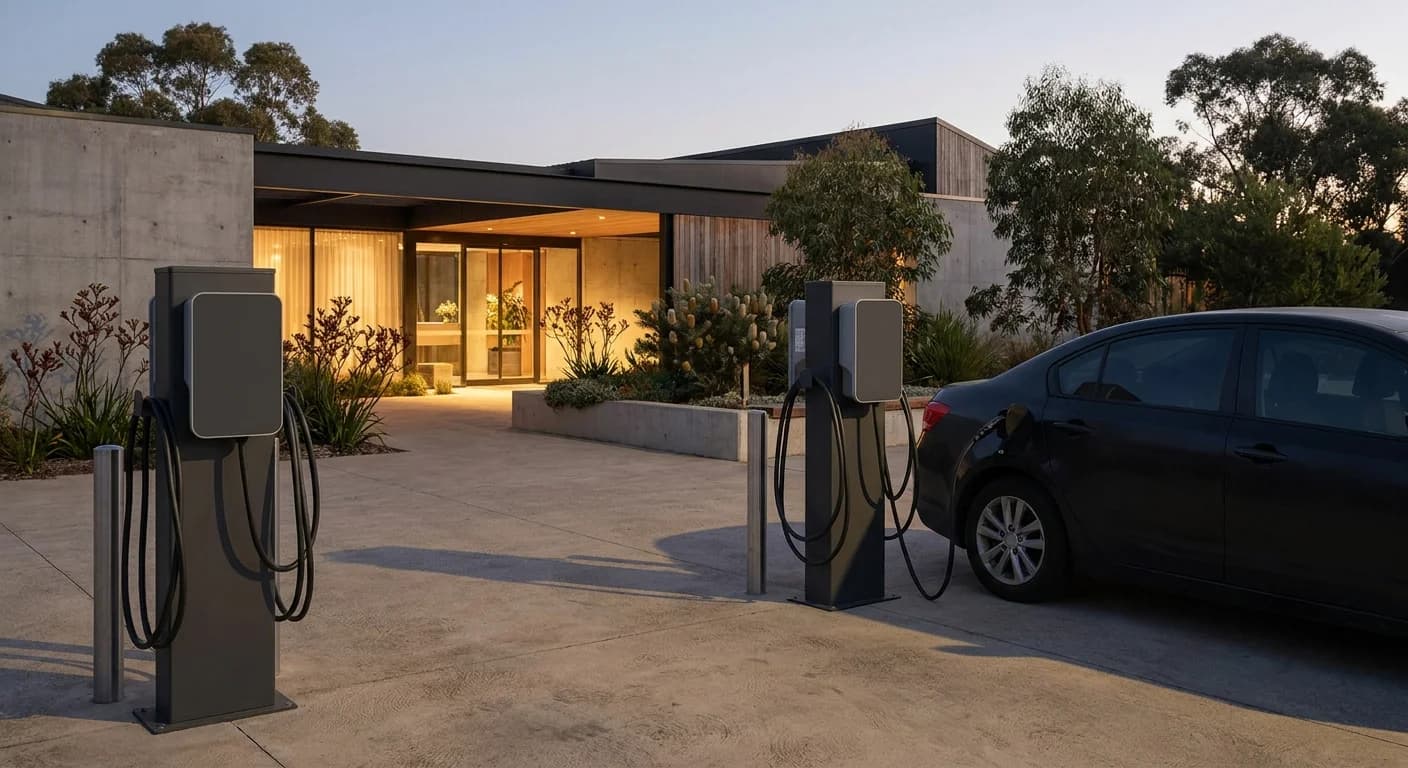
- Typical hardware
- Ocular AC, DC where dwell time is short
- Access control
- Guest, member or public
- Monitoring
- Remote fault alerting
- Support
- Bronze, Silver or Gold SLA
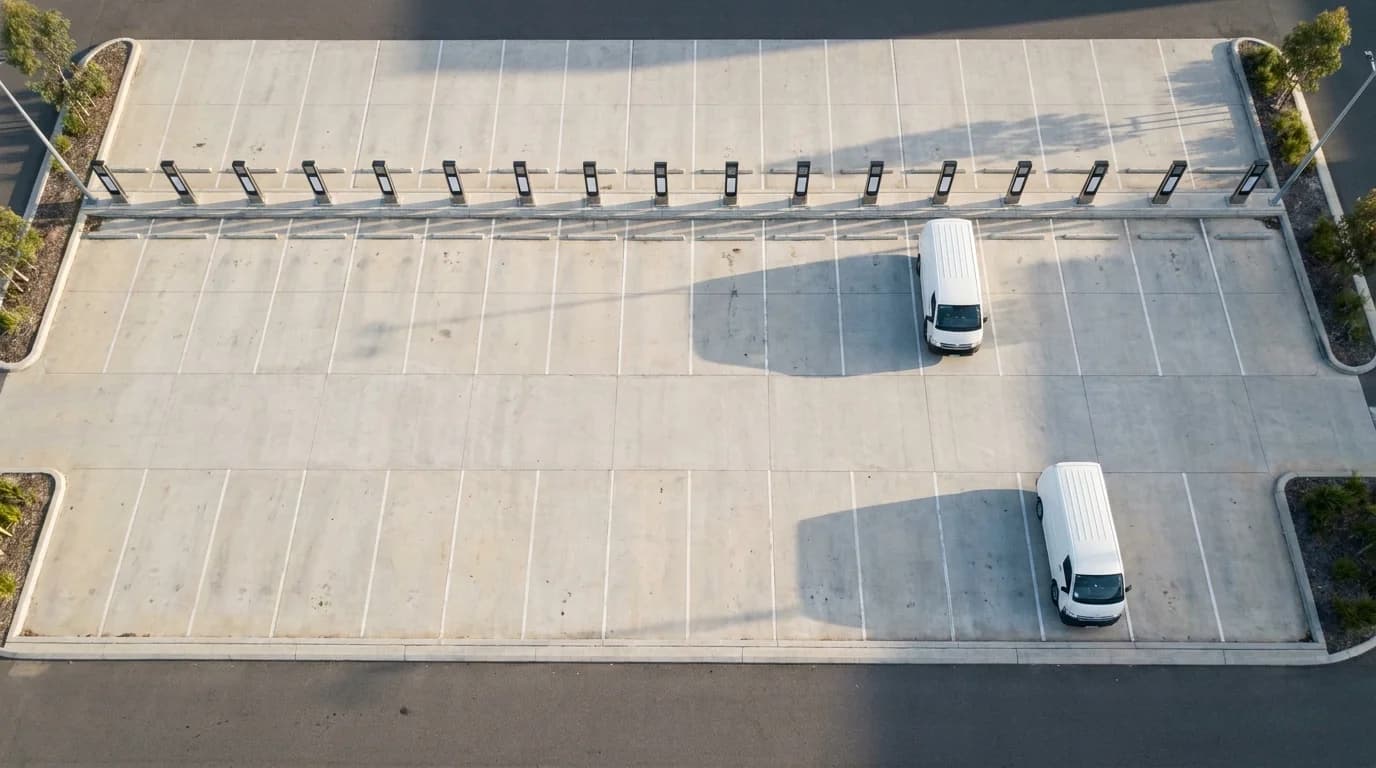

How a destination charging install runs
Five steps, site visit to first guest.
- 01
Site visit
Supply, guest parking and the sight lines on arrival.
- 02
Placement
Bays sited where a guest arriving in the dark will see them.
- 03
Proposal
Hardware, access rules and service tier, itemised in one price.
- 04
Install
Licensed electricians, and a Certificate of Electrical Safety on completion.
- 05
Commission
Guest access is set up and remote monitoring is switched on.
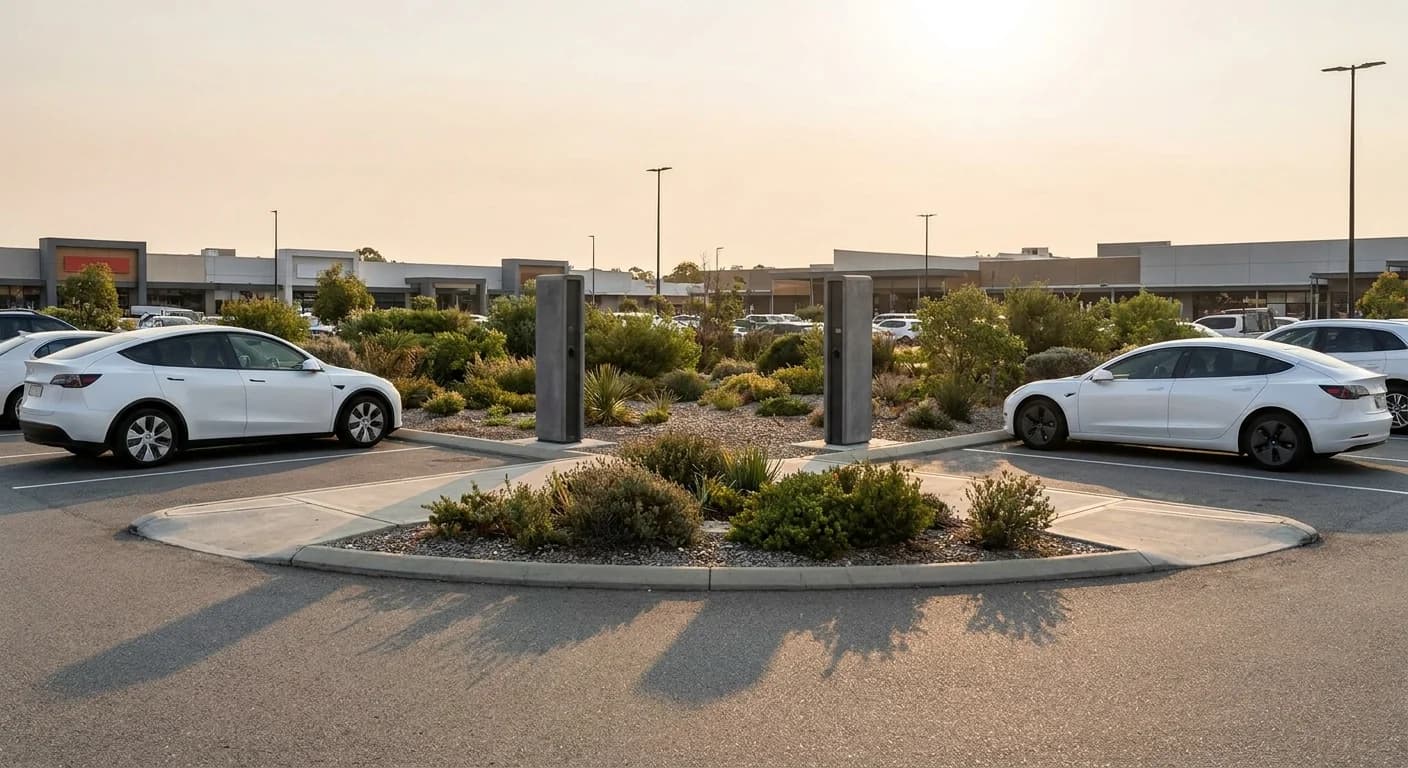

What a destination charging install includes
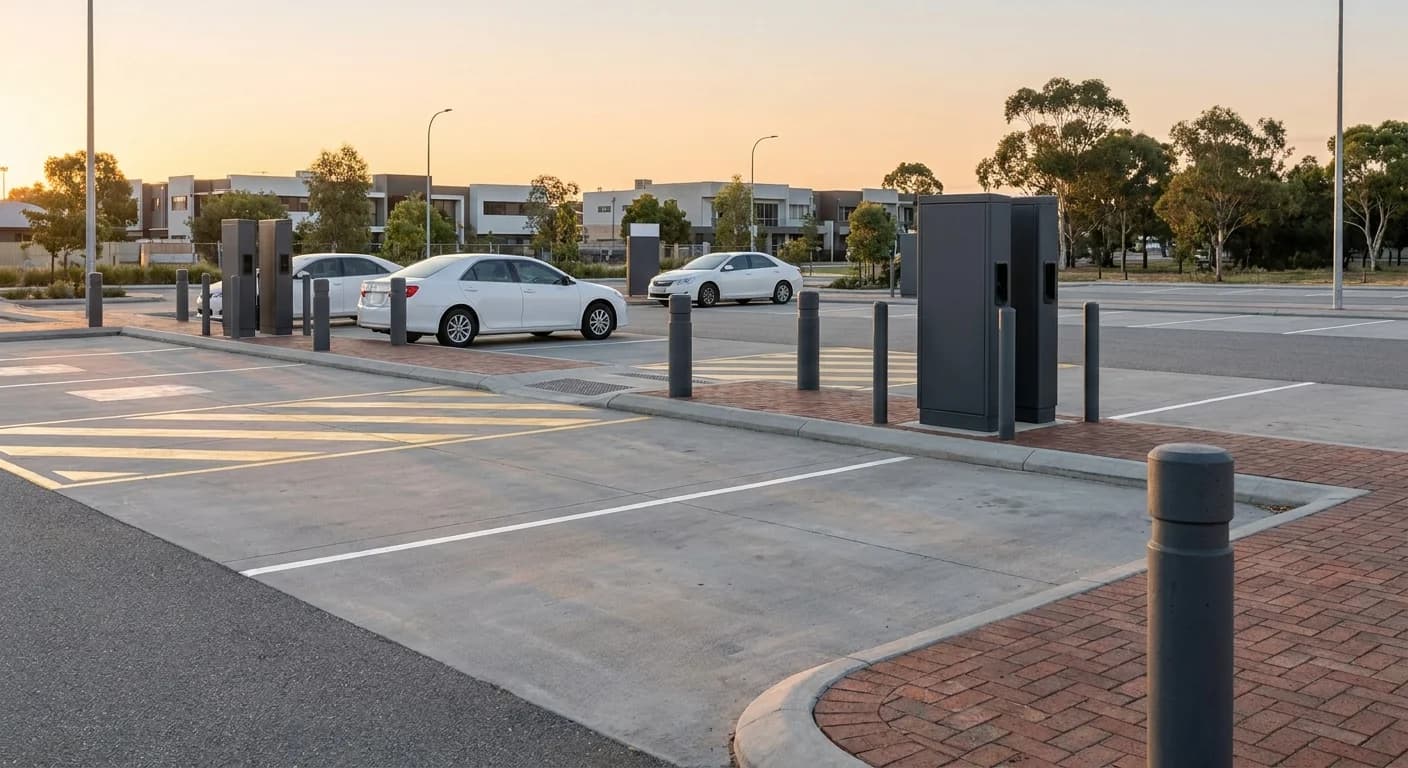
Included

Site visit, supply and sight lines
Placement chosen for arriving guests

Itemised proposal, hardware and access rules

Switchboard work, mounting and chargers

Guest or member access, billing if you want it

Remote monitoring and two year warranty
Book a site assessment
We look at the supply before anything is quoted. 2 years on parts and labour.

The guest is staying anyway.
Dwell time
A hotel guest overnight: plugged in from 4pm to 10am, 18 hrs in total, of which 5 hrs is spent charging, leaving 13 hrs spare.
- Plugged in
- 18 hrs
- Actually charging
- 5 hrs
- Spare
- 13 hrs
The guest is staying anyway. The charger does not need to be fast.
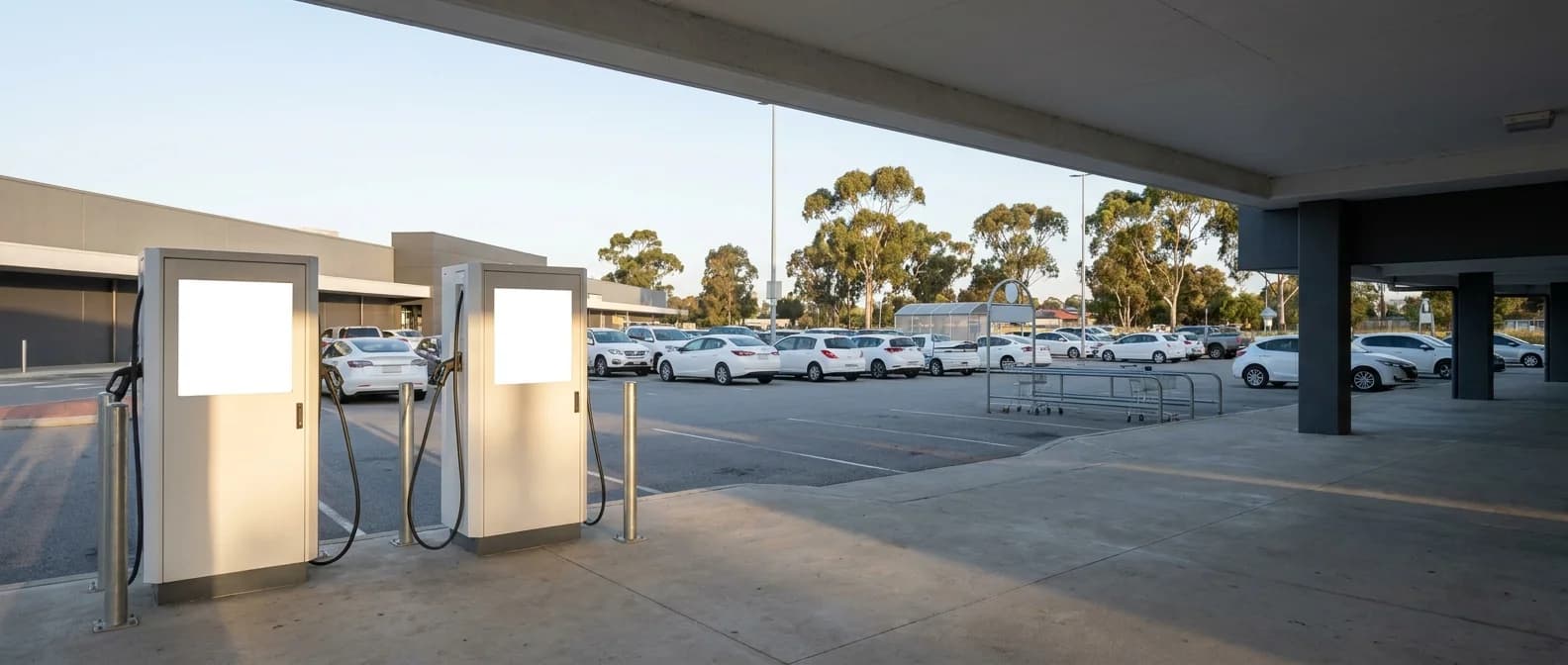

Destination charging across the Perth metro.
Where we work
Your charging peak is also your building's peak
Worth knowing
A hotel, a club or a shopping centre fills in the evening, and that is exactly when the building's own load is highest. Charging added to that hour is added to the worst hour, which is why a destination site is sized against measured maximum demand rather than against the number of bays anyone would like.
The wiring rules require each charging point to have its own circuit and protection, so the bays are a distinct load a contractor can measure and control, not a general power circuit. Held below the site's existing capacity, the bays and the building coexist on the connection already there.
Source: AS/NZS 3000:2018 Wiring Rules, Appendix P.
Destination charging questions
Questions
Tap a question to open it.
01Should destination charging be free for guests?
That is your call and both work. The software supports free access for authenticated guests, paid access, or free up to a limit. What matters is choosing before the units go in.
02How many bays does a hotel need?
Fewer than most people expect at first, but the number grows. We size the first bays to current demand and lay the infrastructure so the next ones are quick.
03Where should the bays actually go?
Somewhere a guest arriving in the dark will see them without being told. Visibility does more for uptake than output does, and a bay tucked behind the bin store gets used by nobody.
04Can we stop people who are not guests using them?
Yes. Access can be tied to a booking, a membership or a card, or opened to the public with payment. The point is to choose deliberately, because an unauthenticated bay on a main road becomes free power for the neighbourhood.
05Should we appear on the public charging maps?
If you want the traffic, yes, and it is one of the better reasons to install. A charger listed on the maps puts your venue in front of people planning where to stop.
06What does it cost us to run?
The energy, and not much else. Whether you absorb that as a guest service or recover it through the software is your call, and both are supported. Decide before the units go in.
07What about accessible bays?
They need space to the side of the vehicle, not just in front of it, and the charger has to be reachable from a seated position. It is straightforward when it is designed in and expensive when it is retrofitted.
08Do we need signage?
Yes, and it earns its keep. Clear bay marking stops petrol cars parking in them, which is the single most common complaint about destination charging.
More on commercial EV charging in Perth, or see the areas we install across.
Let us look at your site.
We assess the supply, the vehicles and the timeline, then put an itemised proposal in front of you.