Strata and Apartment EV Charging in Perth
Strata and developers
Strata and apartment EV charging across Perth, built as shared infrastructure a building can add bays to later.
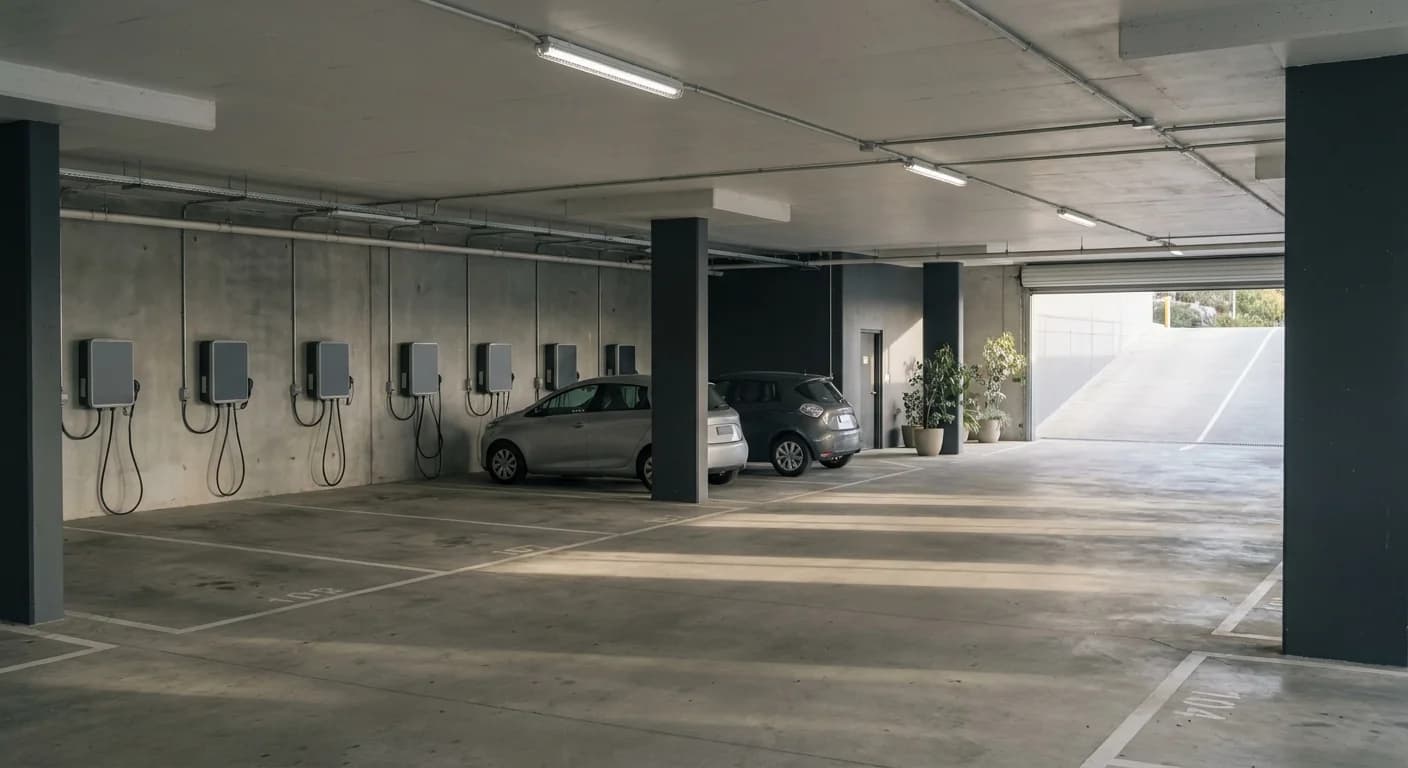
- Structure
- Shared backbone, metered bays
- Billing
- Individual, per resident
- Expandable
- Yes, designed for it from day one
- Warranty
- 2 years parts and labour
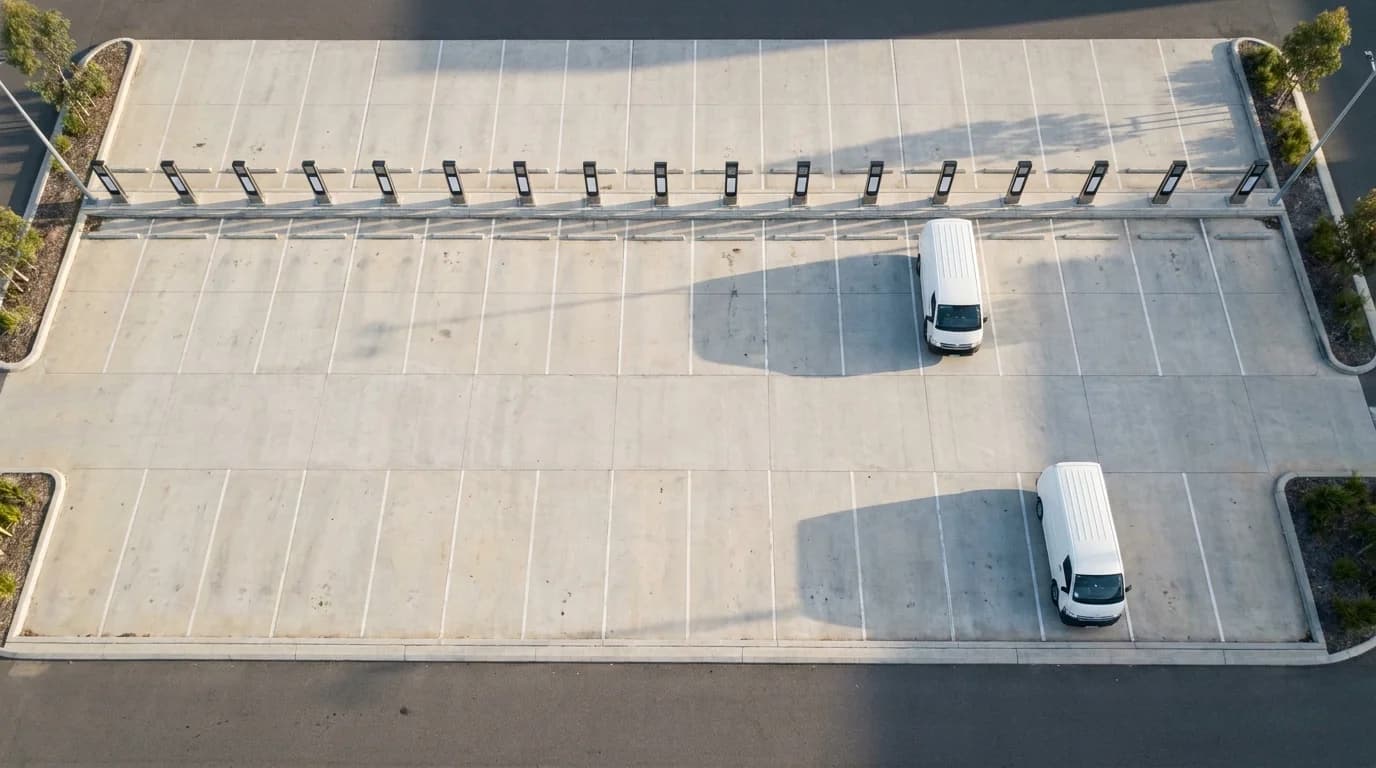

How a strata EV charging install runs
Five steps, first meeting to the first bay.
- 01
Site visit
Building supply, basement cable routes and where the bays go.
- 02
Load assessment
We work out what the building can carry overnight.
- 03
Committee proposal
A design and a price the committee can actually vote on.
- 04
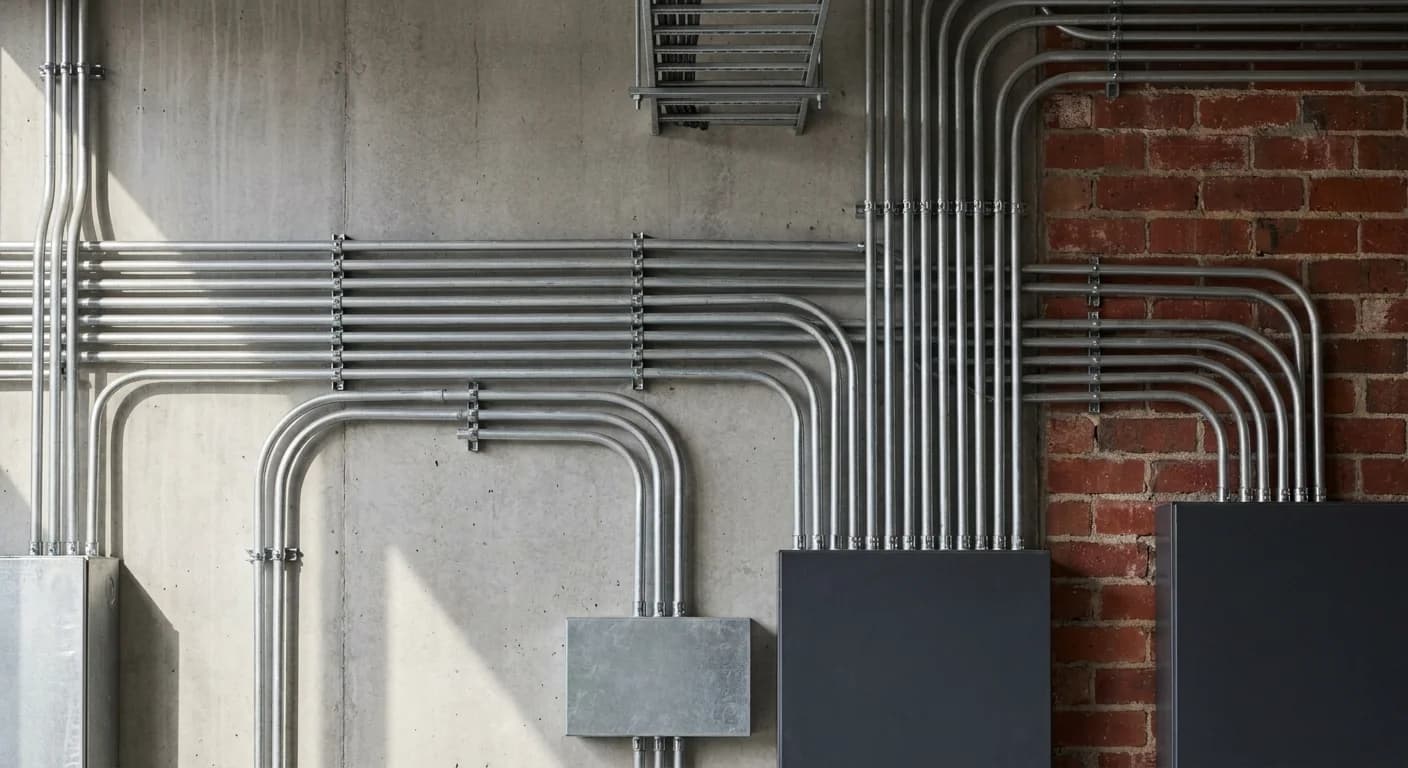
Backbone install
One shared run the building owns, sized for every future bay.
- 05
Bay connections
Each bay is metered to its resident and added one at a time.
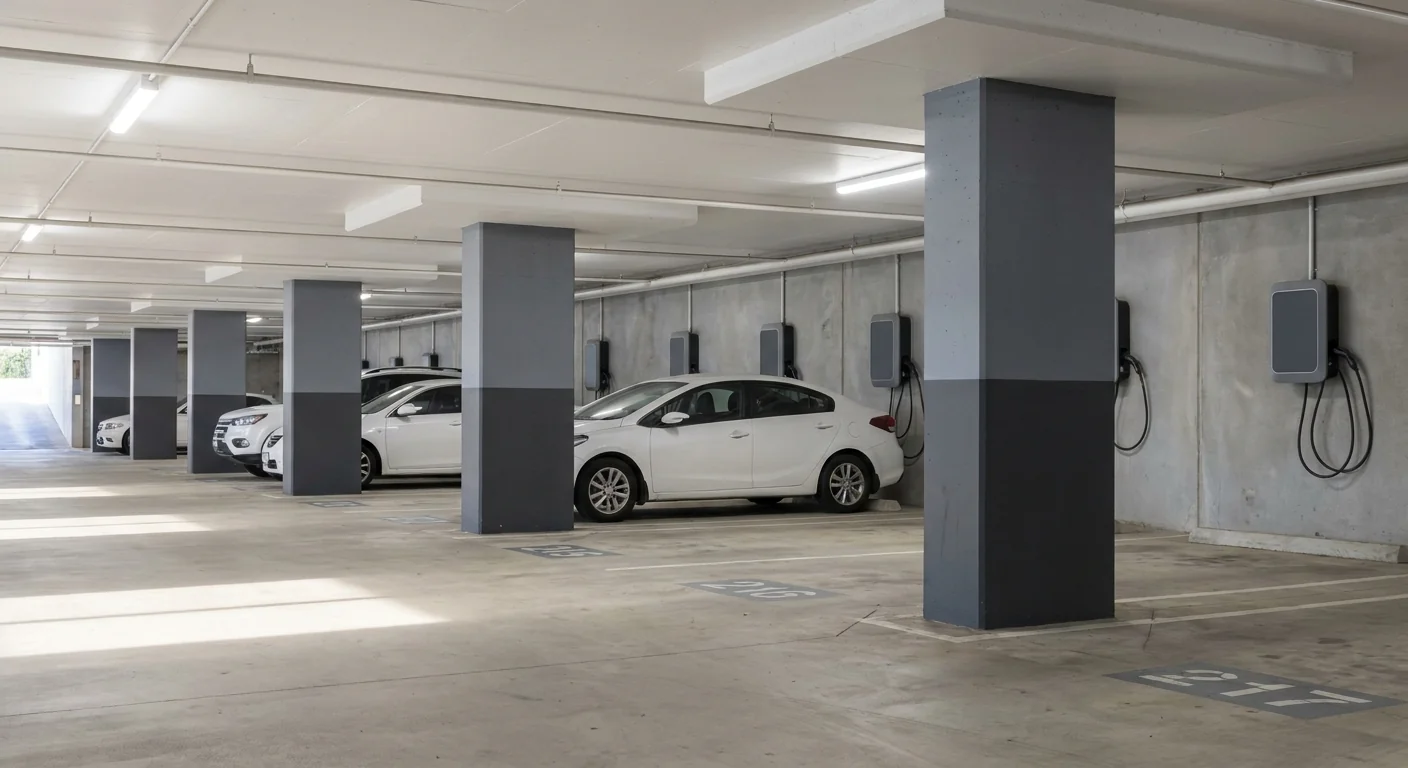
What a strata charging install includes
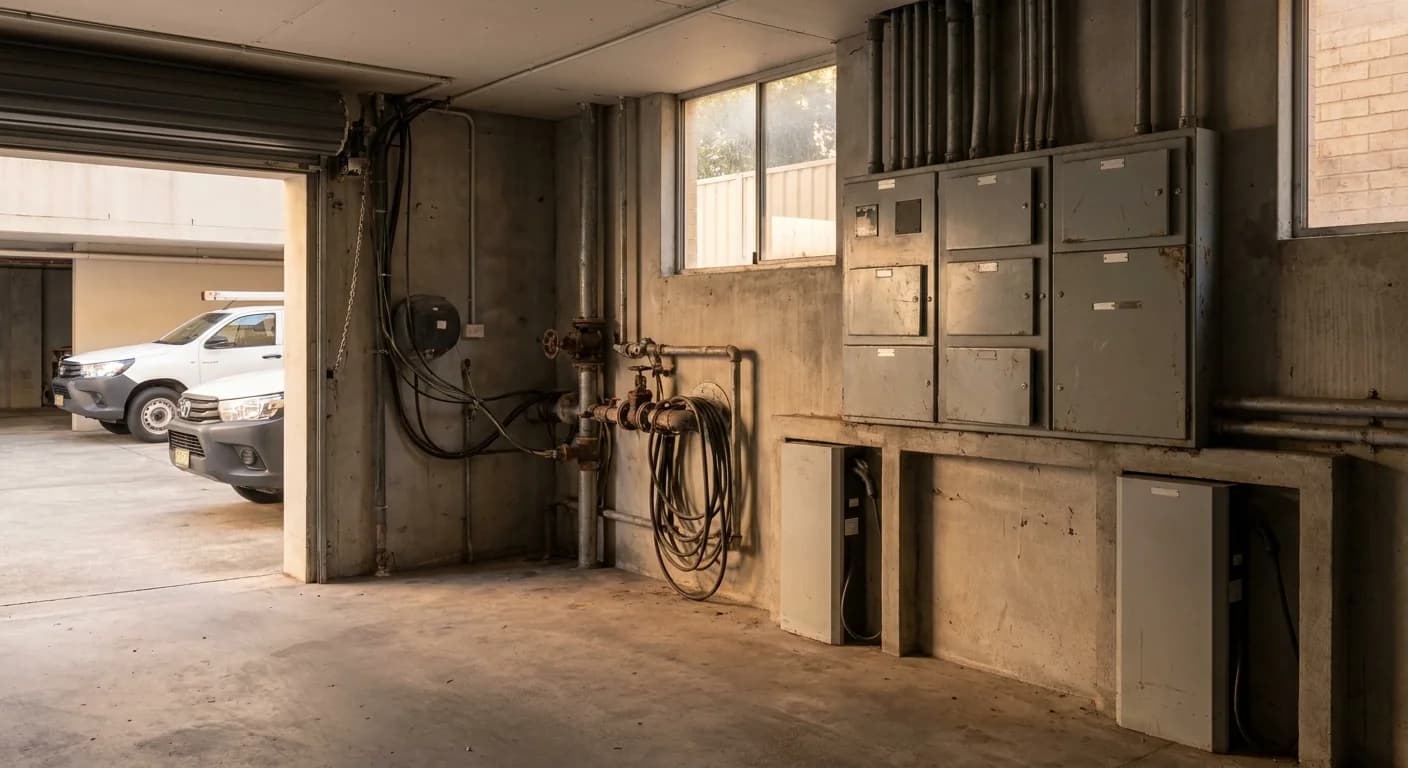
Included

Site visit and building load assessment

Shared backbone designed for every future bay

Proposal written for a committee vote

Backbone install on the common property side

Individual metering, resident by resident

Certificate of Electrical Safety and two year warranty
Book a site assessment
We look at the supply before anything is quoted. 2 years on parts and labour.

Thirteen hours parked. Four hours of charging.
Dwell time
A resident's car overnight: plugged in from 6:30pm to 7:30am, 13 hrs in total, of which 4 hrs is spent charging, leaving 9 hrs spare.
- Plugged in
- 13 hrs
- Actually charging
- 4 hrs
- Spare
- 9 hrs
Thirteen hours parked. Bays can share the building's supply and still finish.
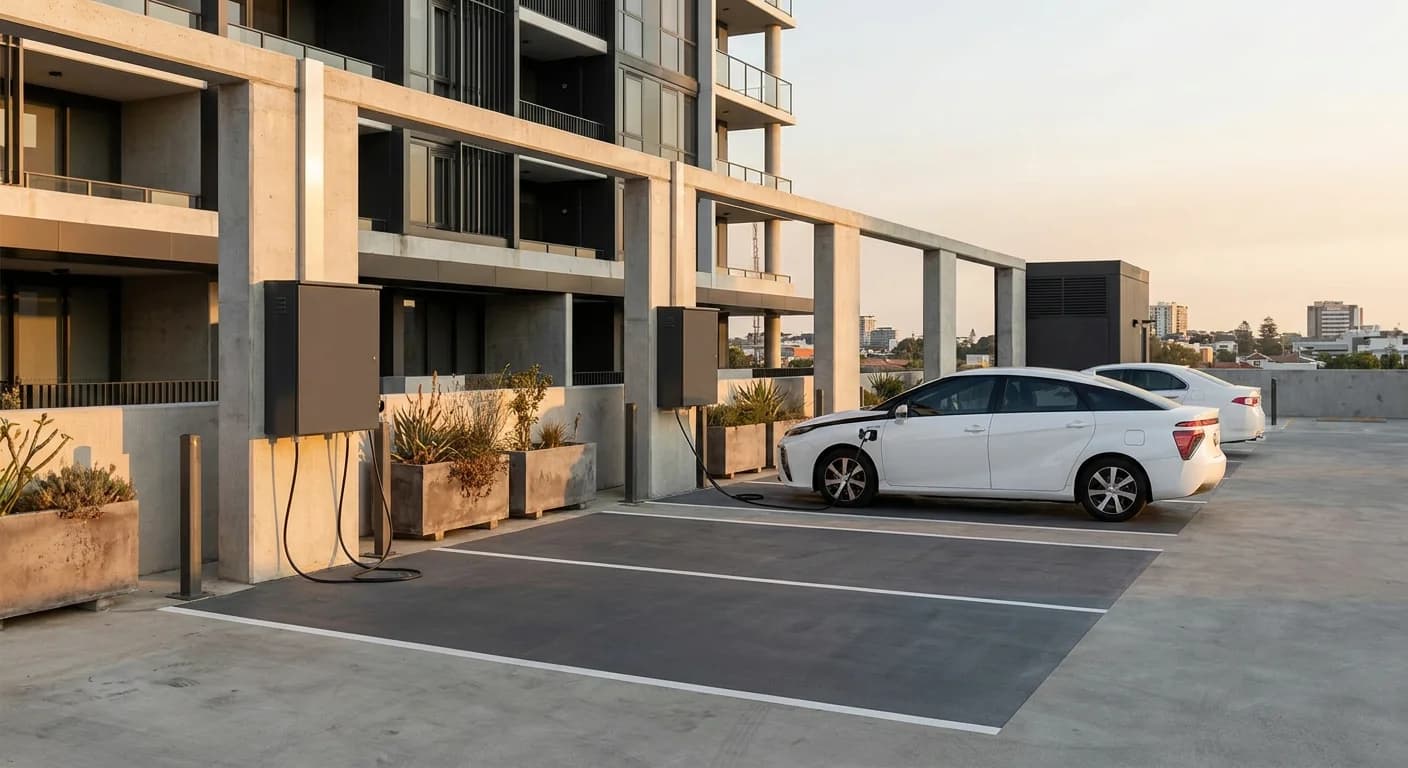

Strata and apartments across the Perth metro.
Where we work
Two approvals, not one
Worth knowing
A strata job has an electrical approval and a strata one. Bays and cabling on common property are the owners corporation's decision under the Strata Titles Act 1985 (WA), so the resolution matters as much as the switchboard, and the design has to be something owners can actually vote on.
That is the case for a shared backbone rather than one charger per resident. Owners approve the infrastructure once, each bay is metered to the resident who uses it, and the next resident is an addition to something already voted through rather than a fresh proposal to a meeting.
Source: Strata Titles Act 1985 (WA).
Strata and apartments questions
Questions
Tap a question to open it.
01Can we start with two bays and add more later?
That is the point of doing it as infrastructure. The backbone is sized for the building, the first bays go in now, and later connections are additions rather than a second project.
02Who pays for the electricity each resident uses?
The resident. Each bay is metered individually, so the charging does not land in the common property bill.
03Do we need an owners corporation resolution?
Almost certainly, because the work touches common property. We supply the design, the load assessment and an itemised proposal in a form a committee can read and vote on, which is usually what holds these projects up.
04What if the basement has no spare capacity?
Then the answer is control rather than capacity. Bays that share the available supply overnight will still finish, because the cars are parked for thirteen hours and need four. That is far cheaper than upgrading the building's service.
05Can a resident just install their own charger?
Some do, and it is how buildings end up stuck. The first few connections use the easy capacity and the rest are left with an expensive problem. Doing it as shared infrastructure keeps the tenth connection as simple as the first.
06Who owns the infrastructure afterwards?
The building owns the backbone, and the bays belong to whoever paid for them. Setting that out before the work starts avoids the argument later, so it goes in the proposal.
07What about visitor bays?
They can be part of it, with access opened to visitors and billed or free as the committee decides. It is a settings decision, so it can change after the fact without touching the hardware.
08Does this work in an older building?
Usually, though the cable route takes more thought and the supply is often tighter. Both are answered at the site visit. An older basement is a design question, not a blocker.
More on commercial EV charging in Perth, or see the areas we install across.
Let us look at your site.
We assess the supply, the vehicles and the timeline, then put an itemised proposal in front of you.