EV Charger Load Management in Perth
Any site with limited supply
Load management for Perth commercial sites, so EV charging shares the supply the building already has.
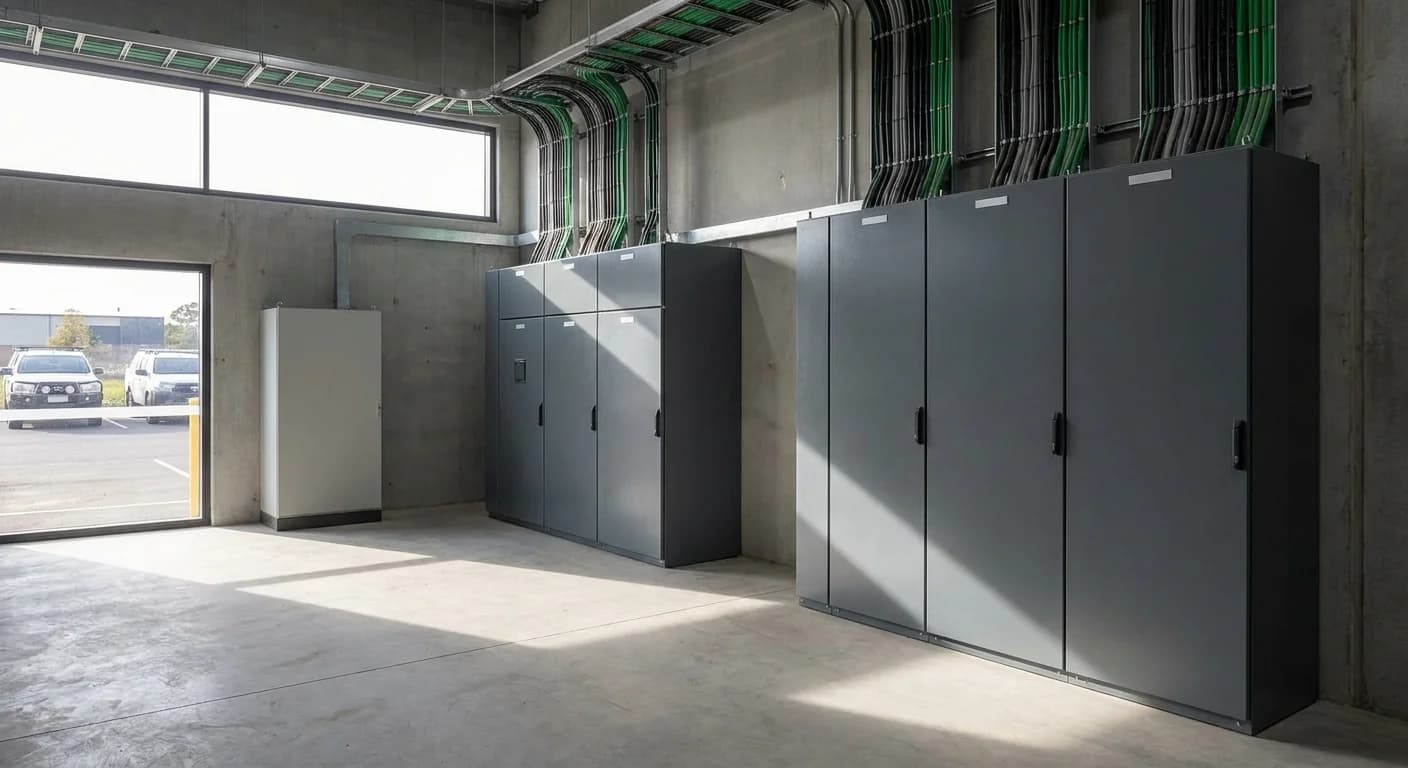
- Approach
- Brand agnostic, not locked to one vendor
- Balances
- Across chargers and against building load
- Typical result
- No service upgrade required
- Software
- Exploren
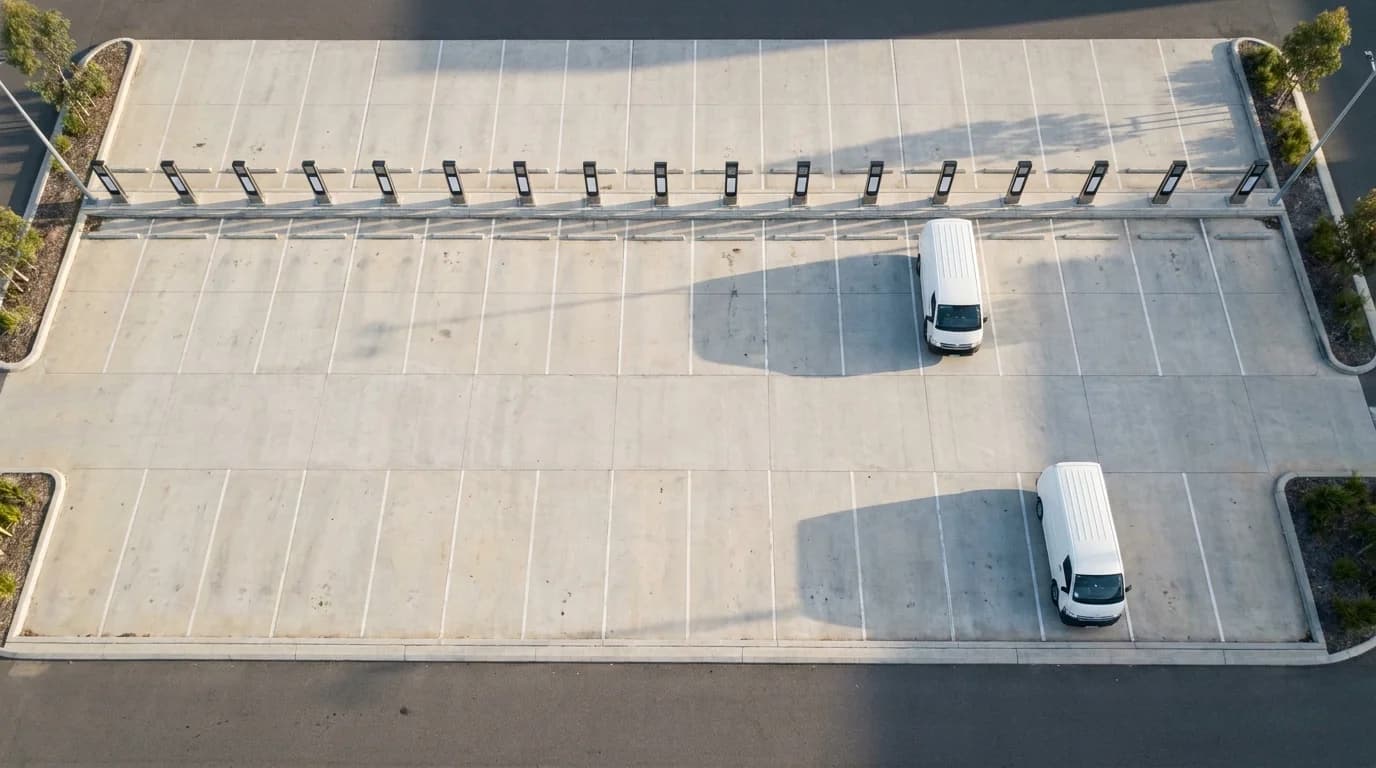

How an EV load management project runs
Five steps, and usually no service upgrade at the end of them.
- 01
Assess
We measure what the site actually draws today.
- 02
Model
The building's demand is mapped against the charging demand.
- 03
Proposal
Control priced against the service upgrade you were quoted.
- 04
Configure
The chargers are made aware of each other and of the building.
- 05
Verify
Total draw is held inside the supply you already have.
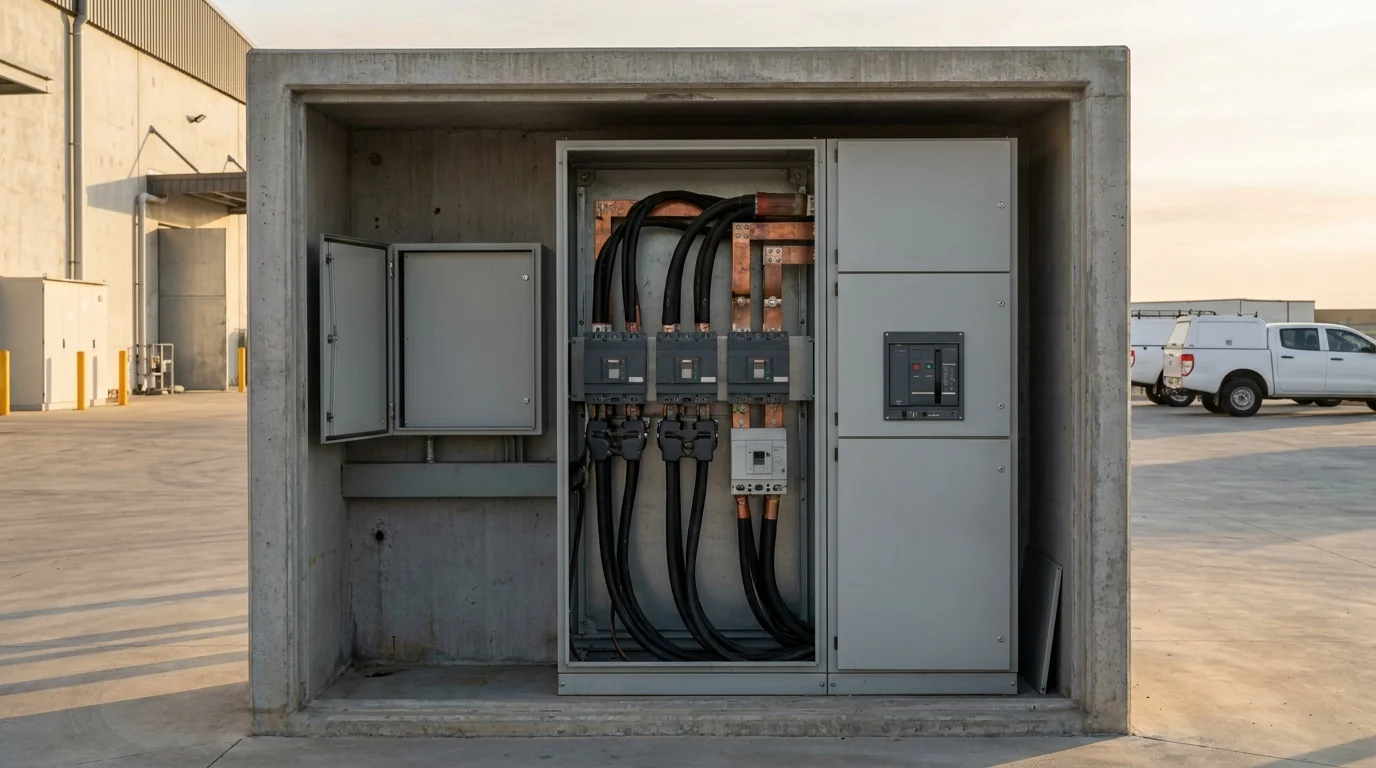

What a load management project includes
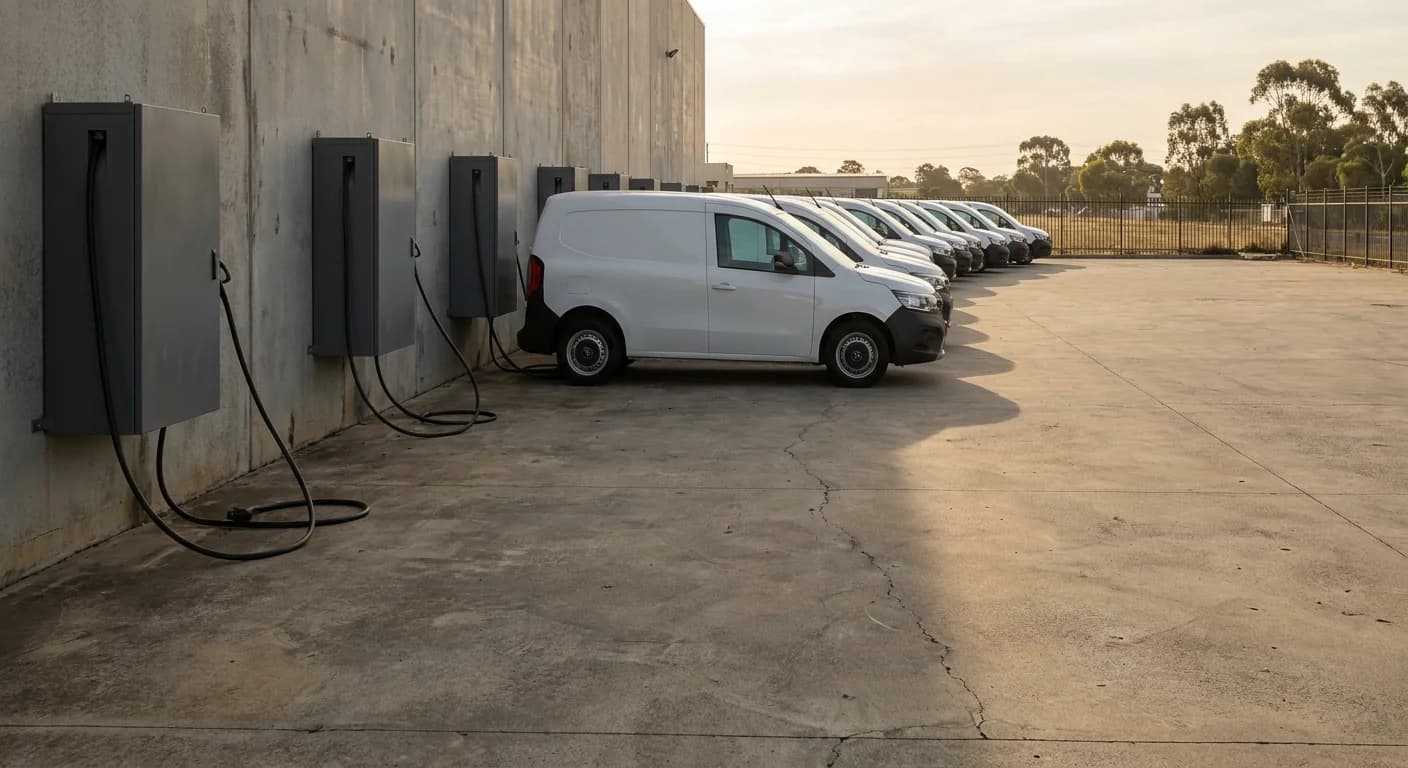
Included

Assessment of the site's real demand
Building load modelled against charging

Proposal priced against the upgrade quote

Configuration across every charger on site

Works with the chargers already there

Verification that the supply holds
Book a site assessment
We look at the supply before anything is quoted. 2 years on parts and labour.

Six cars, one supply, and time to spare.
Dwell time
Six cars sharing one supply: plugged in from 7:30am to 5pm, 9.5 hrs in total, of which 4 hrs is spent charging, leaving 5.5 hrs spare.
- Plugged in
- 9.5 hrs
- Actually charging
- 4 hrs
- Spare
- 5.5 hrs
Sharing the supply stretches the charge, and the window swallows it.
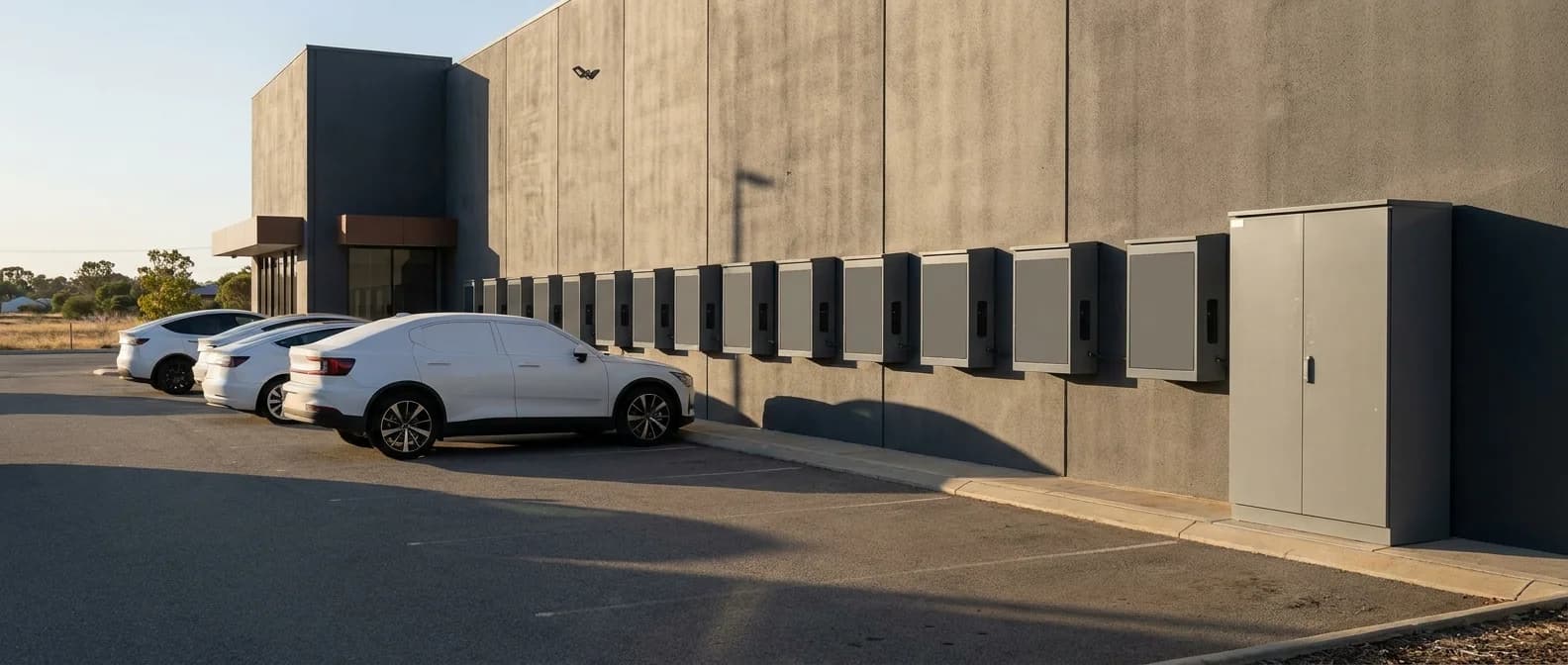

Load management across the Perth metro.
Where we work
What a supply upgrade actually costs in Perth
Worth knowing
Load management exists because network capacity is priced. For a Perth metro site within 25 km of a zone substation, Western Power's published rate to upgrade supply is $496 per kVA, with a capital contribution tax of 13.9 per cent on top. Check the current figure with them before you budget on it.
That is the number the whole decision turns on. Sharing a supply across chargers is a controller and configuration; buying more supply is a per kVA charge, a network application and a wait. We test the first before anyone quotes the second.
Source: Western Power, the network operator for Perth and regional WA.
Load management questions
Questions
Tap a question to open it.
01Will load management slow the charging down?
It shares the available power, so a vehicle may draw less at peak. In practice it does not matter, because vehicles are parked for far longer than they need to charge. What it prevents is the site tripping or an upgrade being required.
02Does it lock us into one brand of charger?
No. Our approach is deliberately brand agnostic, so you are not committed to a single manufacturer for the life of the site.
03How does it know what the rest of the building is using?
A meter on the incoming supply. The system reads the site's total demand and gives the chargers whatever headroom is left, in real time rather than on a schedule.
04What happens if the internet drops?
The balancing keeps working, because it runs locally rather than depending on a server somewhere. What you lose is the reporting until the connection returns, not the charging.
05Can we give some vehicles priority?
Yes. A vehicle on an early start can be set to charge first, with the rest sharing what is left. On a depot that is usually more useful than raw speed.
06How much does it add to the cost?
Less than the supply upgrade it avoids, which is the comparison that matters. The exact figure depends on the number of bays and the hardware, and it is a separate line in the proposal so you can see it.
07Does it work with solar?
It can, and on a site with a decent array it is worth designing for. Charging can be pushed toward the middle of the day when the system is exporting, which turns a daytime carpark into the best place for that energy to go.
08Will the network operator need to approve anything?
Some connections do need sign off and some do not, and it depends on the size of the installation and your existing supply. We tell you which one you are at the site visit, before it becomes a surprise.
More on commercial EV charging in Perth, or see the areas we install across.
Let us look at your site.
We assess the supply, the vehicles and the timeline, then put an itemised proposal in front of you.