
AI overview
Start with the vehicles, not the charger. Work out how far each vehicle travels, where it parks and how long it sits there, and the number and type of chargers follows from that. Three EVs parked overnight may need only two AC chargers, the common units that charge a car over several hours, and rarely need DC fast charging, the far more expensive high-power kind. A site assessment then checks the power, works out where the chargers should go and plans how to add more as the fleet grows.
Key highlights
- The number of vehicles does not set the number of chargers
- Vehicles parked 10 to 12 hours overnight rarely need fast charging
- Where the chargers go can matter more to the price than the chargers
- An office uses far less power at night, which can free capacity for charging
- Load management lets chargers share the power the site already has
- Company cars that go home with staff need a plan for home charging too
 Free PDF · 9 pagesThe Complete Guide to EV Charging for Business Fleets in WADownload the PDF guide
Start With How the Vehicles Are Used
Buying the EVs is only half the decision. The other half is how they will charge every day without creating a problem when the fleet grows. So before you look at any chargers, start with what the vehicles do each day.
Three sales cars that come back to the office every night need something very different from vans that are on the road around the clock. Before anyone talks about chargers, answer these:
- How many EVs are you buying now?
- How many could the fleet grow to over the next few years?
- What does each vehicle do on a normal working day?
- Roughly how many kilometres does each one travel?
- Where is each vehicle parked overnight?
- What time does it come back, and what time does it have to leave?
Charging Is an Energy and Time Problem
A vehicle parked for 10 to 12 hours overnight has far more time to recharge than one that stops for an hour or two. That time is what lets a small, inexpensive charger do the job.
Take three passenger EVs that each travel about 120 to 150 km a working day. A modern passenger EV can cover more than one day of that on a charge, but you should not plan a fleet around cars coming back nearly flat. A simple rule might be that each car gets a charge about every second working day, plus a top-up before weekends or long days.
The point is that the number of vehicles does not automatically equal the number of chargers.
How Many Chargers Does the Business Need?
It is the first question most businesses ask, and the answer comes from the fleet's schedule, not a fixed ratio of one charger per car.
- Work out how often each vehicle needs energy put back.
- Look at how many hours the vehicles are parked and able to charge.
- Allow enough charging that drivers are not swapping cars around or worrying about range.
- Think about what happens on an unusually busy day.
- Plan for growth, but you do not have to pay for the whole future fleet on day one.
AC Chargers Usually Suit a First Small Fleet
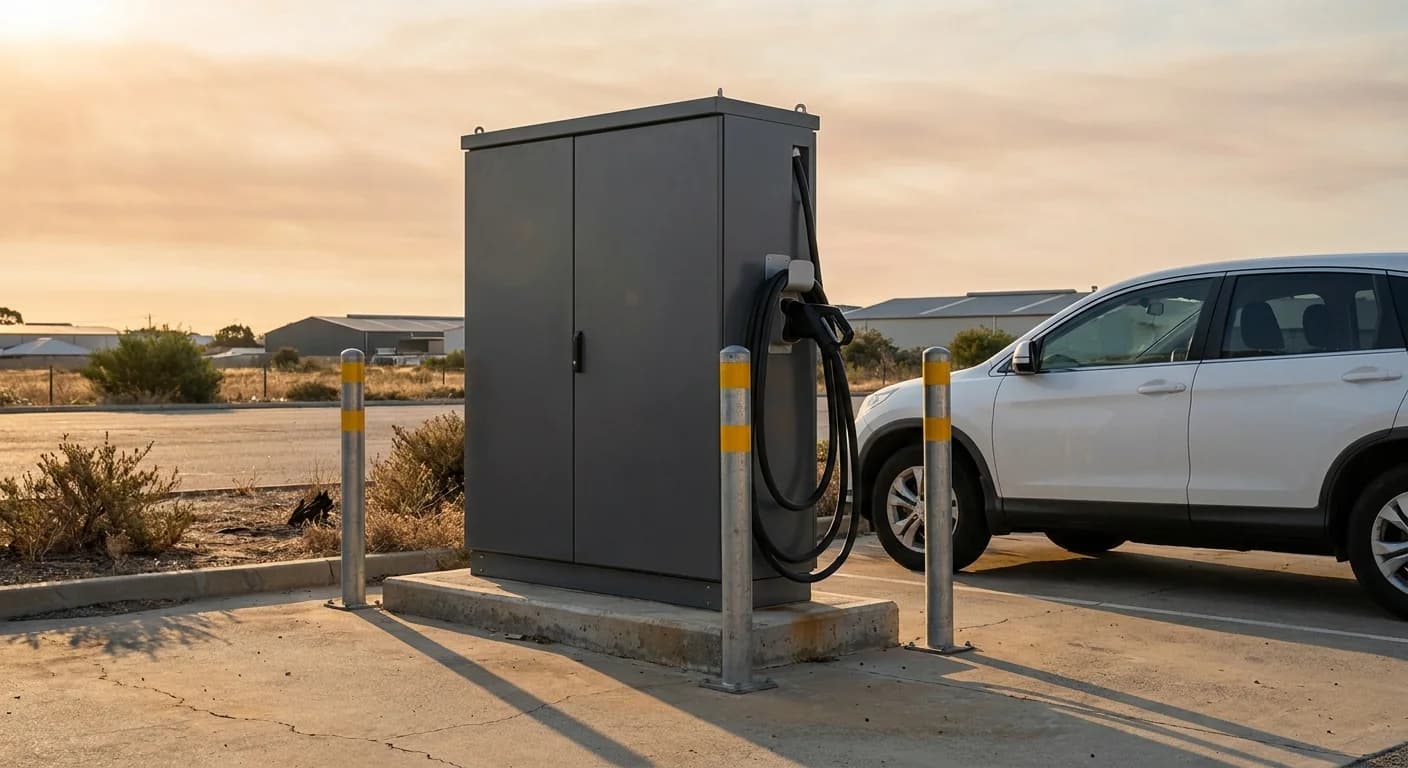
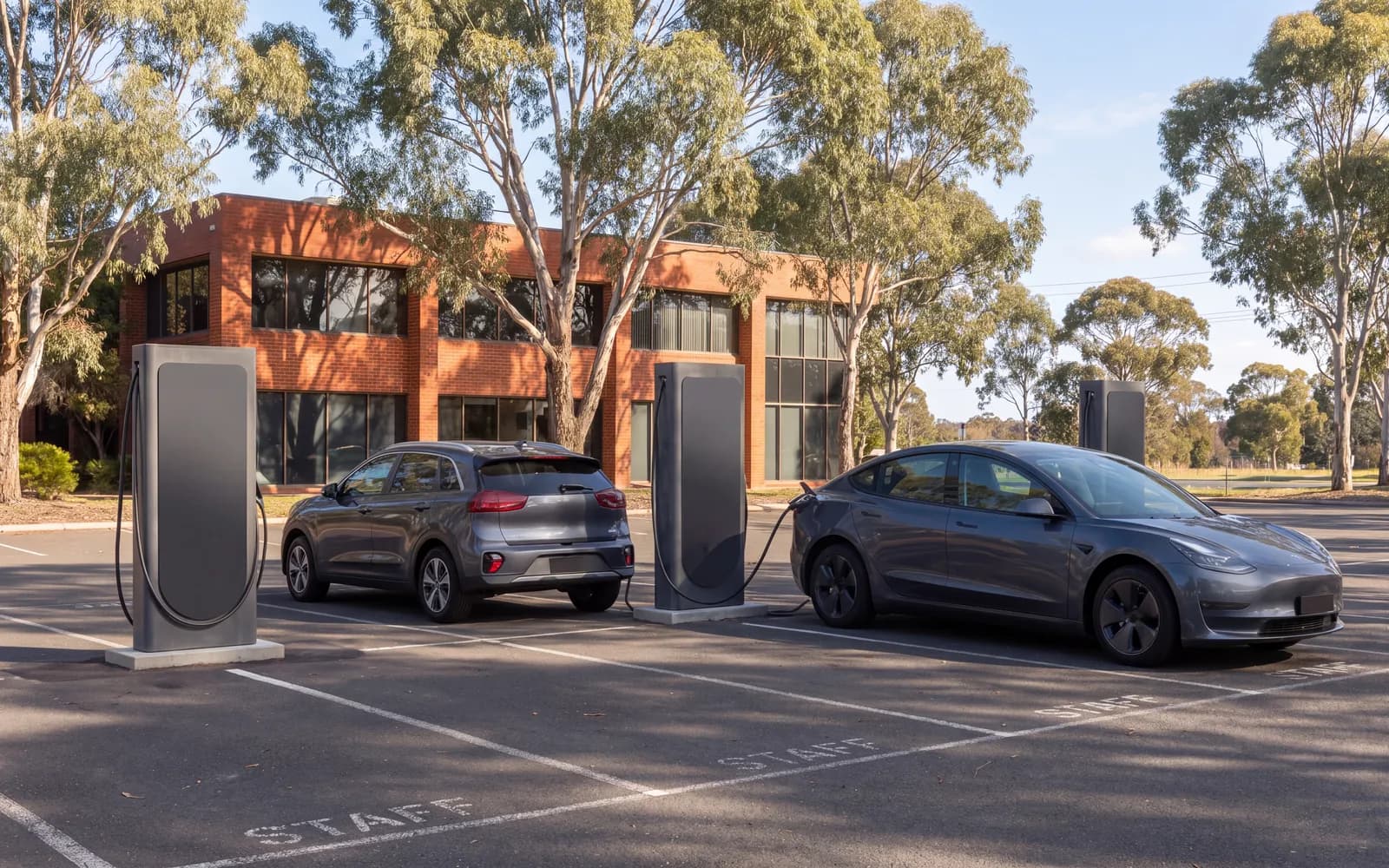
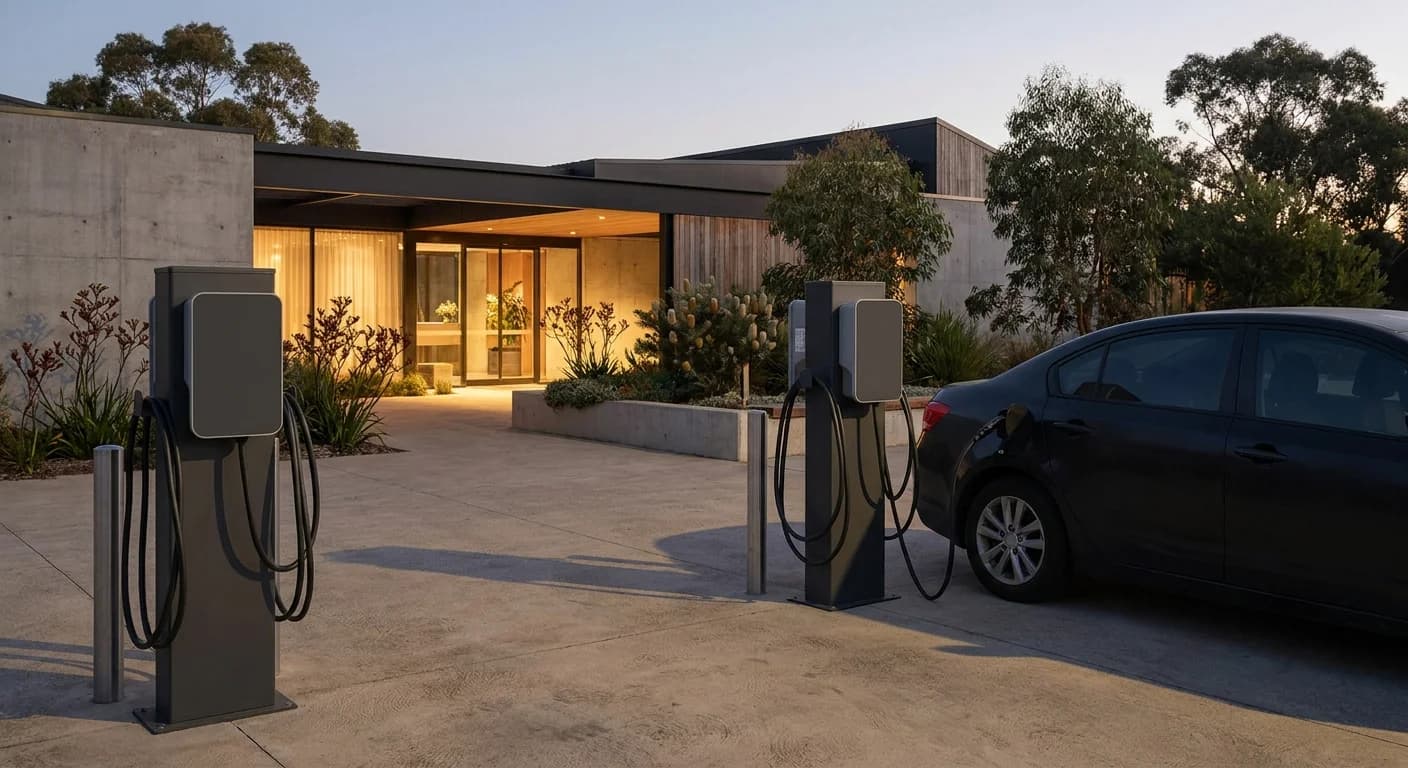
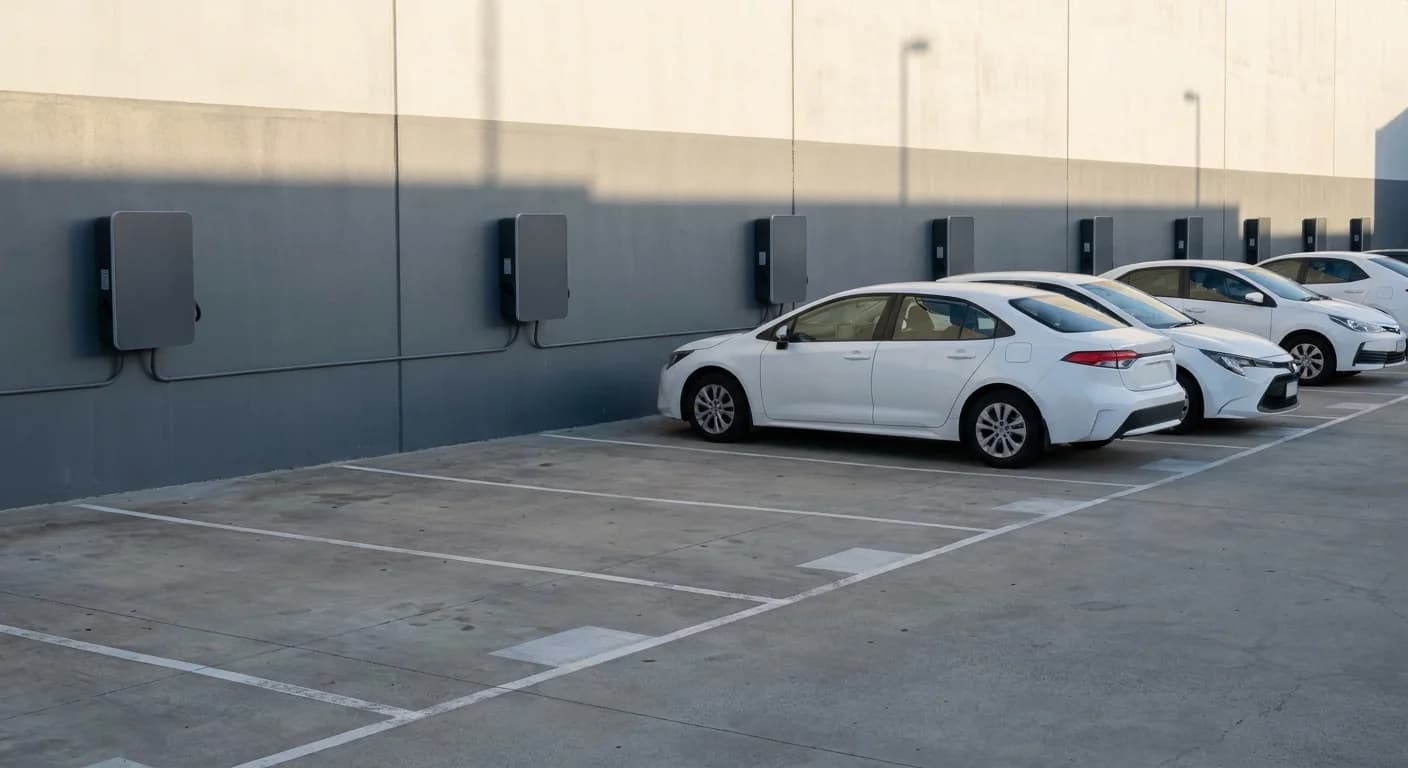
An AC charger is the common unit, mounted on a wall or on a standalone post called a pedestal, that charges a car over several hours. A DC fast charger feeds the battery directly and charges much faster, but it costs far more to buy and needs a lot more power from the site.
If the vehicles are parked overnight, a slower AC charger still has them ready by morning, for far less than a fast charger. For a small fleet trial, a simple AC setup is often the sensible place to start. Three EVs with long overnight parking and staggered charging days may run comfortably on two AC chargers. The right answer still depends on the actual vehicles, their battery size, their daily kilometres and what happens if one is not ready.
Where the Chargers Go Can Set the Price
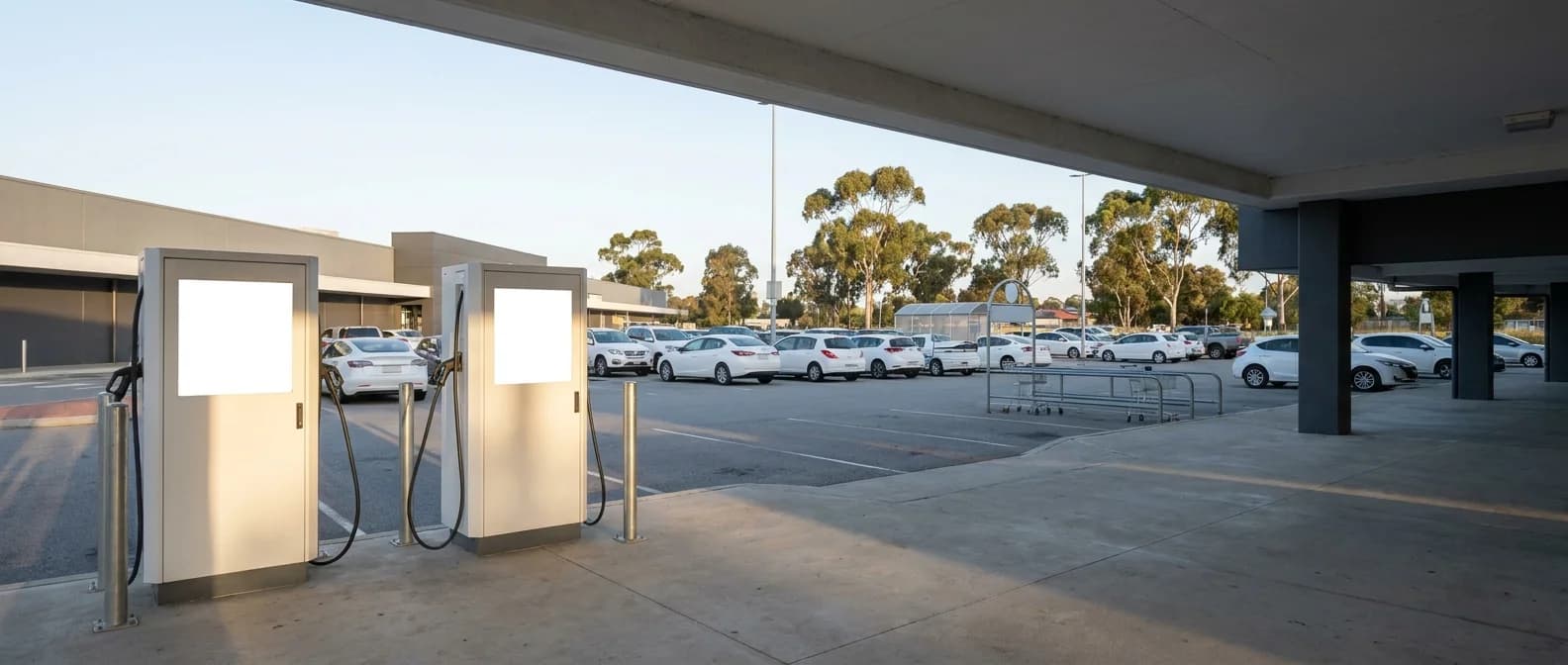
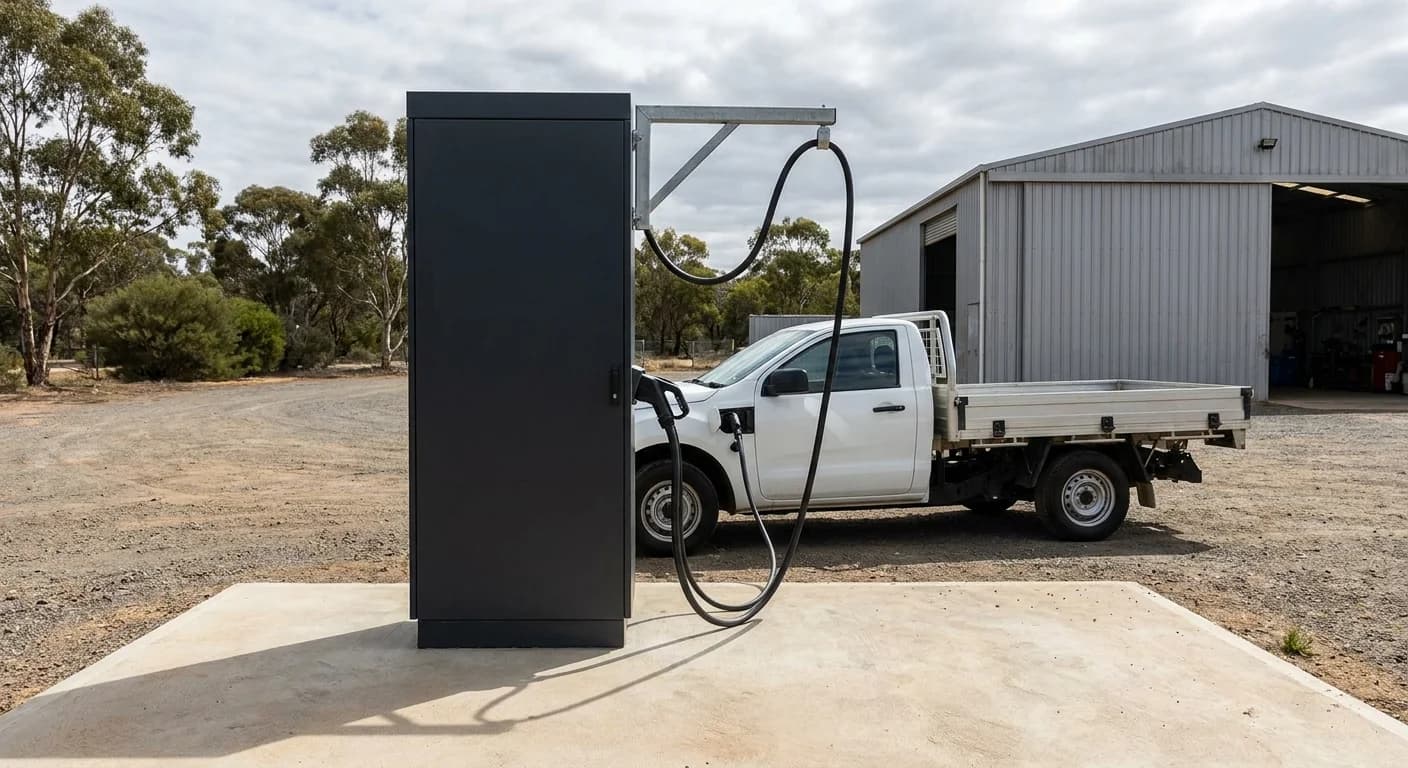
Commercial chargers can be mounted on a wall, on a pedestal, or in an open car park. The best spot balances what is easy for drivers with what it costs to get power and data cabling to the charger.
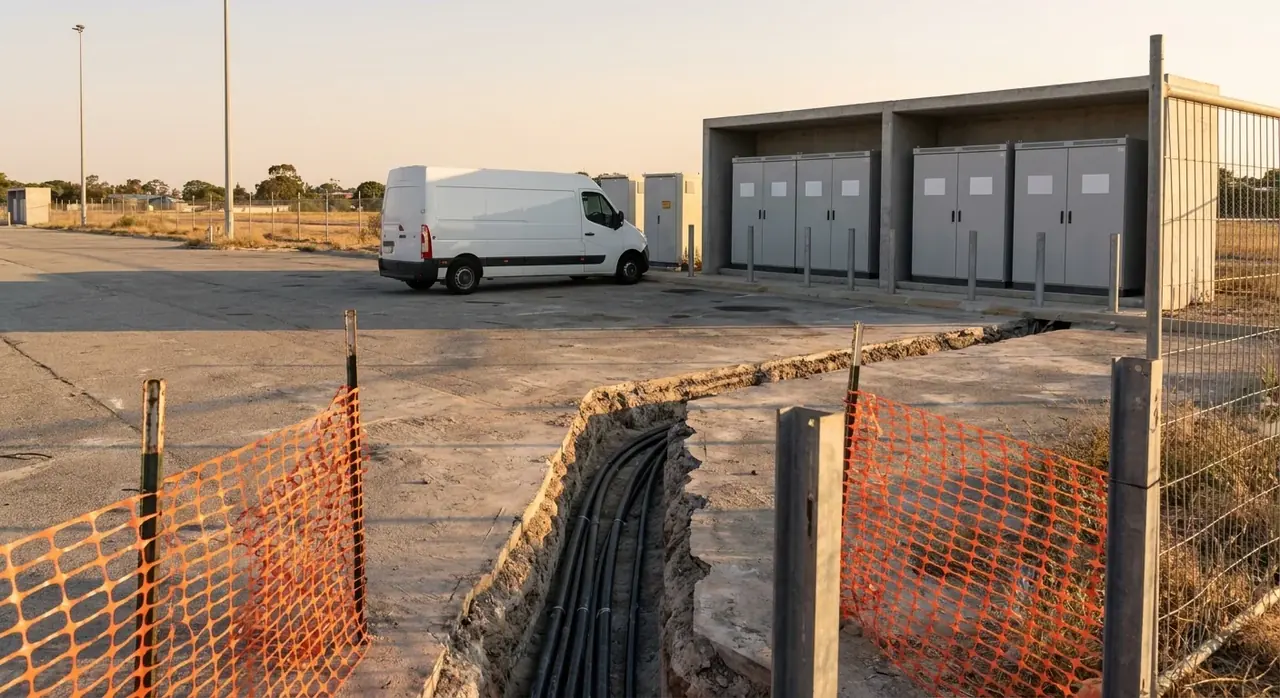
If the main switchboard is right beside the bays, the cable run is short and simple. If the cars park at the back of the building and the switchboard is at the front, the job may need a 20, 50 or even 100 metre cable route, with trenching or other works along the way. Our guide on where to install EV chargers at your business walks through how to compare locations.
Should You Build for the Future Now?
A business moving 3 of its 15 vehicles to EVs may need a lot more charging later. There are two sensible ways to approach it.
- Start simple. Put the first chargers in the cheapest practical spot. When the fleet grows, spend on more infrastructure then, and keep or move the original chargers.
- Build the backbone early. Run power from the main switchboard to a dedicated EV distribution board, a separate small switchboard near the future bays that feeds only the chargers. It costs more at the start, but every charger after that is a simple addition.
Which Approach Is Right for You
Neither is right every time. If the first EVs are a genuine trial, keeping the first install simple makes sense. If the business has committed to moving the fleet across, spending more on the backbone at the start can mean less disruption and less cost later.
Does the Site Have Enough Power?
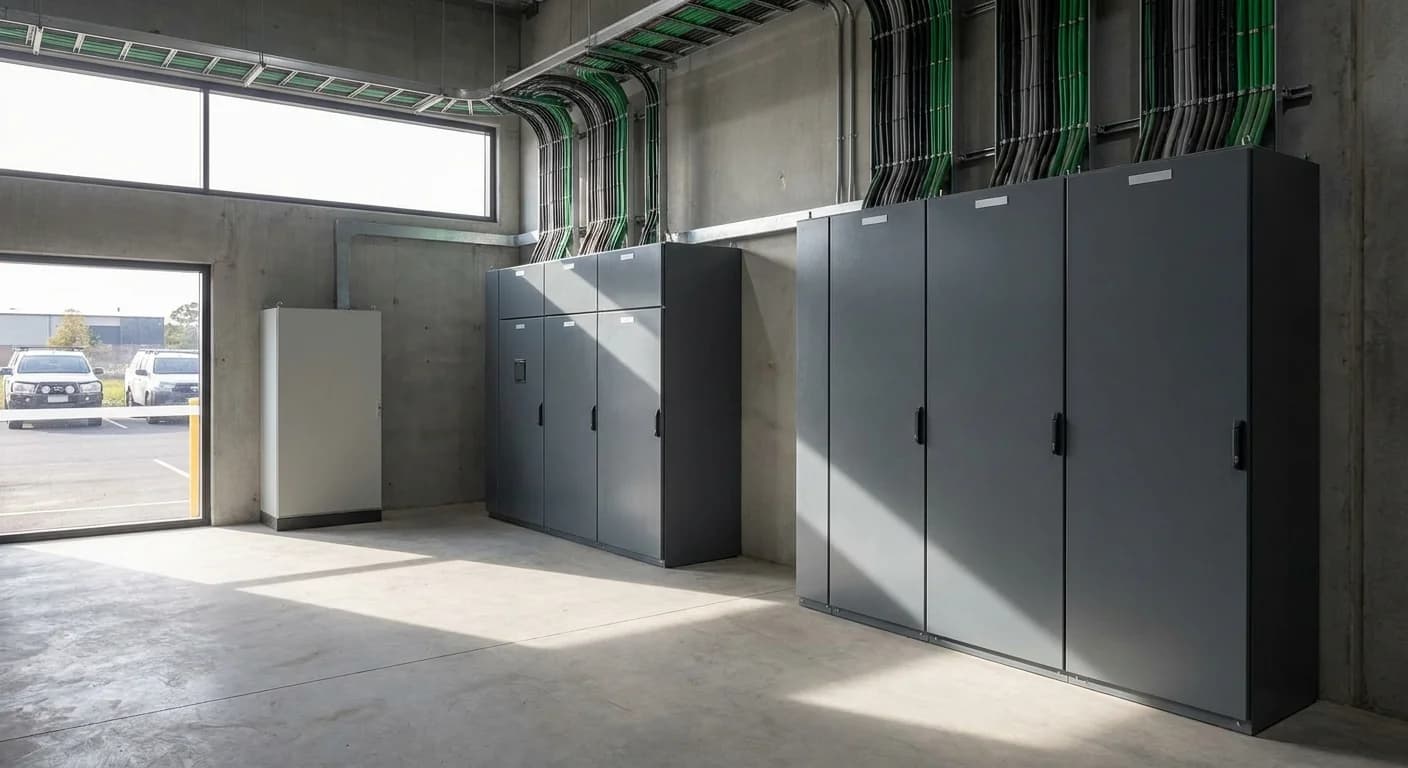
Whether the site has enough power is worked out on the site assessment. The building's electrical supply, what it already uses and how much is spare all need to be understood before the charging design is settled.
An office uses much less power overnight than during business hours. Air conditioning, lighting and computers drop away when staff go home, which can leave useful capacity for charging cars overnight. The aim is to design within the power the site genuinely has before anyone talks about an expensive supply upgrade. Our guide on whether your business has enough power for EV chargers goes into this in detail.
Do You Need Charging Software?
Not every small fleet needs software on day one. But many businesses want to see how much electricity the fleet is using, and they want more control as the number of vehicles grows. Software can:
- Track charging sessions and how much electricity each one used
- Report usage by charger, driver or vehicle, where the system supports it
- Feed sustainability or emissions reporting
- Show whether each charger is working and help find faults
- Control who can use the chargers
- Let staff charge their own cars for free or for a fee, if you want that
Is the Software Worth the Subscription?
Commercial charging software usually comes with an ongoing subscription. So before you pay for a feature, ask whether the business will use it enough to justify the subscription. Our guide on taking payment on EV chargers covers the options for charging staff and visitors.
Company Cars That Go Home With Staff
Not every fleet vehicle comes back to a depot. Sales reps, managers and technicians often take company EVs home. That raises three questions: how the car is charged, how the business's electricity is kept separate from the household's, and how the employee is paid back.
Suitable home charging equipment, recorded charging sessions and a simple reimbursement process solve it. At Step4 in Canning Vale, we paired a workplace charger with a portable charger that has its own SIM connection and an RFID card, a contactless card that identifies the driver. Every session at home logs the start and finish time, the energy used and the user, so the business reimburses on records instead of an estimate. You can read more on our projects page.
For many fleets the answer is a mix of depot or workplace charging, home charging and public charging, not one location.
A Practical Example: Starting With Three EVs
Take a business with 15 vehicles that is moving its first three to EVs.
- 15 fleet vehicles, the first 3 changing to EVs: treat the first install as a trial that can grow, not the whole future fleet.
- Passenger EVs doing about 120 to 150 km a day: use the real daily energy need and the overnight parking time to set how often each one charges.
- Vehicles parked at the office overnight: AC charging is likely to be enough, because the charging window is long.
- Three EVs to start: two AC chargers may be a practical start if charging days can be staggered. Confirm it with the actual vehicles.
- Possible growth to 10 or more EVs: check whether a dedicated EV distribution board and future load management should be part of the plan.
- The business wants energy reporting: choose chargers and software that work together, and confirm the ongoing subscription before you buy.
What a Site Assessment Should Work Out
A good assessment ends with a practical proposal with options, not a quote for the biggest or fastest charger on the shelf. It should cover:
- How many EVs you have now and how many you expect
- Daily kilometres, return and departure times, and which vehicles matter most
- The existing supply and switchboard capacity
- Possible charger locations and cable routes
- Whether an EV distribution board is worth it
- Whether load management is needed now or can be added later
- The right mix of charger power and number of chargers
- What connectivity and software the business needs
- Security, public access and vandalism risk
- A staged path for expansion, with budget options
Questions to Bring to the First Discussion
You do not need all the answers before you call, but these are the ones that shape the design. For a bigger depot, see our fleet and depot EV charging service.
- How many EVs are we buying now, and how many could we have in two to five years?
- Which vehicles are we considering?
- How many kilometres do they normally travel each day?
- Where will they be parked overnight?
- When do they come back, and when do they need to leave?
- Do any employees take company vehicles home?
- Do we need usage, cost or sustainability reporting?
- Do we want staff or visitors to be able to use the chargers?
- Do we know where the main switchboard is, and where we would like the EVs to park?