
AI overview
AC charging is slower and cheaper; DC fast charging is quicker, costs more and needs far more power from the site. For a business fleet, the right choice comes from how long the vehicles are parked and how much energy they need before they leave again, not from the charger's top speed. Vans parked overnight usually suit one AC charger each. Vehicles that only call in for an hour or two, or pool cars shared between drivers, are where DC is worth considering. Some fleets are best served by a mix.
Key highlights
- Start with the vehicles, not the charger
- Twelve vans parked overnight and twelve cars that call in for an hour need different chargers
- A van plugged in for 12 hours at 4 kilowatts (kW) takes in 48 kilowatt hours (kWh) of energy
- A fast charger can mean staff moving cars off it all day
- Twelve AC chargers can cost less than two large DC chargers
- Some fleets do best with AC for most vehicles and one DC charger for the exceptions
 Free PDF · 12 pagesAC vs DC EV Charging for Business FleetsDownload the PDF guide
The Short Answer
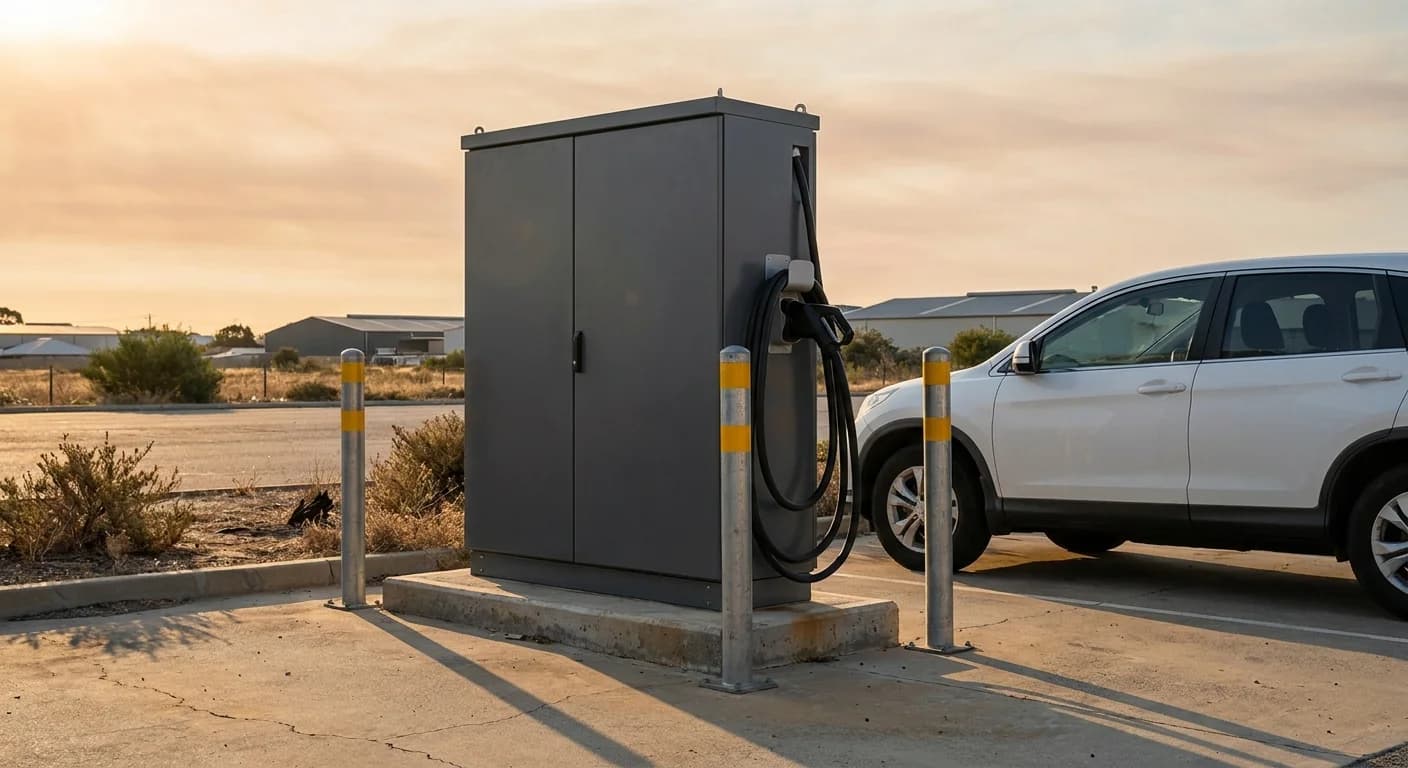
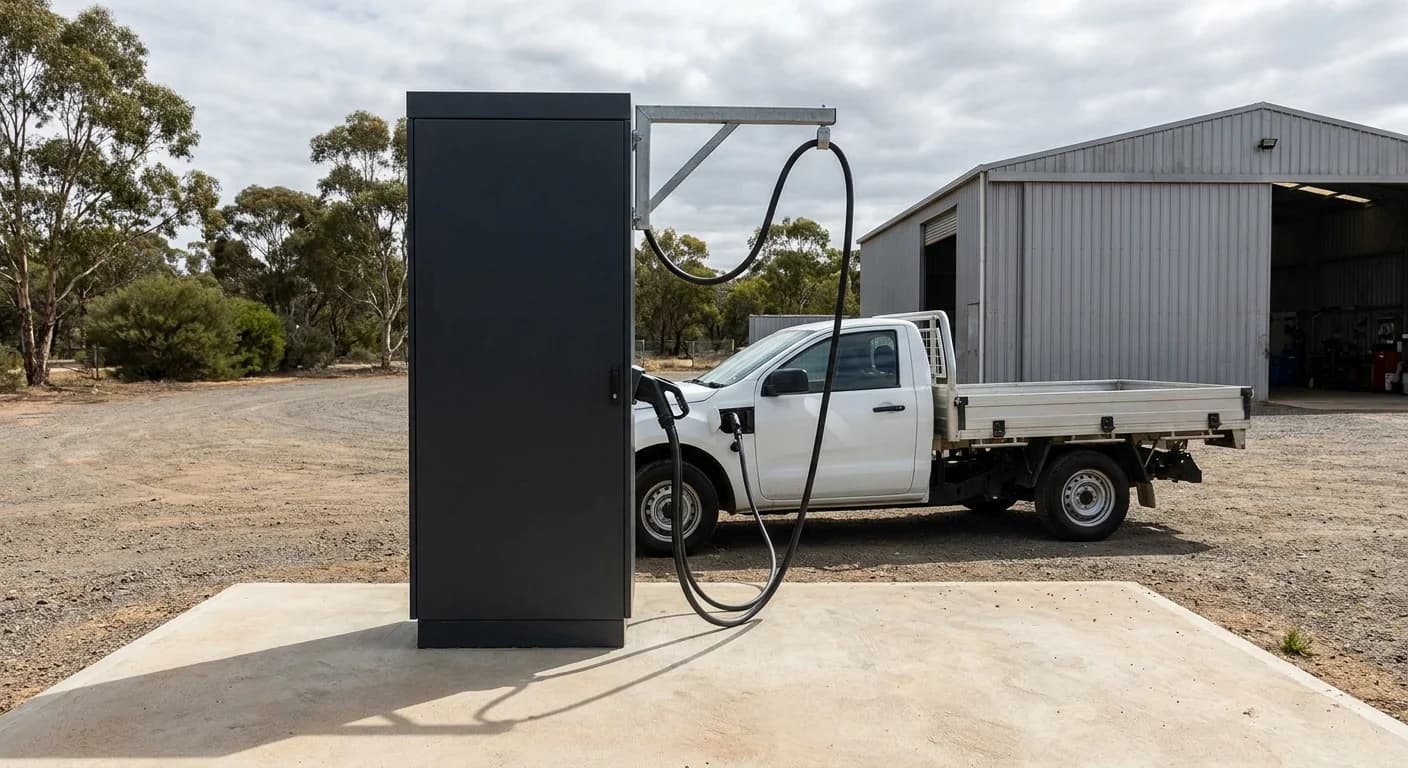
AC charging is the common type you see on a wall or a post. The car's own onboard charger turns the AC power from the grid into DC to fill the battery, so it charges over several hours. A DC fast charger does that conversion inside the charger itself and feeds the battery directly, which is much quicker, but the charger costs a lot more and draws much more power from the site.
When a business moves its fleet to EVs, it is tempting to think faster must be better. In practice the right answer depends far more on how the vehicles are used than on the biggest number printed on the charger.
How Long Are the Vehicles Parked?
The time a vehicle spends parked on site is called its dwell time, and it is one of the most important numbers in any commercial charging design.
A van that comes back to the depot at 5pm and does not leave until 7am has about 14 hours to charge. A take-home car that calls in to the office for an hour or two has a completely different chance to charge.
A long dwell time lets you put the energy back slowly. A short or unpredictable one can make charging speed the thing that decides whether the vehicle is ready.
Same 12 Vehicles, Two Different Answers
The first fleet below is a job we did. The second is a typical delivery depot with the same number of vehicles, to show how the answer changes.
A job we did
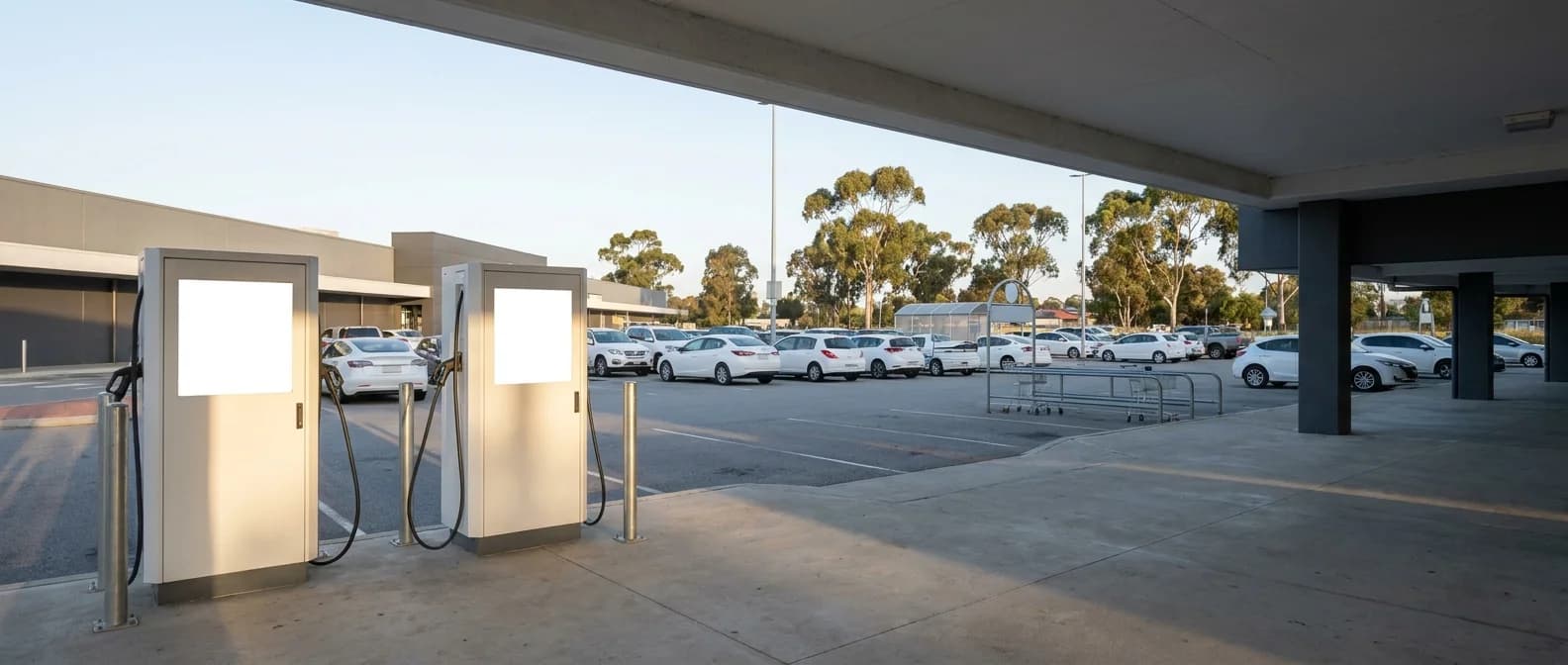
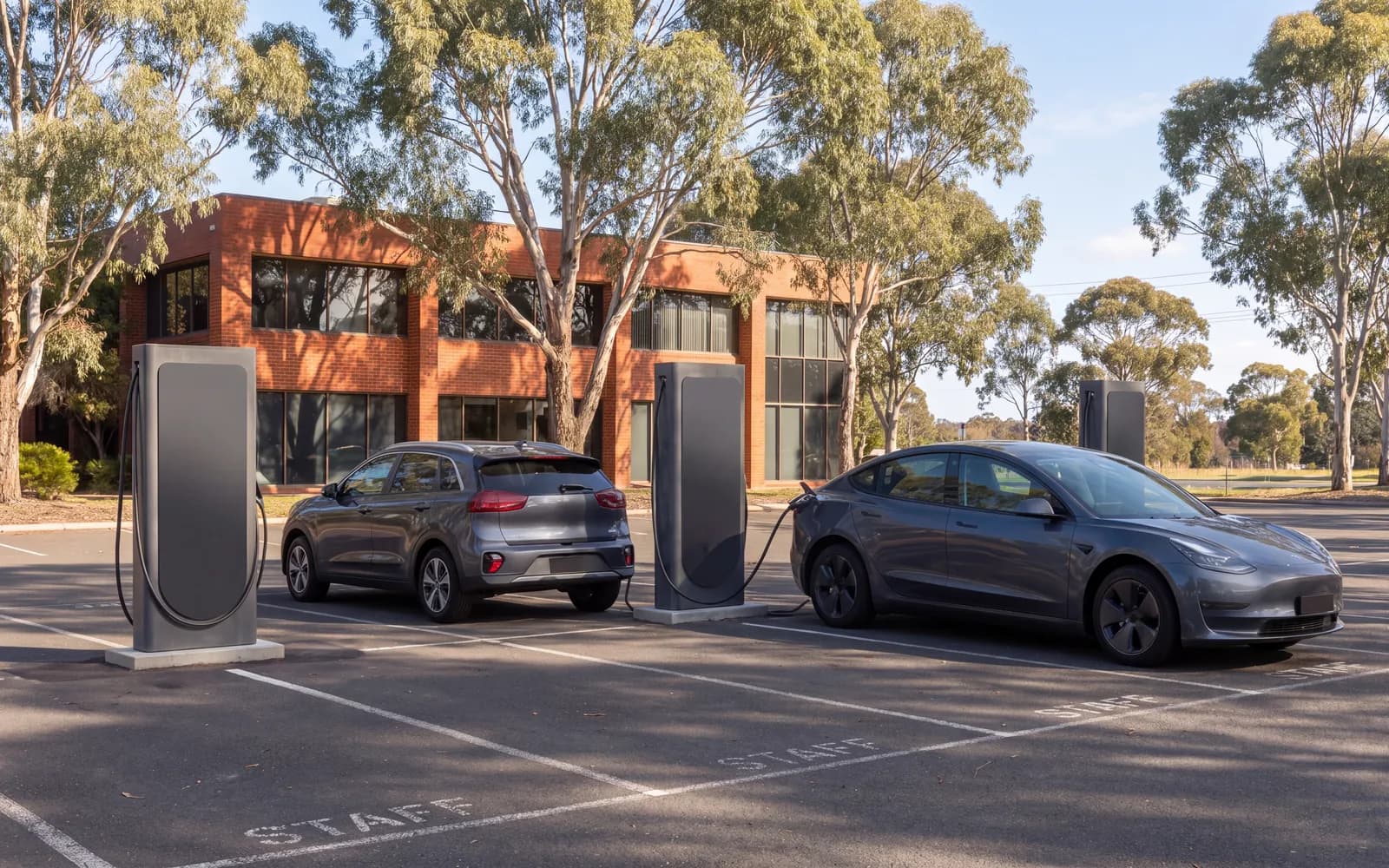
DC12 take-home cars that call in to the office
- Staff take the cars home and spend most of the day on the road.
- Each car calls in for an hour or two, two or three times a week.
- Two or three arrive one day, four the next, and not always the same ones.
- There is no overnight window at the office to charge in.
DC charging. We installed two DC chargers with four charging ports between them, so four cars can charge at once.
A typical depot
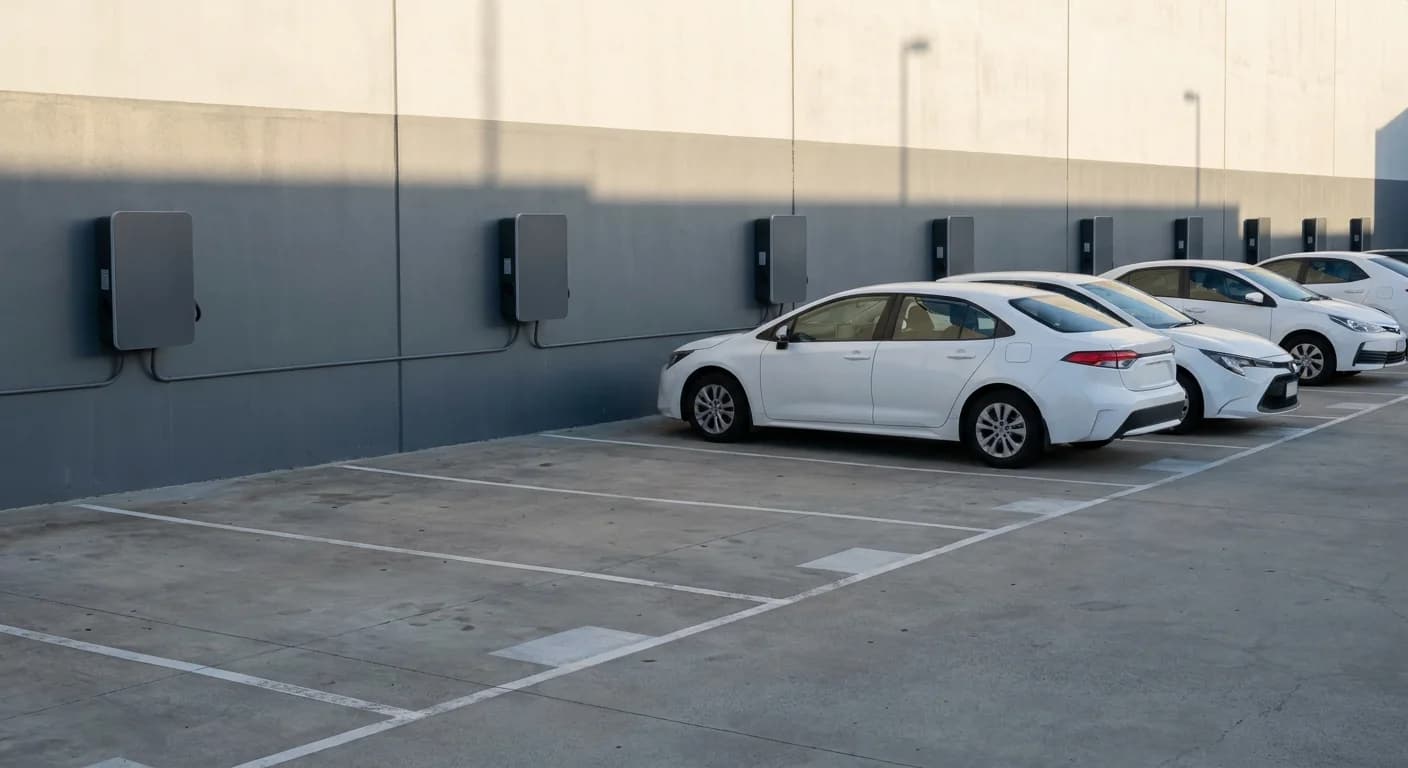
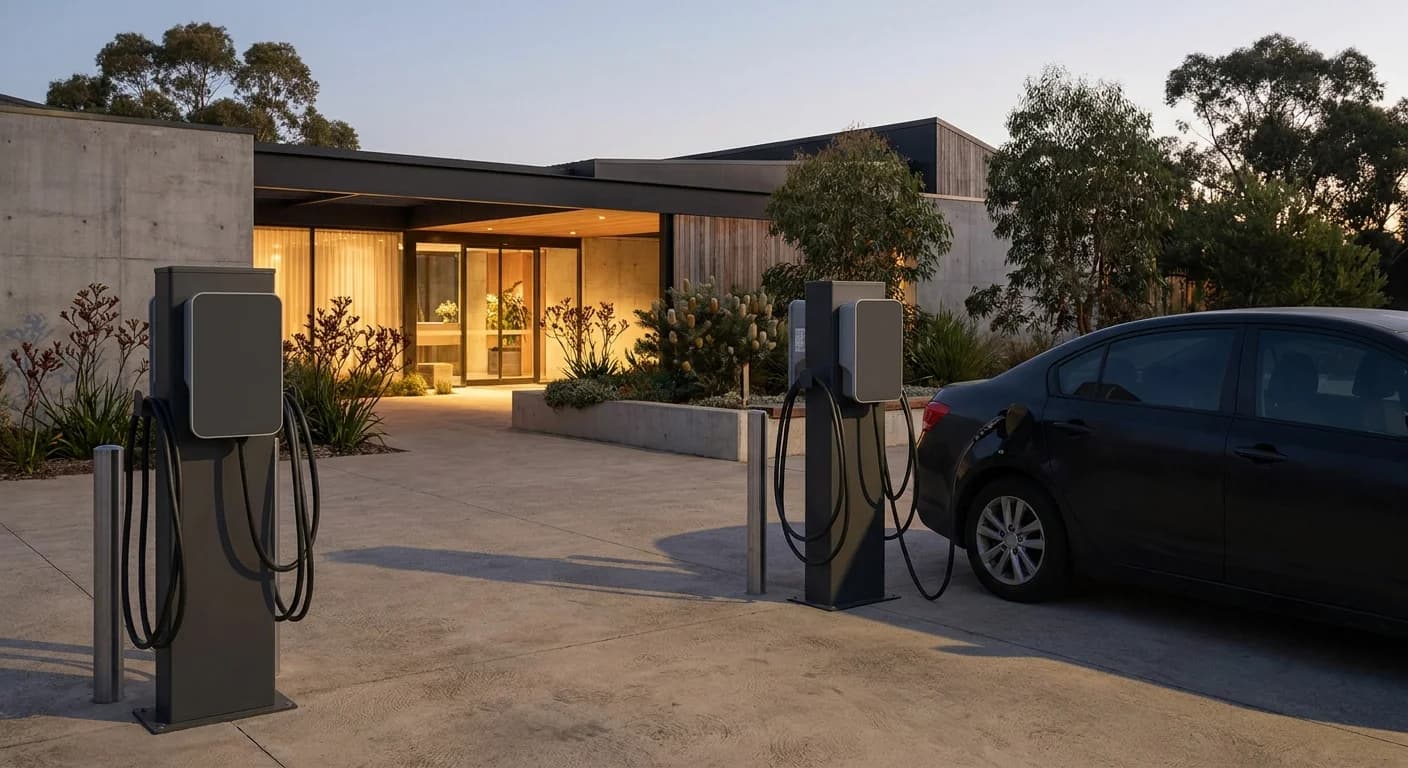
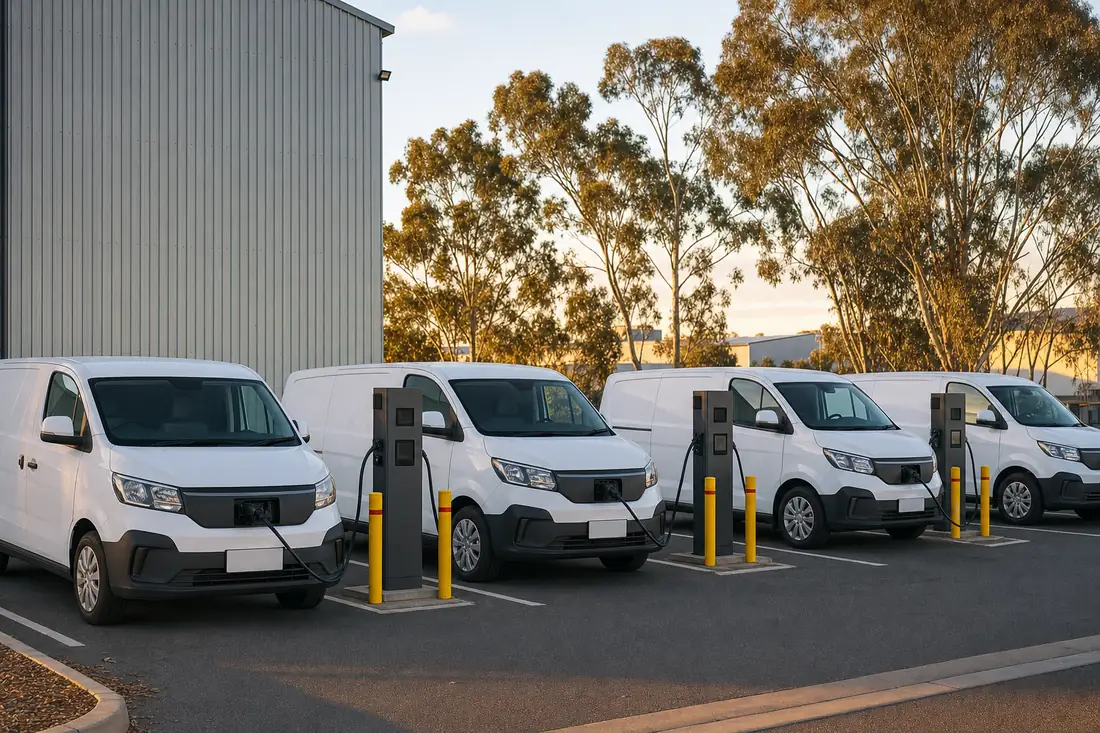
AC12 delivery vans back at the depot every night
- The vans leave each morning, run their routes and come back at the end of the day.
- Each one covers about 200 to 300 km.
- They stay parked until the next morning.
- Every van can be plugged in for the whole night.
AC charging, with one charger per van, so every van sits on its own charger all night and is full for the morning.
Why the First Fleet Went DC
The office could not count on long overnight charging, because the cars were at staff homes overnight. It had to put useful energy into whichever cars happened to be in, during a short visit.
Two DC chargers with four ports let up to four cars charge at the same time. How fast each car charged still depended on how the chargers were set up, what each car could accept and how much power the site had, so the design was built around using as much of the site's spare capacity as possible.
Staff could charge in the time they were already at the office, so they relied much less on public fast chargers. Company cars that go home with staff also need a plan for charging away from the office and reimbursing it.
Why the Second Fleet Suits AC
The depot fleet does not need to charge quickly. It needs every van to have enough energy before it leaves in the morning.
If all 12 vans can be plugged in overnight, AC charging does that well. Each van stays in its own charging bay, nobody has to move a van after an hour, and the power the site can spare is shared across the whole fleet through the long charging window. Our fleet and depot EV charging service is built around exactly this kind of yard.
Isn't Faster Charging Always Better?
Yes and no. Faster charging can be worth having, but speed brings its own costs.
When a car finishes on a DC charger, someone usually has to move it so the next car can use the charger. In a busy workplace that means staff leaving their desks again and again to swap cars between the charging bay and a normal bay.
On AC, a car can stay plugged in for several hours or overnight, which often fits how people actually work far better.
Then there is the cost. Depending on the job, twelve AC chargers can cost less than two large DC chargers, and DC chargers need much more power from the site at any one moment. A fair comparison counts the hardware, the electrical work, the power the site has to spare and how the chargers will be used day to day, not just charging speed. Our guide to what commercial EV charging costs in Perth covers the price side in detail.
When DC Charging Is Worth Considering
DC becomes a serious option when one or more of these is true:
- Vehicles are only on site for short or irregular periods.
- They need a lot of energy put back during a brief visit.
- They are pool cars, shared by several drivers, and nobody knows how far the next driver needs to go.
- They have to go back into service quickly.
- The fleet cannot rely on a long overnight charging window.
- You want to cut how much staff rely on public fast chargers while they are away from the depot.
Pool Cars Are the Clearest Case
With a pool car, one person brings it back with no idea how far the next person needs to drive. Businesses have complained to us about exactly this. A faster charger gives the car a better chance of having useful range for whoever takes it next, because it does not depend on the car sitting on a charger for hours.
That benefit still has to be weighed against what DC costs to install and whether the site has the power for it. Fleets that have to go straight back out after every job need DC most of all. We fitted the St John Ambulance depot with DC fast charging for exactly that reason. See our DC fast charging installation service for what that involves.
When AC Charging Is the Better Fit
AC is usually the better fit when:
- Vehicles come back to the depot at predictable times.
- They stay parked for long periods or overnight.
- Routes and daily kilometres are fairly consistent.
- You can put in enough charging points for the vehicles that need to be plugged in.
- There is enough time to share the site's power across the fleet.
- You want to keep swapping cars and managing charging bays to a minimum.
AC vs DC at a Glance
If your fleet sits in the AC column on some rows and the DC column on others, a mix of both may suit.
| Fleet characteristic | Often points toward AC | Often points toward DC |
|---|---|---|
| Dwell time | Long or overnight | Short or irregular |
| Usage pattern | Predictable | Varies a lot |
| Who uses the vehicle | One driver per vehicle | Pool or shared vehicles |
| Turnaround | Hours available | Back into service quickly |
| Charging bays | Vehicles can stay plugged in | Chargers need to free up for the next vehicle |
| Power demand | Load can be spread over time | More power may be needed at once |
| The goal | Hands-off overnight charging | A fast top-up in a short window |
Work Backwards From the Energy
Start with how much energy each vehicle needs and how much time there is to put it in. Energy is measured in kilowatt hours (kWh), the same unit as on your power bill. Charging speed is measured in kilowatts (kW), the rate the energy goes in.
For a depot fleet, the design starts by measuring or estimating how much spare power the site has during the charging hours, then sharing it across the vehicles plugged in. Here is a simplified example for one van:
- Charging rate per van4 kW
- Hours charging12 hrs
- Energy it can take in48 kWh
- Needed: 50 kWh battery from 20% to full40 kWh
Try It on Your Own Fleet
Put in your own numbers to see which way your fleet leans. It is a guide to start the conversation, not an engineering design. A real answer needs a look at your switchboard and how much power your site has spare.
Your fleet
Leans AC
- Energy to supply per vehicle a day, including losses
- 44.4 kWh
- Time available to charge
- 14 hrs
- Average charging rate needed
- 3.2 kW
- A 7 kW AC charger can put that back in about 6.3 of the 14 hours, so AC has the time it needs.
- With every vehicle able to stay plugged in, plan on 12 AC charging points, one for each vehicle on site at once.
- Charging all 12 vehicles across that window averages about 38.1 kW. Whether the site has that to spare is the first thing we measure, by logging what the building draws through the day and night.
We have assumed 10% of the energy is lost while charging. AC chargers are 7 kW on a single-phase supply, like a house has, or up to 22 kW on a three-phase supply, the heavier supply many business sites have, and never faster than the vehicle can accept. This is a guide only, not a design.
Book a site assessmentSite Power Matters for Both
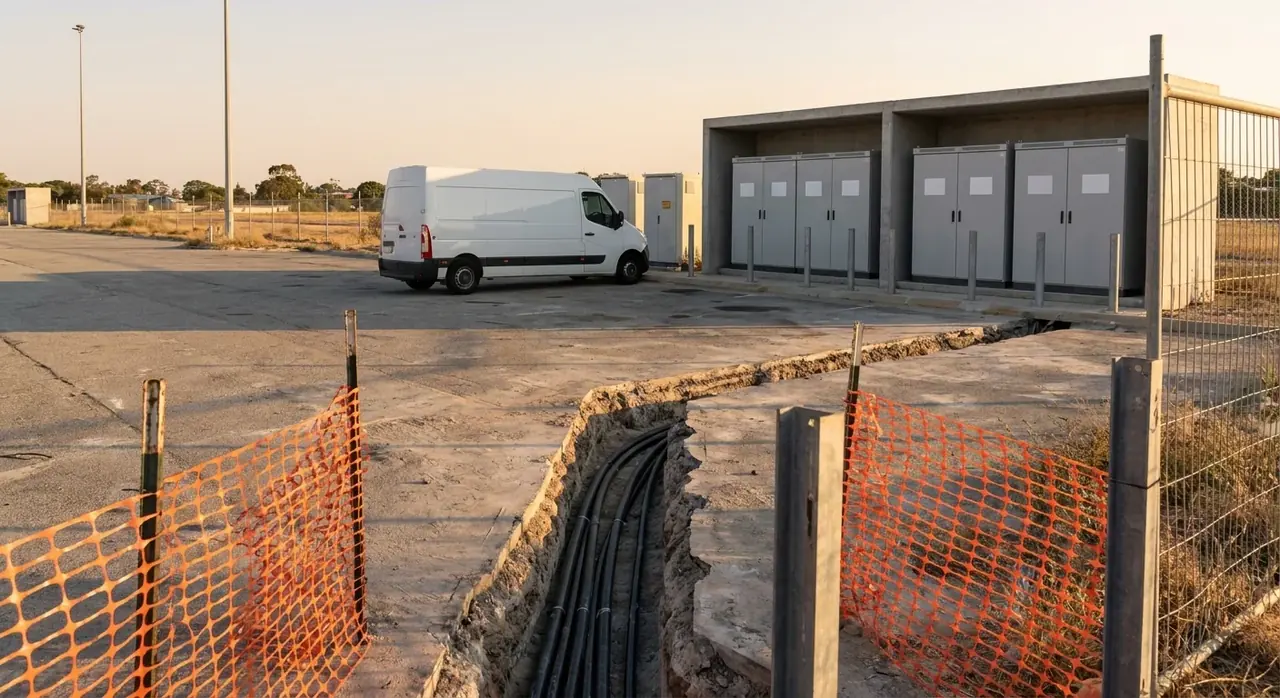
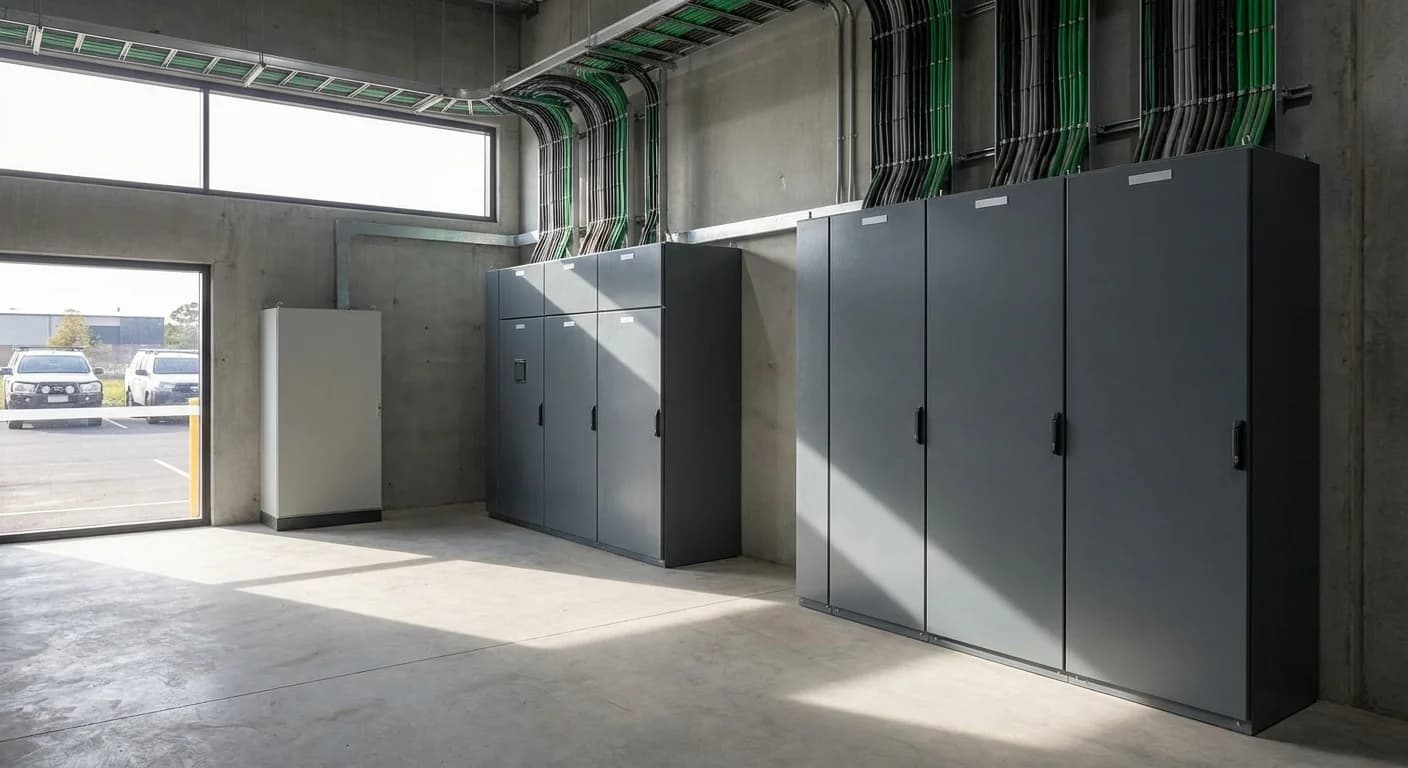
You cannot pick a charging setup without looking at the electrical side. Before committing to several chargers, and especially to high-powered DC units, you need to know the site's existing supply, what it normally uses and how much power is spare during the hours the vehicles will charge.
Where that is unclear, load monitoring, which means logging what the building actually draws through the day and night, shows the real picture. From there you can choose between load management, which lets the chargers share the power the site already has, charging the vehicles in turns, a supply upgrade or a different mix of chargers. Our guide on whether your site has enough power for EV chargers goes through it step by step.
It Doesn't Have to Be AC or DC
Some businesses are best served by a mix. The vehicles with predictable days charge on AC through their long parked hours, while one DC charger gives a fast top-up to pool cars, vehicles coming off an unusually long day and vehicles that have to turn around quickly.
The charger mix should follow how the fleet works. Buying the fastest equipment first and then trying to make the fleet's routine fit around it is the wrong way round.
Seven Steps to the Right Setup
Work through these in order before you ask for a quote.
- 1Map the fleetList every vehicle, its daily kilometres, its battery size and energy use, whether it stays at the depot or goes home, and when it normally arrives and leaves.
- 2Work out the energy, not just the number of chargersEstimate the kWh each vehicle has to get back between shifts. The chargers only need to deliver that energy inside the time available, not run flat out all night.
- 3Measure the parked windowLong, predictable parked times point strongly to AC. Short, irregular ones make DC worth more.
- 4Check the electrical sideLook at the incoming supply, the switchboards, what the site already uses and how much is spare. Where it is unclear, monitor the load before settling the design.
- 5Walk through the daily routineWho plugs the vehicles in, whether they can stay in the charging bays, whether staff have to swap cars, and what happens when a vehicle comes back unexpectedly low.
- 6Plan for the hard daysLong days, a missed charge, late returns, extra vehicles and shared pool cars. Work out which of those days a fast top-up would actually fix, and whether that is worth paying for.
- 7Consider a mixAC for the vehicles with long, predictable nights and DC for the smaller group that needs a quick turnaround can give the best balance.
Questions to Answer Before You Choose
You do not need every answer before you call us, but these are the ones that decide the design. If you are still working out how many charging points your fleet needs, start with our complete fleet guide.
- How many EVs are in the fleet today, and how many do you expect in the next few years?
- Are the vehicles depot-based, taken home, pool cars, delivery or field vehicles?
- What time do they normally arrive and leave?
- How many hours are they really available to charge?
- How many kilometres does each vehicle usually travel in a day?
- How much energy has to go back in before the next trip?
- Do all the vehicles need to charge every day?
- How predictable is the routine?
- How many vehicles are likely to be on site at the same time?
- Can vehicles stay in the charging bays, or would they need to be moved once charged?
- How much spare power does the site have during the charging hours?
- Would staff otherwise be using public fast chargers?
- What happens on the fleet's hardest realistic day, not just an average one?
- How will the charging grow when more EVs arrive?
The Bottom Line
For many depot fleets that are parked overnight, AC charging can be the most practical and economical answer. For vehicles with short, irregular or unpredictable chances to charge, DC charging can solve a problem that slower charging cannot.